 Back
Chapter 2: The Chemical Level of Organization – Study Notes
Study Guide - Smart Notes
 Tailored notes based on your materials, expanded with key definitions, examples, and context.
The Chemical Level of Organization
Introduction to Chemistry in Anatomy & Physiology
Chemistry forms the foundation for understanding biological processes in anatomy and physiology. Matter, composed of atoms, interacts through chemical reactions to sustain life. This chapter explores atomic structure, chemical bonding, and the properties of key biological molecules.
Atoms and Atomic Structure
Subatomic Particles and Atomic Structure
An atom is the smallest stable unit of matter, consisting of three main subatomic particles:
Protons: Positively charged, found in the nucleus.
Neutrons: Neutral, found in the nucleus.
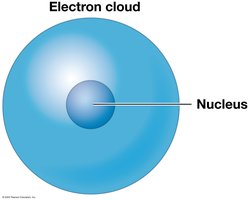
Electrons: Negatively charged, orbit the nucleus in the electron cloud.
The atomic number is the number of protons in an atom and determines the element. The electron cloud surrounds the nucleus and contains electron shells (energy levels).
Isotopes and Radioisotopes
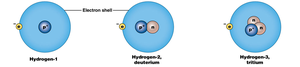
Isotopes are atoms of the same element with different numbers of neutrons, resulting in different mass numbers. Radioisotopes have unstable nuclei and are used in diagnostic procedures.
Electron Shells and Energy Levels
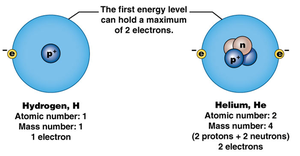
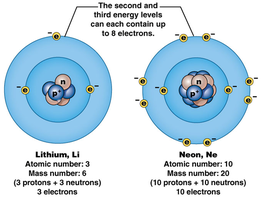
Electrons occupy shells with specific capacities:
First shell: up to 2 electrons
Second and third shells: up to 8 electrons each
Valence shell: outermost shell, determines chemical properties
Molecules and Compounds
Chemical Bonds
Atoms combine to form molecules and compounds through chemical bonds:
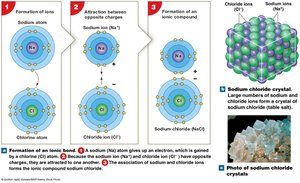
Ionic bonds: Formed by transfer of electrons, resulting in cations and anions.
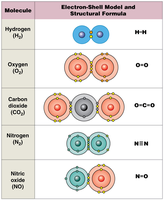
Covalent bonds: Formed by sharing electrons; can be single, double, or triple bonds.
Nonpolar covalent bonds: Equal sharing of electrons.
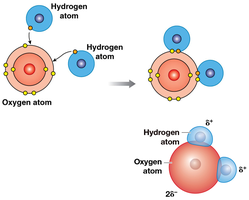
Polar covalent bonds: Unequal sharing, creating partial charges.
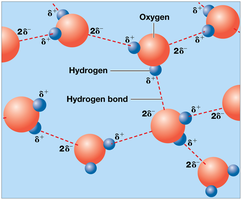
Hydrogen bonds: Weak attractions between partial charges, important in water and DNA.
Chemical Reactions
Types of Chemical Reactions
Chemical reactions involve the formation or breaking of bonds:
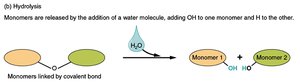
Decomposition (Catabolism): Breaks molecules into smaller fragments, often releases energy.
Hydrolysis: Decomposition involving water.
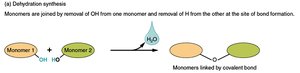
Synthesis (Anabolism): Assembles larger molecules from smaller ones, requires energy.
Dehydration synthesis: Synthesis that produces water.
Exchange reactions: Rearrangement of molecules.
Reversible reactions: Can proceed in both directions.
Energy in Chemical Reactions
Energy is the capacity to do work. Kinetic energy is energy of motion, while potential energy is stored. The First Law of Thermodynamics states that energy cannot be destroyed, only converted.
Enzymes and Metabolism
Role of Enzymes
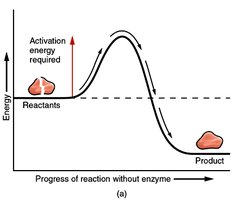
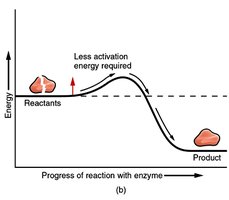
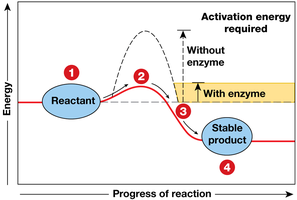
Enzymes are biological catalysts that lower activation energy, speeding up reactions without being consumed. Each step in metabolic pathways is controlled by a specific enzyme.
Inorganic and Organic Compounds
Water and Its Properties
Water is essential for life due to its polarity, high heat capacity, and ability to dissolve many substances. It participates in hydrolysis and dehydration synthesis reactions.
pH and Homeostasis
Understanding pH
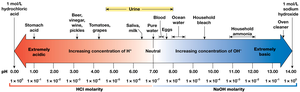
pH is the negative logarithm of hydrogen ion concentration. Neutral pH is 7.0. Acidic solutions have pH less than 7, basic (alkaline) solutions have pH greater than 7.
Buffers and Blood pH
Buffers stabilize pH by binding or releasing hydrogen ions. The carbonic acid–bicarbonate buffer system is crucial for maintaining blood pH (7.35–7.45).

Acids, Bases, and Salts
Definitions and Properties
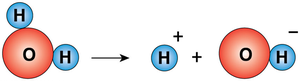
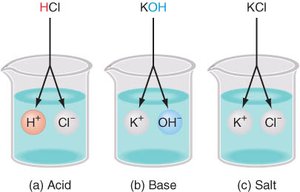
Acids: Dissociate into H+ and an anion.
Bases: Dissociate into OH- and a cation.
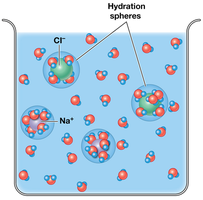
Salts: Dissociate into cations and anions, neither of which is H+ or OH-.
Electrolytes: Inorganic compounds whose ions conduct electricity in solution.
Organic Molecules: Carbohydrates, Lipids, Proteins, Nucleic Acids
Carbohydrates
Carbohydrates are organic macromolecules containing C, H, and O in a 1:2:1 ratio. They are the body's most important energy source.
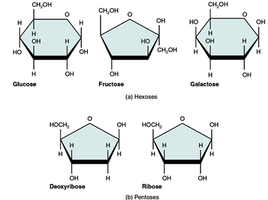
Monosaccharides: Simple sugars (glucose, fructose, galactose).
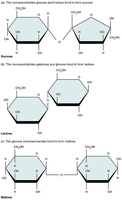
Disaccharides: Two monosaccharides joined by dehydration synthesis (sucrose, lactose, maltose).
Polysaccharides: Polymers of monosaccharides (cellulose, starch, glycogen).
Lipids
Lipids are hydrophobic organic molecules, including fatty acids, eicosanoids, glycerides, steroids, phospholipids, and glycolipids. They serve as structural components and energy storage.
Fatty acids: Saturated (no double bonds) or unsaturated (one or more double bonds).
Eicosanoids: Derived from arachidonic acid, include prostaglandins.
Glycerides: Fatty acids attached to glycerol (triglycerides).
Steroids: Four-ringed structures (cholesterol, hormones).
Phospholipids: Structural lipids with hydrophilic heads and hydrophobic tails.
Proteins
Proteins are polymers of amino acids and are the most abundant organic molecules in the body. Functions include support, movement, transport, buffering, metabolic regulation, coordination, control, and defense.
Primary structure: Sequence of amino acids.
Secondary structure: Alpha helix or beta sheet formed by hydrogen bonds.
Tertiary structure: Three-dimensional folding due to R group interactions.
Quaternary structure: Interaction of multiple polypeptide chains.
Enzymes are proteins that catalyze reactions, exhibiting specificity, saturation limits, and regulation. Temperature and pH affect enzyme function; denaturation leads to loss of function.
Nucleic Acids
Nucleic acids (DNA and RNA) store and process information. They are polymers of nucleotides, each containing a pentose sugar, phosphate group, and nitrogenous base.
DNA: Double helix, bases A, T, C, G.
RNA: Single strand, bases A, U, C, G; types include mRNA, tRNA, rRNA.
High-Energy Compounds
ATP and Energy Storage
High-energy compounds, such as ATP, are derived from nucleotides and contain high-energy bonds. Phosphorylation is the addition of a phosphate group. ATP is the primary energy storage molecule, and its breakdown is catalyzed by ATPase.
Additional info: This study guide covers all major learning outcomes for Chapter 2, including atomic structure, chemical bonding, types of reactions, enzyme function, pH, acids/bases/salts, and the structure and function of carbohydrates, lipids, proteins, nucleic acids, and high-energy compounds. It is suitable for exam preparation in an Anatomy & Physiology college course.
