 Back
BackChapter 2: The Chemistry of Life – Study Notes for Anatomy & Physiology
Study Guide - Smart Notes
 Tailored notes based on your materials, expanded with key definitions, examples, and context.
Module 2.1 Atoms and Elements
Atoms, Elements, and Subatomic Particles
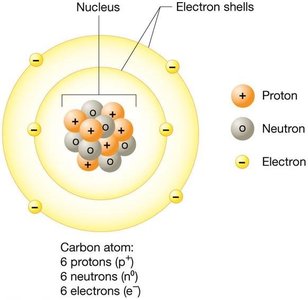
The study of chemistry is essential for understanding the structure and function of the human body. Atoms are the smallest units of matter that retain the properties of an element. Each atom is composed of subatomic particles:
Protons: Positively charged, located in the nucleus, mass ≈ 1 amu.
Neutrons: No charge, located in the nucleus, slightly larger than protons.
Electrons: Negatively charged, found in electron shells surrounding the nucleus, mass ≈ 0 amu.
Atoms are electrically neutral when the number of protons equals the number of electrons.
Electron Shells
Electrons occupy regions called shells around the nucleus:
1st shell: up to 2 electrons
2nd shell: up to 8 electrons
3rd shell: up to 18 electrons (but "satisfied" with 8 for most biological atoms)
Elements and the Periodic Table
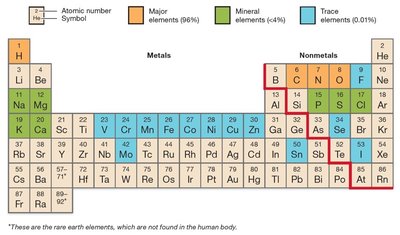
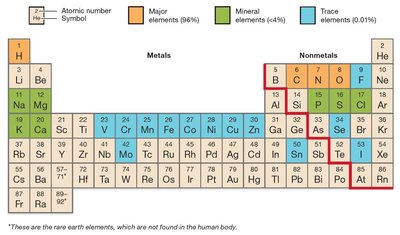
An element is a substance that cannot be broken down into simpler substances by chemical means. Each element is defined by its atomic number (number of protons). The human body is primarily composed of four major elements: hydrogen, oxygen, carbon, and nitrogen. There are also mineral and trace elements essential for life.
Atomic Number, Mass Number, Isotopes, and Radioisotopes
Atomic number: Number of protons in the nucleus.
Mass number: Sum of protons and neutrons.
Isotopes: Atoms of the same element with different numbers of neutrons (different mass numbers).
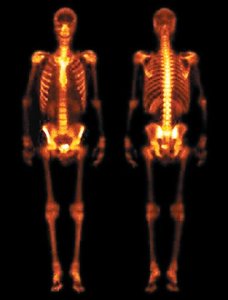
Radioisotopes: Unstable isotopes that emit radiation as they decay to a more stable form.
Radioisotopes are used in nuclear medicine for imaging and treatment (e.g., cancer therapy, radiotracers, thyroid treatment).
Module 2.2 Matter Combined: Mixtures and Chemical Bonds
Types of Mixtures
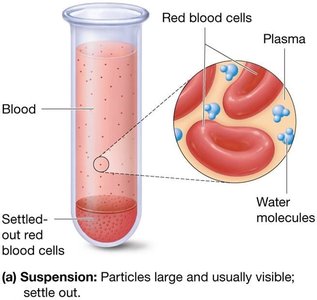
Mixtures are combinations of substances that are not chemically bonded. There are three main types:
Suspensions: Large, visible particles that settle out (e.g., blood).
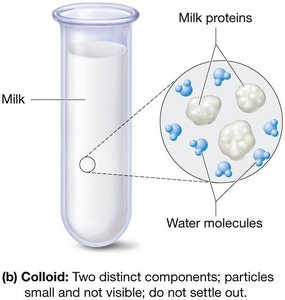
Colloids: Small, evenly distributed particles that do not settle out (e.g., milk).
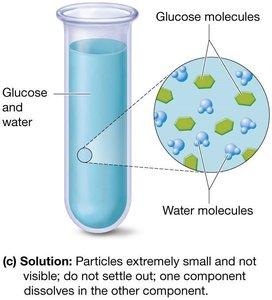
Solutions: Extremely small particles, one substance dissolves in another (e.g., glucose in water). The solute is dissolved, and the solvent does the dissolving (water is the universal solvent).
Chemical Bonds
Chemical bonds are energy relationships between atoms formed by interactions of valence electrons. The octet rule states that atoms are most stable with 8 electrons in their outer shell (except for very small atoms, which follow the duet rule).
Molecule: Two or more atoms of the same element bonded together.
Compound: Two or more atoms of different elements bonded together.
Ionic Bonds
Formed when electrons are transferred from a metal to a nonmetal, creating charged ions:
Cation: Positively charged ion (loses electrons).
Anion: Negatively charged ion (gains electrons).
Covalent Bonds
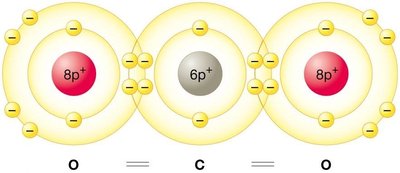
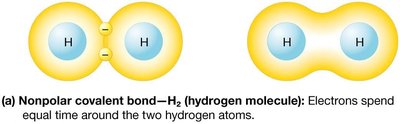
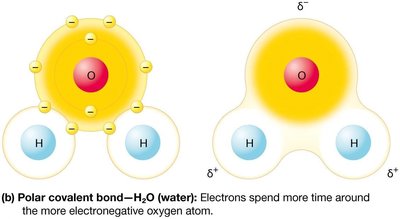
Formed when two or more nonmetals share electrons. Covalent bonds are the strongest type of chemical bond. The sharing can be equal (nonpolar) or unequal (polar), depending on the electronegativity of the atoms involved.
Nonpolar vs. Polar Covalent Bonds
Nonpolar covalent bonds: Electrons are shared equally (e.g., H2, O2, CH4).
Polar covalent bonds: Electrons are shared unequally, creating partial charges (e.g., H2O).
Hydrogen Bonds
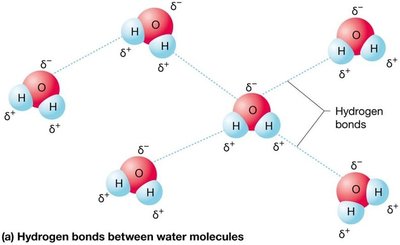
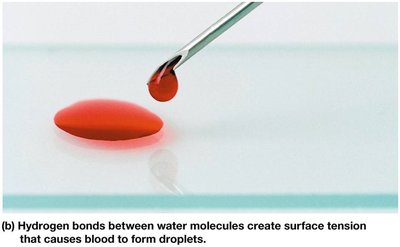
Hydrogen bonds are weak attractions between the partially positive hydrogen of one molecule and the partially negative atom of another. They are crucial for water's surface tension and many biological processes.
Module 2.3 Chemical Reactions
Energy in Chemical Reactions
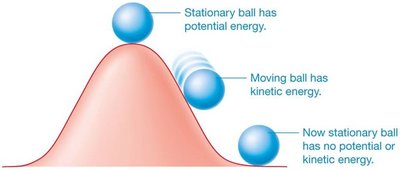
Energy is the capacity to do work. In the body, energy exists as:
Chemical energy: Stored in bonds, drives chemical processes.
Electrical energy: Movement of charged particles.
Mechanical energy: Direct transfer between objects.
Types of Chemical Reactions
Catabolic (decomposition) reactions: Break large molecules into smaller ones; usually exergonic (release energy).
Anabolic (synthesis) reactions: Build larger molecules from smaller ones; usually endergonic (require energy).
Exchange reactions: Atoms are exchanged between reactants.
Oxidation-reduction (redox) reactions: Electrons are transferred; one reactant is oxidized (loses electrons), the other is reduced (gains electrons).
Activation Energy and Enzymes
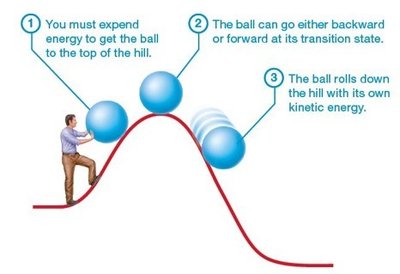
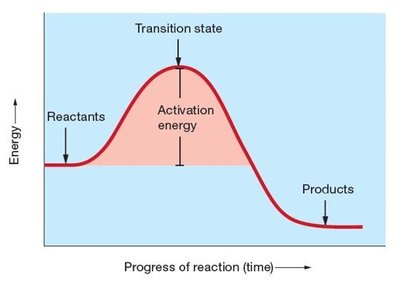
All chemical reactions require an initial input of energy, called activation energy, to proceed. Enzymes are biological catalysts that lower activation energy, increasing reaction rates without being consumed.
Enzyme Function
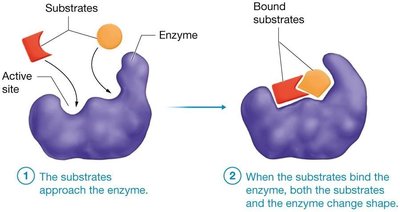
Enzymes are highly specific for their substrates and operate via the induced-fit mechanism, where substrate binding causes a conformational change in the enzyme, facilitating the reaction.
Module 2.4 Inorganic Compounds: Water, Acids, Bases, and Salts
Properties of Water
Water is the most abundant inorganic compound in the body, making up 60–80% of body mass. Its key properties include:
High heat capacity
Effective coolant
Cushioning and protection
Lubrication
Universal solvent (dissolves many substances)
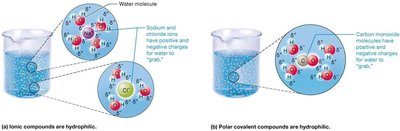
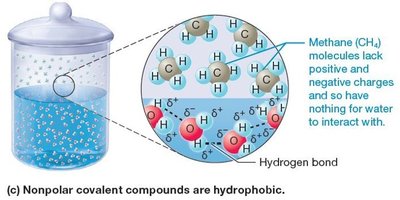
Hydrophilic vs. Hydrophobic Substances
Hydrophilic: Substances with charged or polar regions that dissolve in water (e.g., salts, sugars).
Hydrophobic: Nonpolar substances that do not dissolve in water (e.g., oils, fats).
Acids, Bases, and the pH Scale
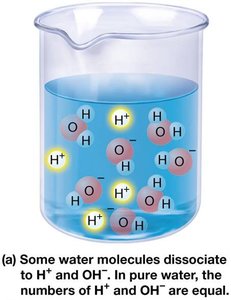
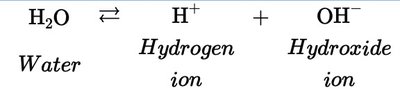
Acids: Proton donors; increase H+ concentration in solution.
Bases: Proton acceptors; decrease H+ concentration.
pH scale: Measures H+ concentration; ranges from 0 (acidic) to 14 (basic), with 7 as neutral.
The pH is calculated as:
Buffers
Buffers are chemical systems that resist changes in pH, maintaining homeostasis. The major buffer in the body is the carbonic acid–bicarbonate system. Blood pH is tightly regulated between 7.35 and 7.45.
Salts and Electrolytes
Salts are compounds formed from the reaction of an acid and a base. When dissolved in water, they dissociate into ions called electrolytes, which conduct electricity and are vital for nerve and muscle function.
Module 2.5 Organic Compounds: Carbohydrates, Lipids, Proteins, and Nucleotides
Monomers and Polymers
Organic compounds are built from monomers (single units) joined to form polymers (large molecules). Dehydration synthesis joins monomers by removing water, while hydrolysis breaks polymers into monomers by adding water.
Carbohydrates
Monosaccharides: Simple sugars (e.g., glucose, fructose, ribose).
Disaccharides: Two monosaccharides joined (e.g., sucrose, lactose).
Polysaccharides: Many monosaccharides linked (e.g., glycogen, stored in liver and muscle).
Lipids
Fatty acids: Monomers; can be saturated (no double bonds), monounsaturated (one double bond), or polyunsaturated (multiple double bonds).
Triglycerides: Three fatty acids linked to glycerol; energy storage.
Phospholipids: Two fatty acids and a phosphate group attached to glycerol; major component of cell membranes (amphiphilic).
Steroids: Four-ring structure; includes cholesterol and hormones.
Proteins
Composed of amino acids linked by peptide bonds.
Four levels of structure: primary, secondary (alpha helix, beta sheet), tertiary, and quaternary.
Functions: structure, movement, catalysis (enzymes), transport, defense.
Denaturation: Loss of structure and function due to heat, pH, or chemicals.
Nucleotides and Nucleic Acids
Nucleotides: Monomers with a nitrogenous base, pentose sugar, and phosphate group.
ATP (adenosine triphosphate): Main energy carrier in cells.
DNA: Double helix, stores genetic information, bases A, T, G, C.
RNA: Single strand, involved in protein synthesis, bases A, U, G, C.
Summary Table: Organic Compounds
Type of Compound | Structure | General Functions | Examples/Location |
|---|---|---|---|
Carbohydrates | Monosaccharides, disaccharides, polysaccharides | Energy, structure | Glucose, glycogen, ribose |
Lipids | Fatty acids, triglycerides, phospholipids, steroids | Energy storage, structure, regulation | Triglycerides, phospholipids, cholesterol |
Proteins | Amino acid chains (primary to quaternary structure) | Structure, movement, catalysis, transport, defense | Collagen, enzymes, hemoglobin |
Nucleic Acids | Nucleotide polymers (DNA, RNA) | Information storage and retrieval, energy (ATP) | DNA, RNA, ATP |
