 Back
Chapter 2: The Chemistry of Life – Structured Study Notes for Anatomy & Physiology
Study Guide - Smart Notes
 Tailored notes based on your materials, expanded with key definitions, examples, and context.
Chapter 2: The Chemistry of Life
Module 2.1: Atoms and Elements
This module introduces the fundamental concepts of matter, atoms, and elements, which are essential for understanding the chemical basis of life in anatomy and physiology.
Matter: Anything that has mass and occupies space; exists in solid, liquid, or gas states.
Chemistry: The study of matter and its interactions.
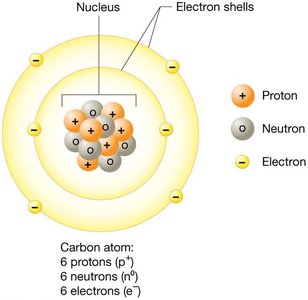
Atom: The smallest unit of matter retaining original properties; composed of subatomic particles.
Subatomic Particles:
Protons (p+): Positively charged, located in the nucleus.
Neutrons (n0): No charge, slightly larger than protons, located in the nucleus.
Electrons (e-): Negatively charged, found in electron shells surrounding the nucleus.
Electron Shells: Regions around the nucleus where electrons exist; each shell holds a specific number of electrons (1st: 2, 2nd: 8, 3rd: 18, "satisfied" with 8).
Atomic Number: Number of protons in the nucleus; defines the element.
Element: Substance that cannot be broken down by chemical means; each element has atoms with the same number of protons.
Elements in the Periodic Table and the Human Body
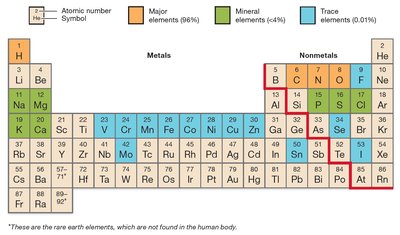
The periodic table organizes elements by atomic number and properties. The human body is primarily composed of four major elements, with additional mineral and trace elements.
Major Elements: Hydrogen, Oxygen, Carbon, Nitrogen (make up 96% of body mass).
Mineral Elements: Seven elements present in smaller amounts.
Trace Elements: Thirteen elements present in minute quantities.
Isotopes and Radioactivity
Isotopes are variants of elements with different numbers of neutrons. Some isotopes are unstable and radioactive, which has medical applications.
Mass Number: Sum of protons and neutrons in the nucleus.
Isotope: Same atomic number, different mass number.
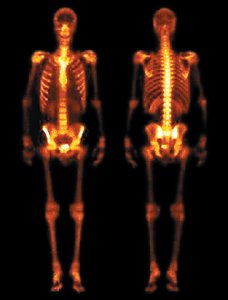
Radioisotopes: Unstable isotopes that release energy/radiation during decay.
Nuclear Medicine: Uses radioisotopes for cancer therapy, radiotracers, and thyroid disorder treatment.
Module 2.2: Matter Combined – Mixtures and Chemical Bonds
Matter can be combined physically (mixtures) or chemically (chemical bonds). Understanding these combinations is crucial for biological processes.
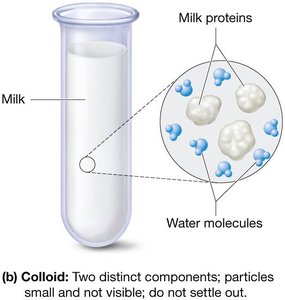
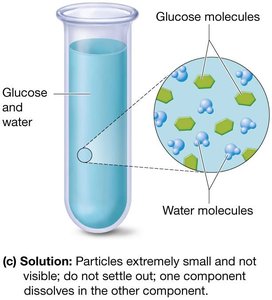
Mixtures: Physical combinations of atoms without changing their chemical nature.
Types of Mixtures:
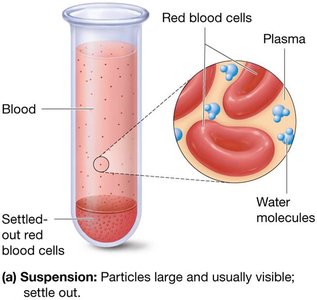
Suspensions: Large, unevenly distributed particles; settle out when undisturbed.
Colloids: Small, evenly distributed particles; do not settle out.
Solutions: Extremely small, evenly distributed particles; solute dissolved by solvent.
Chemical Bonds
Chemical bonds are energy relationships between atoms, forming molecules and compounds. The type of bond affects molecular properties and biological function.
Molecule: Formed by chemical bonding between atoms of the same element.
Compound: Formed by chemical bonding between atoms of different elements.
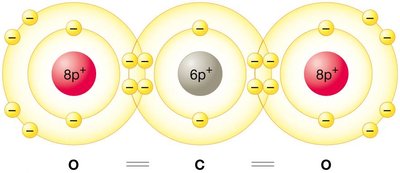
Valence Electrons: Outermost shell electrons; determine bonding behavior.
Octet Rule: Atoms are most stable with 8 electrons in their valence shell.
Duet Rule: Atoms with 5 or fewer electrons are stable with 2 in their valence shell.
Ions and Ionic Bonds
Ionic bonds form when electrons are transferred between atoms, resulting in charged ions that attract each other.
Cation: Positively charged ion (metal loses electrons).
Anion: Negatively charged ion (nonmetal gains electrons).
Salt: Formed by attraction between cations and anions.
Covalent Bonds
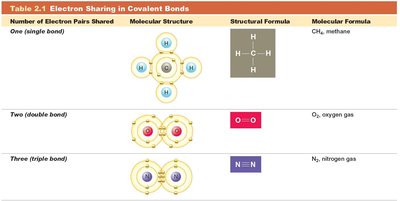
Covalent bonds are formed when two or more nonmetals share electrons. They are the strongest type of chemical bond.
Single, Double, Triple Bonds: Atoms can share one, two, or three pairs of electrons.
Electronegativity: The ability of an atom to attract electrons; increases across the periodic table.
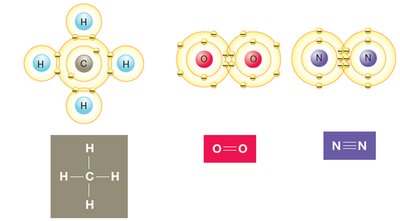
Nonpolar and Polar Covalent Bonds
Nonpolar covalent bonds share electrons equally, while polar covalent bonds share electrons unequally, creating partial charges.
Nonpolar Covalent Bonds: Occur between atoms with similar electronegativities or between carbon and hydrogen.
Polar Covalent Bonds: Occur between atoms with different electronegativities; create dipoles with partial positive and negative ends.
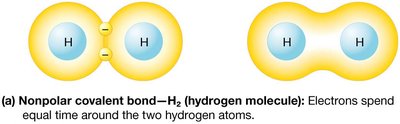
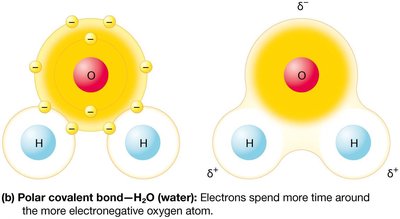
Hydrogen Bonds
Hydrogen bonds are weak attractions between dipoles, crucial for water's properties and biological molecules.
Surface Tension: Caused by hydrogen bonding between water molecules.
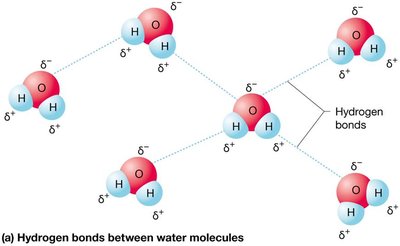
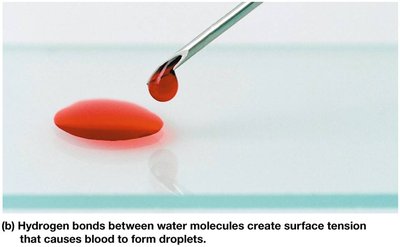
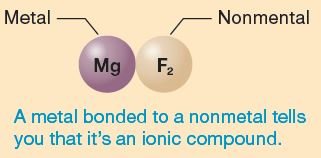
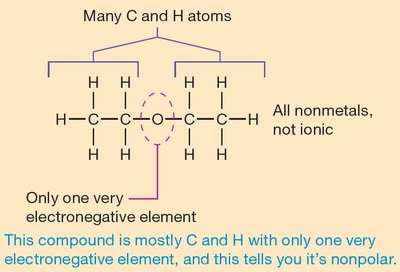
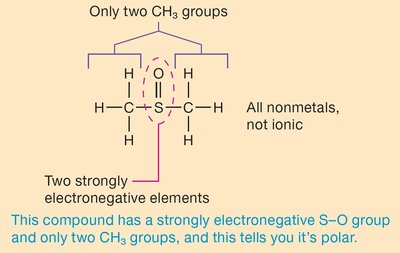
Concept Boost: Determining Bond Types
Rules for identifying bond types in molecules:
Metal + nonmetal = ionic bond.
Two or more nonmetals = covalent bond.
Two identical nonmetals = nonpolar covalent.
Mostly carbon and hydrogen = nonpolar covalent.
Nonmetals with different electronegativities = polar covalent.
Module 2.3: Chemical Reactions
Chemical reactions involve the formation, breaking, or rearrangement of chemical bonds. They are fundamental to metabolism and homeostasis.
Reactants: Starting ingredients in a reaction.
Products: Results of the reaction.
Reversible Reactions: Proceed in either direction; denoted by two arrows.
Irreversible Reactions: Proceed left to right; denoted by a single arrow.
Energy and Chemical Reactions
Energy is required for chemical reactions and exists in various forms in the human body.
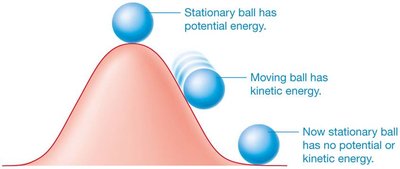
Potential Energy: Stored energy.
Kinetic Energy: Energy in motion.
Chemical Energy: Stored in bonds; drives most biological processes.
Electrical Energy: Movement of charged particles.
Mechanical Energy: Direct transfer between objects.
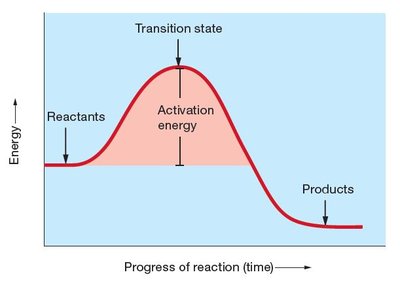
Endergonic Reactions: Require energy input; products have more energy.
Exergonic Reactions: Release energy; products have less energy.
Homeostasis and Types of Chemical Reactions
Three fundamental reaction types maintain homeostasis:
Catabolic (Decomposition) Reactions: Break down large substances into smaller ones; usually exergonic.
Exchange Reactions: Atoms are exchanged between reactants.
Anabolic (Synthesis) Reactions: Build large substances from smaller subunits; usually endergonic.
Oxidation-Reduction (Redox) Reactions: Electrons and energy are exchanged; one reactant is oxidized (loses electrons), another is reduced (gains electrons).
Reaction Rates and Enzymes
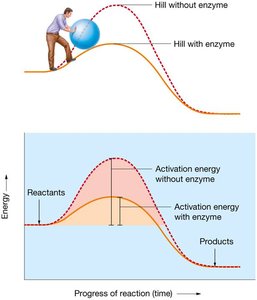
Reaction rates depend on activation energy and other factors. Enzymes are biological catalysts that speed up reactions by lowering activation energy.
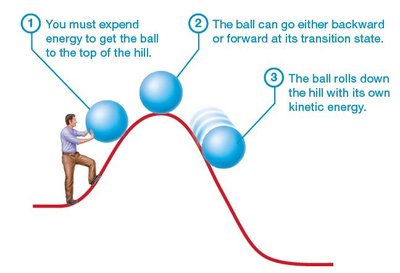
Activation Energy (Ea): Minimum energy required for a reaction.
Factors Affecting Rate: Concentration, temperature, particle size, phase, and catalysts.
Catalyst: Increases reaction rate without being consumed.
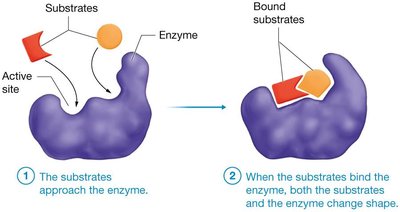
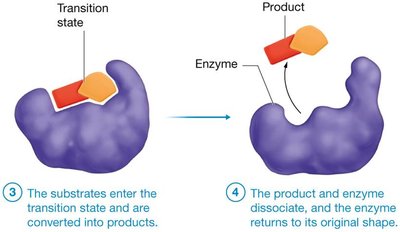
Enzyme: Highly specific protein catalyst; lowers activation energy, not altered by reaction.
Induced-Fit Mechanism: Substrate binding causes enzyme shape change, facilitating reaction.
Module 2.4: Inorganic Compounds – Water, Acids, Bases, and Salts
Inorganic compounds are essential for life and include water, acids, bases, and salts.
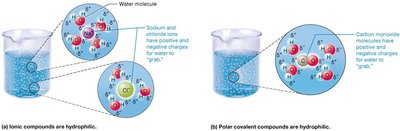
Water: Makes up 60–80% of body mass; high heat capacity, carries heat, cushions, lubricates, and acts as a universal solvent.
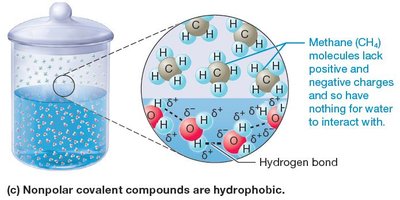
Hydrophilic Solutes: Dissolve in water; ionic and polar covalent compounds.
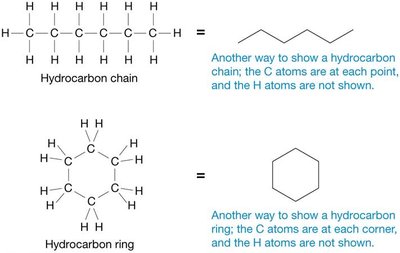
Hydrophobic Solutes: Do not dissolve in water; nonpolar covalent compounds.
Acids and Bases
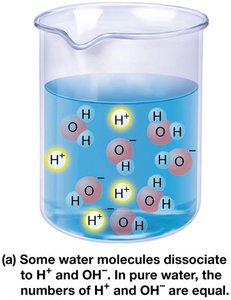
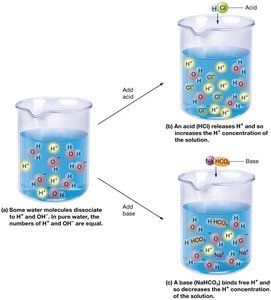
Acids and bases are defined by their behavior with hydrogen ions. The pH scale measures hydrogen ion concentration.
Acid: Hydrogen ion donor; increases H+ in solution.
Base: Hydrogen ion acceptor; decreases H+ in solution.
pH Scale: Ranges from 0–14; pH = -log[H+].
Neutral: pH = 7; equal H+ and OH-.
Acidic: pH < 7; more H+ than OH-.
Basic (Alkaline): pH > 7; more OH- than H+.
Buffer: Chemical system that resists changes in pH; major buffer is carbonic acid–bicarbonate system.
Salts and Electrolytes
Salts are ionic compounds that dissolve in water to form electrolytes, which conduct electrical current.
Electrolytes: Dissolved ions capable of conducting electricity.
Module 2.5: Organic Compounds – Carbohydrates, Lipids, Proteins, and Nucleotides
Organic compounds are built from monomers and polymers and are essential for structure and function in the body.
Monomers: Single subunits; combine to form polymers via dehydration synthesis.
Hydrolysis: Catabolic reaction; breaks polymers into monomers using water.
Carbohydrates
Monosaccharides: Simple sugars (glucose, fructose, galactose, ribose, deoxyribose).
Disaccharides: Two monosaccharides joined by dehydration synthesis.
Polysaccharides: Many monosaccharides joined; glycogen is a storage polymer.
Lipids
Fatty Acids: Lipid monomers; saturated (no double bonds), monounsaturated (one double bond), polyunsaturated (multiple double bonds).
Triglycerides: Three fatty acids linked to glycerol; storage form.
Phospholipids: Glycerol backbone, two fatty acid tails, one phosphate head; amphiphilic; vital for cell membranes.
Steroids: Four-ring structure; cholesterol forms basis for other steroids.
Proteins
Fibrous Proteins: Long strands; structural roles.
Globular Proteins: Spherical; functional roles (enzymes, hormones).
Protein Structure: Primary (amino acid sequence), secondary (alpha helix, beta sheet), tertiary (3D shape), quaternary (multiple polypeptides).
Denaturation: Loss of structure and function due to heat, pH, or chemicals.
Nucleotides and Nucleic Acids
Nucleotides: Monomers of nucleic acids; consist of nitrogenous base, pentose sugar, and phosphate group.
ATP: Main energy source; synthesized from ADP and Pi; hydrolysis releases energy.
DNA: Double helix; contains genes; complementary base pairing (A=T, C≡G).
RNA: Single strand; contains uracil instead of thymine; involved in transcription and translation.
