 Back
Chapter 20: The Cardiovascular System – Blood
Study Guide - Smart Notes
 Tailored notes based on your materials, expanded with key definitions, examples, and context.
The Cardiovascular System: Blood
Introduction to the Cardiovascular System
The cardiovascular system is responsible for transporting substances throughout the body via the blood. This system is essential for delivering oxygen and nutrients to cells, removing waste products, distributing chemical signals, and defending the body against pathogens. Additionally, it plays a critical role in maintaining homeostasis by regulating temperature, substance concentrations, and preventing fluid loss through clotting.
Transported Substances: Oxygen, nutrients, carbon dioxide, waste products, hormones, and leukocytes.
Homeostatic Functions: Heat distribution, maintenance of extracellular fluid (ECF) composition, and prevention of blood loss.
Functions and Composition of Blood
Blood Components
Blood consists of two main components: plasma and formed elements. Plasma is the liquid portion, while formed elements include cells and cell fragments. The average adult has 4–6 liters of blood, accounting for about 7% of body weight.
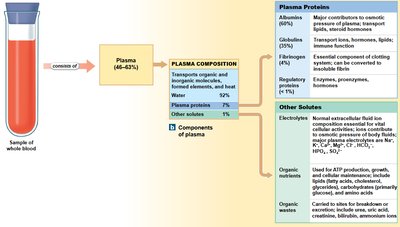
Plasma: Water (92%), plasma proteins (7%), and other solutes (1%).
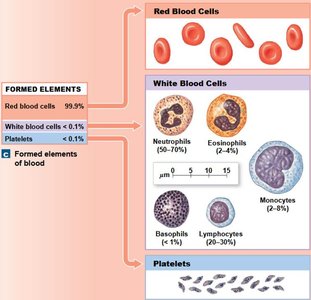
Formed Elements: Erythrocytes (red blood cells), leukocytes (white blood cells), and platelets.
Plasma and Its Proteins
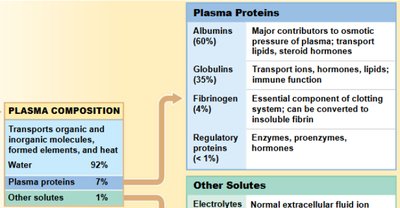
Plasma is the fluid matrix of blood, containing proteins, nutrients, electrolytes, and waste products. Plasma proteins are too large to diffuse through blood vessel walls, resulting in higher protein concentration in plasma compared to interstitial fluid. Major plasma proteins include:
Albumins (60%): Maintain osmotic pressure and transport hydrophobic substances.
Globulins (35%): Transport ions, hormones, and lipids; include immunoglobulins (antibodies).
Fibrinogen (4%): Essential for blood clotting; converts to fibrin during clot formation.
Regulatory Proteins (<1%): Enzymes, proenzymes, and hormones.
Formed Elements of Blood
Formed elements make up about 45% of blood volume and include erythrocytes, leukocytes, and platelets. Erythrocytes are the most abundant, while leukocytes and platelets are present in much smaller quantities.
Erythrocytes (99.9%): Red blood cells responsible for oxygen transport.
Leukocytes (<0.1%): White blood cells involved in immune defense.
Platelets (<0.1%): Cell fragments essential for blood clotting.
Erythrocytes (Red Blood Cells)
Structure and Function
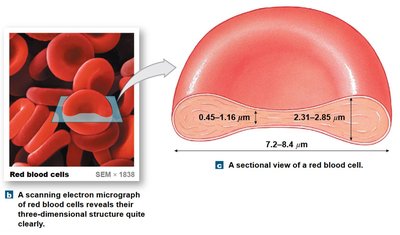
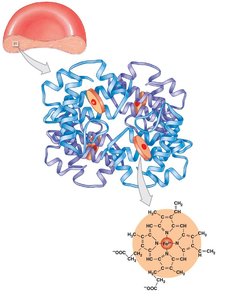
Erythrocytes are biconcave discs, which increases their surface area for gas exchange and allows flexibility to pass through narrow capillaries. They lack nuclei and most organelles, being filled primarily with hemoglobin for oxygen transport.
Lifespan: Approximately 120 days; old cells are recycled in the spleen and liver.
Hemoglobin: Protein composed of four subunits, each with a heme group containing iron that binds oxygen reversibly.
Color: Oxygenated blood is bright red; deoxygenated blood is darker red.
Hematocrit
Hematocrit is the percentage of blood volume occupied by erythrocytes. Normal values range from 40% to 45%, varying by age, sex, and health status. Abnormal hematocrit levels can indicate various medical conditions.
Leukocytes (White Blood Cells)
Types and Functions
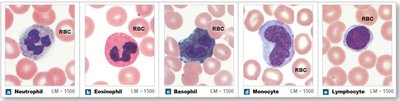
Leukocytes are immune cells that defend the body against pathogens, remove debris, and participate in immune responses. They are classified as granular or agranular based on the presence of cytoplasmic granules.
Granular Leukocytes: Neutrophils, eosinophils, basophils.
Agranular Leukocytes: Monocytes, lymphocytes.
Neutrophils
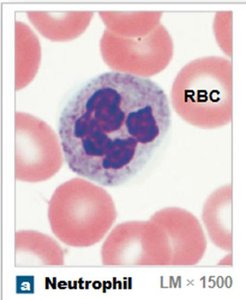
Neutrophils are the most abundant leukocytes (50–70%). They are highly phagocytic, rapidly responding to infection and releasing toxic substances to destroy pathogens. Their lifespan is short, around 10 hours.
Eosinophils
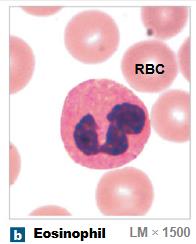
Eosinophils (2–4%) are active during allergic reactions and parasitic infections. Their granules stain red and contain substances that reduce inflammation and attack antibody-marked foreign substances.
Basophils
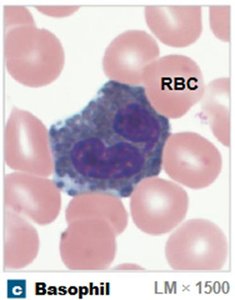
Basophils (<1%) trigger inflammation by releasing histamine and heparin, increasing blood flow to injury sites. They are similar to mast cells but are more mobile.
Monocytes
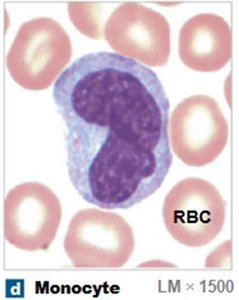
Monocytes (2–8%) are the largest leukocytes and are phagocytic. They differentiate into macrophages and dendritic cells in tissues, playing a role in adaptive immunity by activating lymphocytes.
Lymphocytes
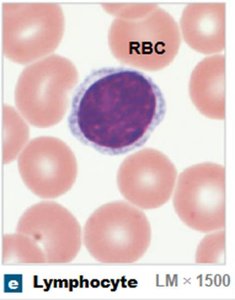
Lymphocytes (20–30%) are responsible for adaptive immunity. They are found in blood and lymphatic tissues and include T cells, B cells (which produce antibodies), and natural killer (NK) cells.
Mnemonic for Leukocyte Types
A helpful mnemonic for remembering the order of leukocyte abundance is "Never Let Monkeys Eat Bananas": Neutrophils, Lymphocytes, Monocytes, Eosinophils, Basophils.
Platelets (Thrombocytes)
Structure and Function
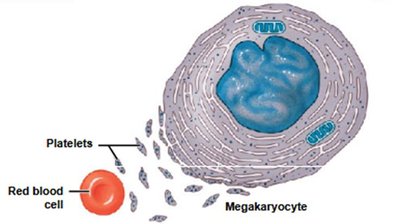
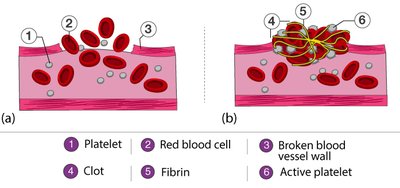
Platelets are small cell fragments derived from megakaryocytes in red bone marrow. They are essential for hemostasis, the process of blood clotting, by forming plugs and releasing chemicals that promote clot formation and vessel repair.
Hemostasis
Hemostasis prevents blood loss from damaged vessels without stopping blood flow. Platelets initiate and regulate this process by forming a platelet plug and facilitating the formation of a fibrin clot.
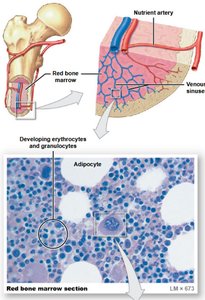
Hemopoiesis (Hematopoiesis)
Blood Cell Formation
Hematopoiesis is the process of forming new blood cells from hematopoietic stem cells in red bone marrow. This process produces erythrocytes, leukocytes, and megakaryocytes (which form platelets). Erythropoietin, a hormone released by the kidneys during hypoxia, stimulates erythrocyte production.
Requirements: Adequate iron, amino acids, and vitamin B12 are necessary for effective erythropoiesis.
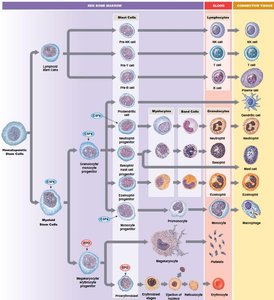
Additional info: Hematopoiesis involves several intermediate progenitor cells, and the balance of blood cell production is tightly regulated to meet physiological needs.
