 Back
BackChapter 20: The Lymphatic System and Lymphoid Organs and Tissues – Study Notes
Study Guide - Smart Notes
 Tailored notes based on your materials, expanded with key definitions, examples, and context.
The Lymphatic System: Structure and Function
Overview of the Lymphatic System
The lymphatic system is a vital component of human anatomy and physiology, responsible for returning fluids leaked from blood vessels back to the bloodstream and providing the structural basis for the immune system. It consists of a network of lymphatic vessels, lymph (the fluid within these vessels), and lymph nodes that cleanse the lymph. Lymphoid organs and tissues house phagocytic cells and lymphocytes, supporting immune function.
Lymphatic vessels: Drainage network transporting lymph toward the heart.
Lymph: Fluid derived from interstitial fluid once it enters lymphatic vessels.
Lymph nodes: Filter lymph and house immune cells.
Lymphoid organs: Include spleen, thymus, tonsils, lymph nodes, and other tissues.
Distribution and Structure of Lymphatic Vessels
Lymphatic vessels form a one-way system, ensuring lymph flows only toward the heart. They include lymphatic capillaries and larger collecting vessels.
Lymphatic capillaries: Blind-ended vessels that weave between tissue cells and blood capillaries. They are absent from bones, teeth, and bone marrow, but present in limited locations in the CNS.
Permeability: Lymphatic capillaries are more permeable than blood capillaries, allowing uptake of proteins, cell debris, pathogens, and cancer cells.
Minivalves: Overlapping endothelial cells form one-way minivalves, anchored by collagen filaments. Increased ECF volume opens minivalves; decreased ECF closes them.
Lacteals: Specialized lymph capillaries in intestinal mucosa absorb digested fat and deliver chyle to the blood.
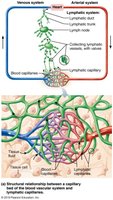
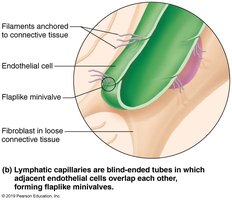
Larger Lymphatic Vessels, Trunks, and Ducts
Lymph capillaries drain into larger collecting vessels, which form lymphatic trunks and ducts. These vessels have thinner walls and more internal valves than veins.
Lymphatic trunks: Drain large regions of the body (lumbar, bronchomediastinal, subclavian, jugular, intestinal).
Lymphatic ducts: Right lymphatic duct drains right upper arm and right side of head/thorax; thoracic duct drains the rest of the body, often beginning as the cisterna chyli.
Venous return: Each duct empties lymph into venous circulation at the junction of internal jugular and subclavian veins.
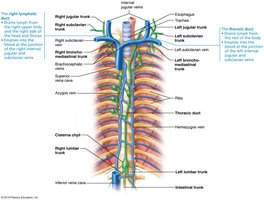
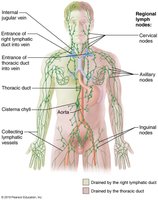
Lymph Transport
The lymphatic system operates under low pressure, similar to veins. Lymph is propelled by:
Milking action of skeletal muscle
Pressure changes during breathing
Valves preventing backflow
Pulsations of nearby arteries
Contractions of smooth muscle in vessel walls
Physical activity increases lymph flow, while immobilization keeps inflammatory material in place for healing.
Lymphoid Cells, Tissues, and Organs
Lymphoid Cells
Lymphoid cells include immune system cells and supporting cells that form lymphoid tissue structures.
Lymphocytes: Adaptive immune system cells, maturing into T cells (manage immune response, attack infected cells) and B cells (produce plasma cells that secrete antibodies).
Macrophages: Phagocytize foreign substances and activate T cells.
Dendritic cells: Capture antigens and deliver them to lymph nodes, activating T cells.
Reticular cells: Produce reticular fibers (stroma), providing scaffolding for immune cells.
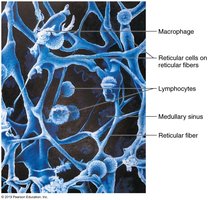
Lymphoid Tissue
Lymphoid tissue houses and provides proliferation sites for lymphocytes, offering surveillance vantage points for immune cells. It is largely composed of reticular connective tissue.
Diffuse lymphoid tissue: Loose arrangement of cells and fibers, found in most organs.
Lymphoid follicles (nodules): Solid, spherical bodies with germinal centers of proliferating B cells; found in nodes, Peyer’s patches, and appendix.
Primary and Secondary Lymphoid Organs
Lymphoid organs are grouped by function:
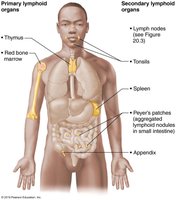
Primary lymphoid organs: Sites of T and B cell maturation (red bone marrow and thymus).
Secondary lymphoid organs: Sites where mature lymphocytes encounter antigens and become activated (lymph nodes, spleen, MALT, diffuse tissues).
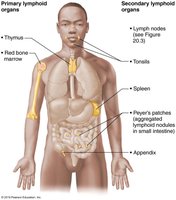
Lymph Nodes
Structure and Function of Lymph Nodes
Lymph nodes are principal secondary lymphoid organs, found throughout the body, often in clusters. They filter lymph and provide sites for immune activation.
Cleansing the lymph: Macrophages remove and destroy microorganisms and debris.
Immune activation: Lymphocytes become activated and mount attacks against antigens.
Internal Structure
Capsule: External fibrous covering.
Trabeculae: Capsule fibers dividing node into compartments.
Cortex: Contains follicles with germinal centers (B cells) and deep cortex (T cells).
Medulla: Medullary cords with B cells, T cells, plasma cells; lymph sinuses with reticular fibers and macrophages.
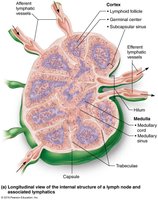
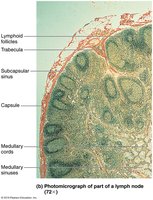
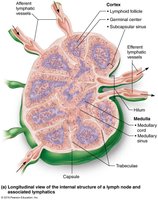
Circulation in Lymph Nodes
Lymph enters via afferent vessels, passes through sinuses, and exits via efferent vessels at the hilum.
Fewer efferent vessels cause stagnation, allowing immune cells time to act.
Spleen
Structure and Function of the Spleen
The spleen is the largest lymphoid organ, located in the left abdominal cavity. It is blood-rich and serves multiple functions:
Site of lymphocyte proliferation and immune response
Cleanses blood of aged cells and platelets; macrophages remove debris
Stores breakdown products of RBCs, platelets, and monocytes
May produce erythrocytes in the fetus
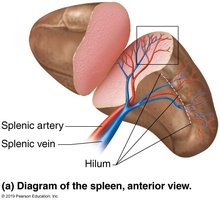
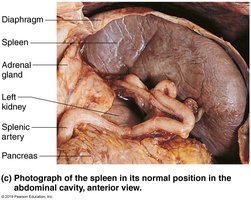
Histology
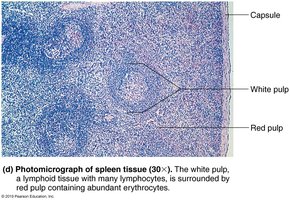
White pulp: Immune function, clusters of lymphocytes around central arteries.
Red pulp: Destruction of old blood cells and pathogens, rich in RBCs and macrophages.
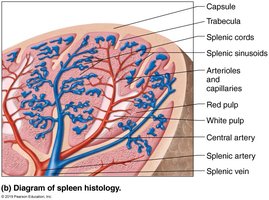
MALT: Mucosa-Associated Lymphoid Tissue
Tonsils
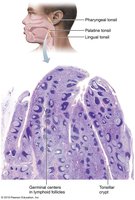
Tonsils are the simplest lymphoid organs, forming a ring around the pharynx. They gather and remove pathogens from food and air.
Contain follicles with germinal centers and scattered lymphocytes
Not fully encapsulated; crypts trap bacteria and particulate matter
Peyer's Patches
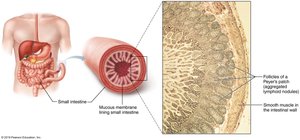
Peyer's patches are clusters of lymphoid follicles in the distal small intestine, structurally similar to tonsils. They destroy bacteria and generate memory lymphocytes.
Appendix
The appendix contains numerous lymphoid follicles, aiding in the destruction of bacteria and generation of memory lymphocytes.
Thymus
Structure and Function of the Thymus
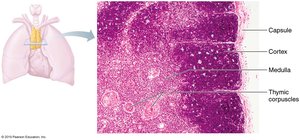
The thymus is a bilobed lymphoid organ in the inferior neck, most active during childhood. It is the site of T cell maturation and differs from other lymphoid organs:
No follicles (lacks B cells)
Does not directly fight antigens
Contains blood thymus barrier to prevent premature activation
Stroma made of epithelial cells
Summary Table: Lymphoid Organs and Tissues
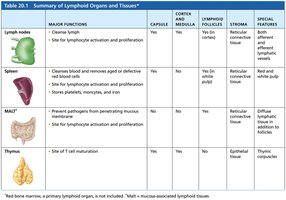
The following table summarizes the major functions, structural features, and special characteristics of lymphoid organs and tissues:
Organ/Tissue | Major Functions | Capsule | Cortex & Medulla | Lymphoid Follicles | Stroma | Special Features |
|---|---|---|---|---|---|---|
Lymph nodes | Cleanses lymph; site for lymphocyte activation and proliferation | Yes | Yes | Yes (in cortex) | Reticular connective tissue | Both afferent and efferent lymphatic vessels |
Spleen | Cleanses blood; removes aged cells; site for lymphocyte activation and proliferation | Yes | Yes | Yes (white pulp) | Reticular connective tissue | Red and white pulp |
MALT | Prevents pathogens from penetrating mucosa; site for lymphocyte activation and proliferation | No | No | Yes | Reticular connective tissue | Diffuse, follicles, and aggregates |
Thymus | Site of T cell maturation | Yes | Yes | No | Epithelial tissue | Blood thymus barrier; no follicles |
Developmental Aspects of the Lymphatic System
Embryonic Development
Lymphatic vessels and main clusters of lymph nodes begin forming by week 5 of embryonic development, arising as lymph sacs from developing veins. Most lymphoid organs (except thymus) arise from mesodermal mesenchymal cells, while the thymus forms from endodermal origin as an outgrowth of the pharynx.
Postnatal Development
Except for spleen and tonsils, lymphoid organs are poorly developed at birth.
High numbers of lymphocytes appear after birth, paralleling immune system maturation.
