 Back
BackChapter 21: The Immune System – Adaptive Immunity and Lymphocyte Function
Study Guide - Smart Notes
 Tailored notes based on your materials, expanded with key definitions, examples, and context.
Immune System Overview
Introduction to Adaptive Immunity
The adaptive immune system is a highly specialized defense mechanism that provides specific responses to pathogens. It is characterized by the ability to recognize, remember, and mount stronger attacks on previously encountered pathogens. The main cellular components are lymphocytes (B and T cells) and antigen-presenting cells (APCs).
Lymphocyte Development, Maturation, and Activation
Origin and Maturation of Lymphocytes
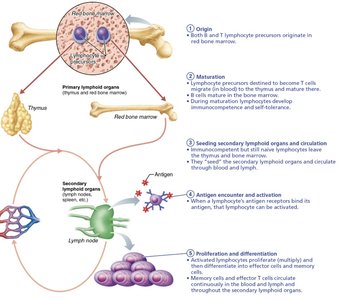
Lymphocytes originate from hematopoietic stem cells in the red bone marrow. They undergo maturation in primary lymphoid organs: B cells mature in the bone marrow, while T cells mature in the thymus. Maturation involves the development of immunocompetence and self-tolerance through selection processes.
Selection of T Cells: Positive and Negative Selection
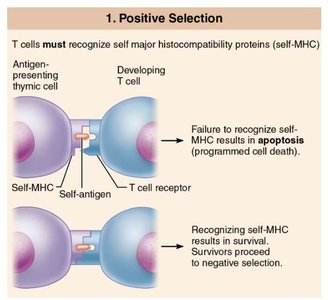
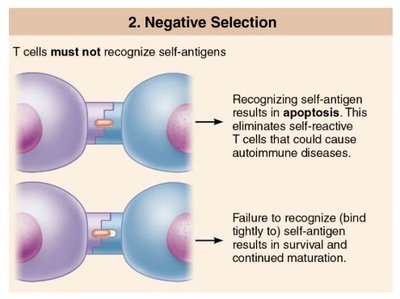
T cells undergo two critical selection processes in the thymus:
Positive Selection: T cells must recognize self-major histocompatibility complex (MHC) proteins. Failure to recognize self-MHC results in apoptosis (programmed cell death).
Negative Selection: T cells must not recognize self-antigens. Recognition of self-antigen leads to apoptosis, eliminating self-reactive T cells that could cause autoimmune diseases.
Seeding and Activation
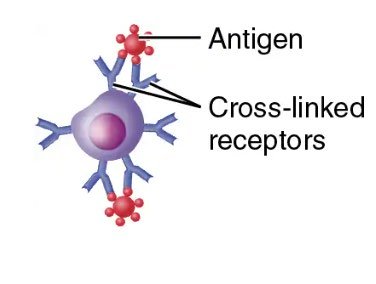
After maturation, lymphocytes circulate to secondary lymphoid organs (e.g., lymph nodes, spleen) where they may encounter antigens. Activation occurs when a naive lymphocyte binds its specific antigen, leading to proliferation and differentiation into effector and memory cells.
Cells of the Adaptive Immune System
B Lymphocytes (B Cells)
B cells are responsible for humoral immunity, targeting extracellular pathogens by producing antibodies. They mature in the red bone marrow and, upon activation, differentiate into plasma cells (which secrete antibodies) and memory B cells.
T Lymphocytes (T Cells)
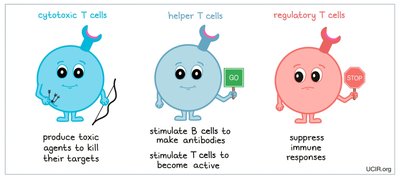
T cells are responsible for cellular immunity, targeting intracellular pathogens and abnormal cells. They mature in the thymus and differentiate into several types:
Cytotoxic T cells (Tc): Directly kill infected or abnormal cells.
Helper T cells (Th): Activate B cells, other T cells, and coordinate the immune response.
Regulatory T cells (Tr): Suppress immune responses to prevent autoimmunity.
Memory T cells (Tm): Provide long-term immunity.
Antigen-Presenting Cells (APCs)
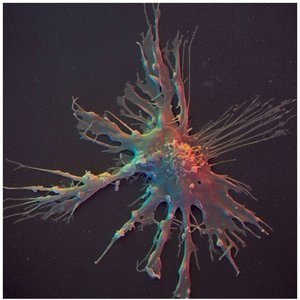
APCs include dendritic cells, macrophages, and B cells. They engulf antigens, process them, and present antigen fragments on their surface to T cells, initiating the adaptive immune response.
Comparison of B and T Lymphocytes
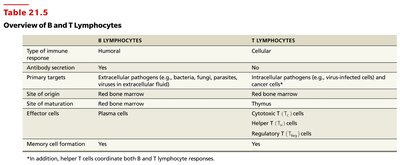
B Lymphocytes | T Lymphocytes | |
|---|---|---|
Type of Immune Response | Humoral | Cellular |
Antibody Secretion | Yes | No |
Primary Targets | Extracellular pathogens (bacteria, fungi, parasites, viruses in extracellular fluid) | Intracellular pathogens (virus-infected cells, cancer cells) |
Site of Origin | Red bone marrow | Red bone marrow |
Site of Maturation | Red bone marrow | Thymus |
Effector Cells | Plasma cells | Cytotoxic, Helper, Regulatory T cells |
Memory Cell Formation | Yes | Yes |
Clonal Selection and Immunological Memory
Clonal Selection and Differentiation
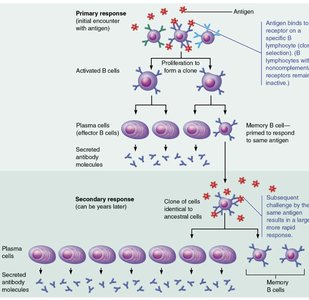
When a naive lymphocyte encounters its specific antigen, it is selected for activation. If the correct signals are present, it proliferates (clonal expansion) and differentiates into effector and memory cells. Self-reactive cells are eliminated by clonal deletion (apoptosis).
Primary and Secondary Immune Responses
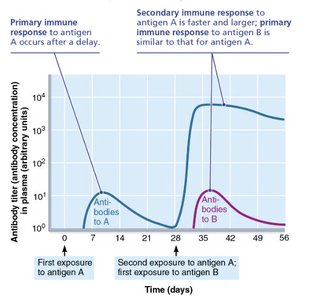
The primary immune response occurs after the first exposure to an antigen, with a lag period for B cell proliferation and antibody production. The secondary immune response is faster and more robust due to memory cells generated during the primary response.


Humoral Immunity: Active and Passive
Active Humoral Immunity
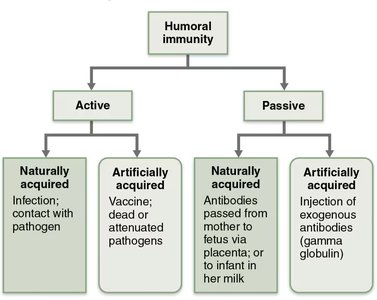
Active immunity results when B cells encounter antigens and produce antibodies. It can be acquired naturally (through infection) or artificially (through vaccination).
Naturally acquired: Response to infection by pathogens.
Artificially acquired: Response to vaccines containing dead or attenuated pathogens.
Passive Humoral Immunity
Passive immunity involves the transfer of ready-made antibodies. It can be acquired naturally (from mother to fetus or infant) or artificially (injection of serum or gamma globulin). B cells are not activated, and immunological memory does not develop.
Naturally acquired: Antibodies passed from mother to fetus via placenta or to infant via breast milk.
Artificially acquired: Injection of exogenous antibodies (e.g., antivenom).
Antibodies (Immunoglobulins)
Structure and Classes of Antibodies
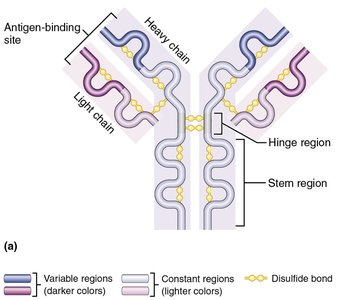
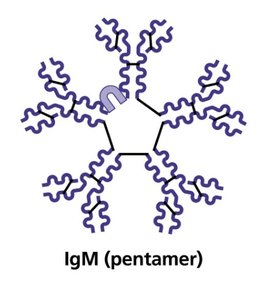
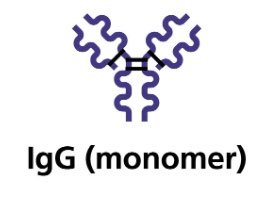
Antibodies are proteins secreted by plasma cells. Each antibody consists of four polypeptide chains (two heavy, two light), with variable and constant regions. The variable region forms the antigen-binding site. There are five main classes: IgM, IgA, IgD, IgG, and IgE.

Functions of Antibodies
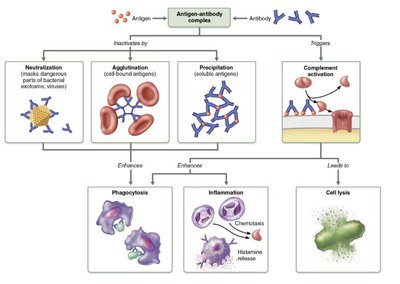
Antibodies do not destroy antigens directly but inactivate and tag them for destruction by other immune mechanisms. They form antigen-antibody complexes and mediate several defensive mechanisms:
Neutralization: Blocks harmful effects of toxins or pathogens.
Agglutination: Clumps antigens together for easier removal.
Precipitation: Causes soluble antigens to settle out of solution.
Complement Activation: Triggers cell lysis and enhances inflammation and phagocytosis.
Cellular Immune Response: T Cells
Types and Roles of T Cells
T cells provide defense against intracellular antigens. Major types include:
Cytotoxic T cells (Tc): Directly attack and kill infected or abnormal cells using perforins and granzymes.
Helper T cells (Th): Activate B and T cells, stimulate proliferation, and coordinate immune responses.
Regulatory T cells (Tr): Suppress immune responses, prevent autoimmunity, and maintain tolerance.
Memory T cells (Tm): Provide rapid response upon re-exposure to the same antigen.
MHC Proteins and Antigen Presentation
T cells recognize antigens only when presented on cell surfaces by MHC proteins:
Class I MHC: Present on all nucleated cells (except RBCs); display endogenous antigens; recognized by cytotoxic T cells.
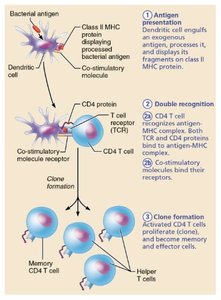
Class II MHC: Present on APCs; display exogenous antigens; recognized by helper T cells.
T Cell Activation and Differentiation
T cell activation is a two-step process:
Antigen Binding: T cell receptors (TCRs) bind to antigen-MHC complexes on APCs.
Co-stimulation: Additional signals from co-stimulatory molecules are required for full activation.
Activated T cells proliferate and differentiate into effector and memory cells.
Cytokines
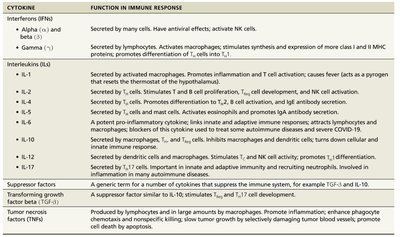
Cytokines are chemical messengers that mediate cell development, differentiation, and immune responses. Major types include interferons and interleukins, which regulate the activity of immune cells.
Cytokine | Function in Immune Response |
|---|---|
Interferons (IFNs) | Antiviral effects, activate NK cells, enhance antigen presentation |
Interleukins (ILs) | Promote inflammation, T and B cell proliferation, differentiation, and activation |
Suppressor factors | Suppress immune system activity |
Tumor necrosis factors (TNFs) | Promote inflammation, induce cell death in tumor cells |
Clinical Aspects of Immune Function
Autoimmune Diseases
Autoimmune diseases occur when the immune system loses self-tolerance and attacks the body's own tissues. Examples include multiple sclerosis, myasthenia gravis, Graves' disease, type 1 diabetes mellitus, systemic lupus erythematosus, and rheumatoid arthritis. Treatments focus on suppressing the immune response.
Immunodeficiency Disorders
Acquired Immunodeficiency Syndrome (AIDS), caused by the Human Immunodeficiency Virus (HIV), results in the destruction of helper T cells. This impairs both humoral and cellular immunity, making affected individuals susceptible to opportunistic infections.
Additional info: This guide expands on the provided notes with definitions, examples, and tables for clarity and completeness, following the structure of a modern anatomy and physiology textbook.
