 Back
BackChapter 21: The Immune System – Innate and Adaptive Body Defenses
Study Guide - Smart Notes
 Tailored notes based on your materials, expanded with key definitions, examples, and context.
Overview of the Immune System
Introduction
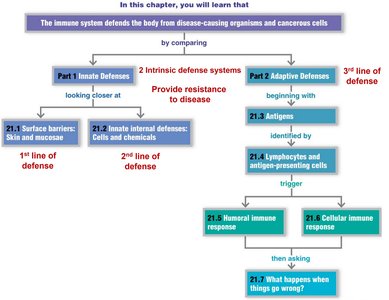
The immune system protects the body from disease-causing organisms and cancerous cells through a series of defense mechanisms. These mechanisms are categorized into two intrinsic systems: innate defenses and adaptive defenses. Each system has distinct components and functions, working together to provide resistance to disease.
Innate (Nonspecific) Defenses
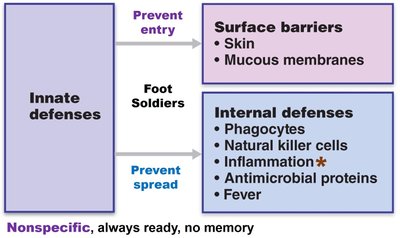
Surface Barriers: Skin and Mucous Membranes
Surface barriers are the body's first line of defense, preventing the entry of pathogens. These include the skin and mucous membranes, which act as physical and chemical barriers.
Skin: Provides a tough, keratinized barrier.
Mucous membranes: Trap pathogens and contain antimicrobial substances.
Secretions: Include acid mantles, enzymes, mucin, defensins, and sebum.
Internal Defenses: Cells and Chemicals
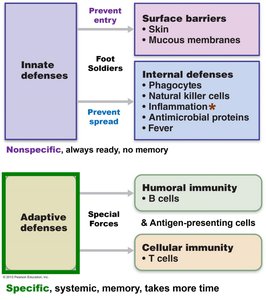
If pathogens breach surface barriers, internal defenses are activated. These include phagocytes, natural killer cells, inflammation, antimicrobial proteins, and fever.
Phagocytes: Neutrophils and macrophages engulf and digest pathogens.
Natural Killer (NK) Cells: Destroy infected or abnormal cells by inducing apoptosis.
Inflammation: Localized response to injury, characterized by redness, heat, swelling, and pain.
Antimicrobial Proteins: Interferons and complement proteins inhibit pathogen replication and promote destruction.
Fever: Systemic response to infection, raising body temperature to inhibit pathogen growth.
Phagocytosis
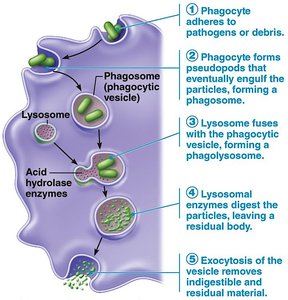
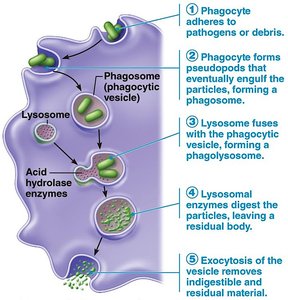
Phagocytosis is a process by which phagocytes ingest and destroy pathogens. The steps include adherence, engulfment, fusion with lysosomes, digestion, and exocytosis of residual material.
Adherence: Phagocyte binds to pathogen.
Engulfment: Pathogen is enclosed in a phagosome.
Fusion: Phagosome fuses with lysosome.
Digestion: Lysosomal enzymes break down pathogen.
Exocytosis: Residual material is expelled.
Natural Killer (NK) Cells
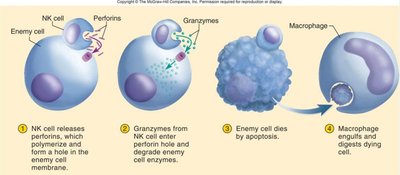
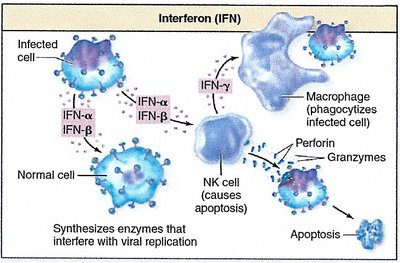
NK cells are large lymphocytes that provide immune surveillance. They attack cells lacking self (MHC) surface receptors, releasing perforin and granzymes to induce apoptosis.
Perforin: Forms pores in target cell membrane.
Granzymes: Enter pores and trigger apoptosis.
Inflammation
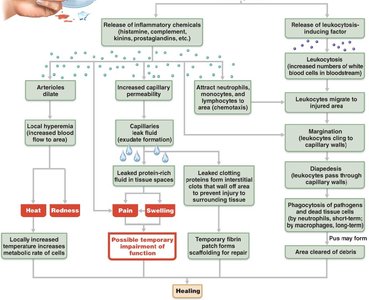
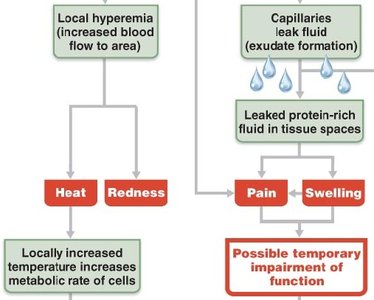
Inflammation is a nonspecific response to tissue injury, serving to prevent the spread of damaging agents, dispose of debris, and set the stage for repair. It is characterized by four cardinal signs: swelling, redness, heat, and pain.
Stage 1: Release of inflammatory chemicals (histamine, kinins, prostaglandins, cytokines).
Stage 2: Vasodilation and increased vascular permeability (causes redness, heat, swelling, pain).
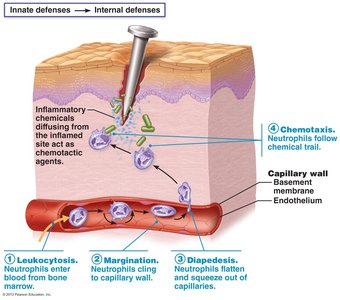
Stage 3: Phagocyte mobilization (leukocytosis, margination, diapedesis, chemotaxis).

Antimicrobial Proteins: Interferons and Complement
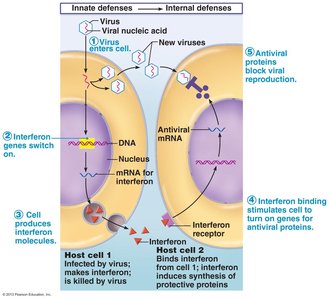
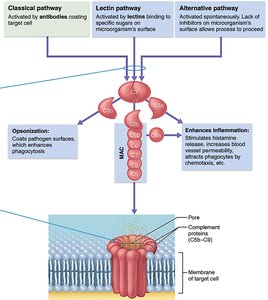
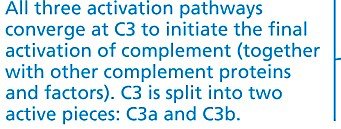
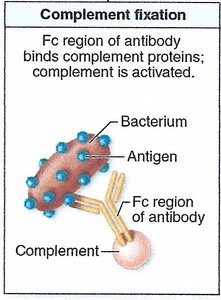
Antimicrobial proteins play a crucial role in innate immunity. Interferons are released by virus-infected cells to inhibit viral replication. The complement system consists of plasma proteins that enhance both innate and adaptive defenses.
Interferons: Block viral protein synthesis and activate NK cells.
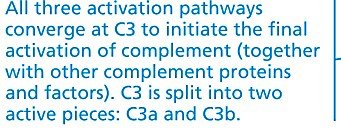
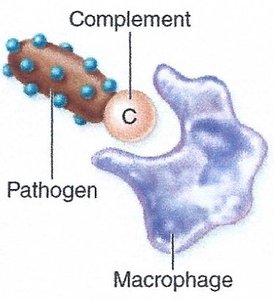
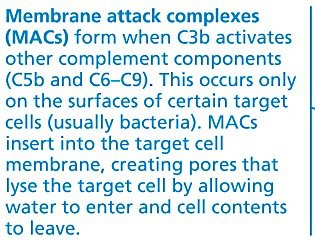
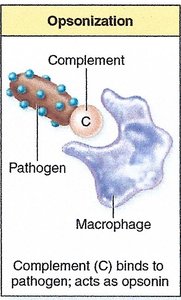
Complement: Promotes phagocytosis, enhances inflammation, and causes cell lysis.

Fever
Fever is a final nonspecific defense mechanism. It is an abnormally high body temperature induced by pyrogens released from leukocytes and macrophages. Fever inhibits pathogen replication and increases metabolic rate, aiding repair.
Pyrogens: Fever-inducing molecules (e.g., interleukins, TNFα).
Stages: Onset, stadium, defervescence.
Adaptive (Specific) Defenses
Characteristics of Adaptive Immunity
Adaptive immunity is specific, systemic, and has memory. It involves lymphocytes (B and T cells) and antigen-presenting cells (APCs). Adaptive responses are slower but more effective upon repeated exposure.
Antigen-specific: Targets identified pathogens.
Systemic: Occurs throughout the body.
Memory: Stronger and faster response upon re-exposure.
Humoral Immunity (Antibody-Mediated)
B cells produce antibodies that target extracellular antigens. Antibodies bind to antigens, marking them for destruction by phagocytes or complement.
Antibodies: Immunoglobulins (IgM, IgA, IgD, IgG, IgE).
Primary response: Initial exposure, slower antibody production.
Secondary response: Faster, stronger response due to memory cells.
Cellular Immunity (Cell-Mediated)
T cells defend against intracellular antigens, cancer cells, and foreign grafts. They recognize processed antigen fragments presented on MHC proteins.
Helper T cells (CD4): Activate B cells, other T cells, and macrophages.
Cytotoxic T cells (CD8): Destroy infected or abnormal cells.
Regulatory T cells: Help maintain tolerance.
Antigen Presentation and MHC Proteins
Antigen-presenting cells (APCs) display antigen fragments on MHC proteins to activate T cells. There are two classes of MHC proteins:
Class I MHC: Found on all nucleated cells; recognized by CD8 T cells.
Class II MHC: Found on APCs; recognized by CD4 T cells.
Immune System Disorders
Immunodeficiencies
Immunodeficiencies result from impaired production or function of immune components. Examples include congenital disorders (SCID) and acquired conditions (AIDS, Hodgkin's lymphoma).
Autoimmune Diseases
Autoimmune diseases occur when the immune system fails to distinguish self from non-self, producing autoantibodies and cytotoxic T cells that attack the body's own tissues. Examples include myasthenia gravis, multiple sclerosis, and type I diabetes mellitus.
Hypersensitivities
Hypersensitivities are exaggerated immune responses to harmless antigens (allergens). They are classified by time course and whether antibodies or T cells are involved:
Immediate (Type I): Allergies, mediated by IgE.
Subacute (Types II & III): Antibody-mediated, involve IgG and IgM.
Delayed (Type IV): T cell-mediated, appear in 1-3 days.
Allergic reactions may be local or systemic, with anaphylactic shock being a severe systemic response.
Summary Table: Innate vs Adaptive Defenses
Innate Defenses | Adaptive Defenses |
|---|---|
Surface barriers (skin, mucous membranes) | Humoral immunity (B cells, antibodies) |
Phagocytes, NK cells, inflammation, antimicrobial proteins, fever | Cellular immunity (T cells) |
Nonspecific, always ready, no memory | Specific, systemic, memory, takes more time |
Key Terms and Concepts
Pathogen: Disease-causing microorganism.
Antigen: Substance that provokes an immune response.
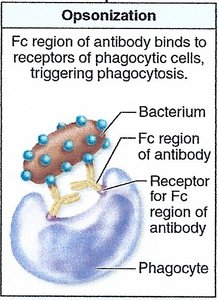
Opsonization: Process by which pathogens are coated to enhance phagocytosis.
Complement: Group of plasma proteins that aid in immune responses.
Immunogenicity: Ability of an antigen to provoke an immune response.
Self-tolerance: Ability of immune cells to avoid attacking the body's own tissues.
Additional info: The notes expand on brief points from the original materials, providing academic context, definitions, and examples for clarity and completeness.
