 Back
BackChapter 21: The Immune System – Innate and Adaptive Body Defenses
Study Guide - Smart Notes
 Tailored notes based on your materials, expanded with key definitions, examples, and context.
The Immune System: Overview
Introduction to the Immune System
The immune system provides resistance to disease by defending the body against pathogens such as bacteria, fungi, and viruses. Unlike anatomical organ systems, the immune system is a functional system composed of a variety of molecules and immune cells, especially lymphocytes, that reside in lymphoid tissues and circulate in body fluids. The immune system can be likened to a medieval castle with multiple lines of defense that act both independently and cooperatively to resist invasion.
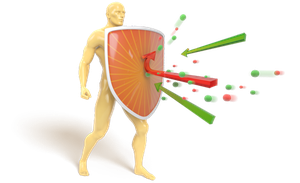

Two Major Intrinsic Systems
Innate (nonspecific) defense system: Provides the first and second lines of defense.
Adaptive (specific) defense system: The third line of defense, which targets particular foreign substances and takes longer to react than the innate system.

Innate (Nonspecific) Defenses
First Line of Defense: Surface Barriers
The first line of defense consists of surface membranes (skin and mucous membranes) and their secretions, which act as physical barriers to most microorganisms. These barriers also produce protective chemicals that inhibit or destroy microorganisms:
Acid: The acidity of skin and some mucous secretions inhibits microbial growth (acid mantle).
Enzymes: Lysozyme in saliva, respiratory mucus, and lacrimal fluid of the eye, as well as enzymes in the stomach, destroy bacteria.
Mucin: Sticky mucus lining the digestive and respiratory tracts traps microorganisms.
Defensins: Antimicrobial peptides that inhibit microbial growth.
Other chemicals: Lipids in sebum and dermicidin in sweat are toxic to some bacteria.
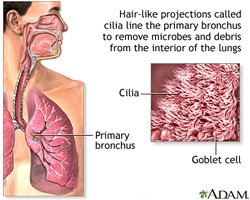
The respiratory system has additional modifications, such as mucus-coated hairs in the nose and cilia in the upper respiratory tract, which sweep dust- and bacteria-laden mucus toward the mouth.
Second Line of Defense: Internal Defenses
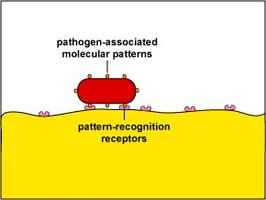
If surface barriers are breached, the internal second line of defense is activated to protect deeper tissues. Many of these cells have pattern recognition receptors that recognize pathogen-associated molecular patterns (PAMPs) on microbes.
Phagocytes: White blood cells that ingest and digest foreign invaders (e.g., neutrophils, macrophages, dendritic cells, mast cells).
Natural Killer (NK) cells: Nonphagocytic lymphocytes that kill virus-infected and cancer cells by inducing apoptosis and secreting chemicals that enhance inflammation.
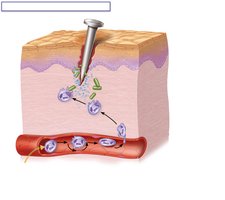
Inflammatory response: Triggered by tissue injury, it prevents the spread of damaging agents, disposes of debris and pathogens, alerts the adaptive immune system, and sets the stage for repair.
Antimicrobial proteins: Such as interferons and complement proteins, which hinder microorganism reproduction or attack them directly.
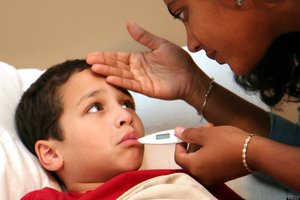
Fever: A systemic response to infection that increases body temperature to inhibit microbial growth and speed up tissue repair.
Phagocytosis
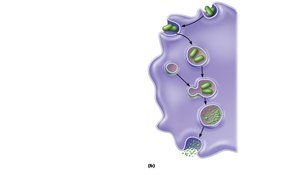
Phagocytes engulf pathogens through a series of steps: adherence, engulfment (forming a phagosome), fusion with a lysosome (forming a phagolysosome), digestion, and exocytosis of indigestible material.
Natural Killer (NK) Cells
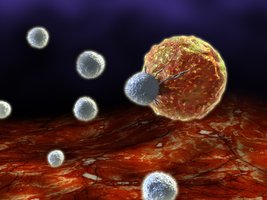
NK cells patrol the blood and lymph, targeting virus-infected and cancer cells. They induce apoptosis and secrete chemicals that enhance inflammation.
Inflammation
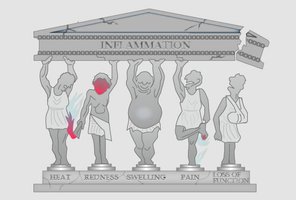
Inflammation is characterized by four cardinal signs: heat, redness, swelling, and pain. Sometimes, loss of function is also observed. The stages of inflammation include chemical release, vasodilation and increased vascular permeability, and phagocyte mobilization.
Antimicrobial Proteins
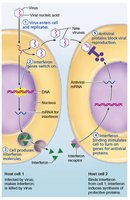
Interferons (IFNs): Proteins released by virus-infected cells that protect uninfected cells and mobilize the immune system.
Complement proteins: Bloodborne proteins that, when activated, lyse microorganisms, enhance phagocytosis, and intensify inflammation.
Fever
Fever is an abnormally high body temperature induced by pyrogens released from leukocytes and macrophages. It causes the liver and spleen to sequester iron and zinc, increases metabolic rate, and accelerates tissue repair.
Adaptive (Specific) Defenses
Overview of Adaptive Immunity
The adaptive immune system is a specific defense system that eliminates almost any pathogen or abnormal cell. It is characterized by specificity, systemic action, and memory. The adaptive system consists of two overlapping arms:
Humoral immunity: Antibody-mediated immunity provided by B cells and antibodies in body fluids, targeting extracellular pathogens.
Cellular immunity: Cell-mediated immunity provided by T cells, targeting infected or abnormal cells directly or indirectly.
Cells of the Adaptive Immune Response
B lymphocytes (B cells): Provide humoral immunity by producing antibodies.
T lymphocytes (T cells): Provide cellular immunity by directly attacking infected cells or regulating immune responses.
Antigen-presenting cells (APCs): Present antigens to T cells and play auxiliary roles in immunity (e.g., dendritic cells, macrophages, B cells).
Lymphocyte Life Cycle
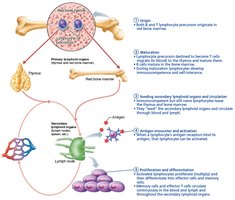
Origin: All lymphocytes originate from hematopoietic stem cells in red bone marrow.
Maturation: B cells mature in bone marrow; T cells mature in the thymus. Maturation ensures immunocompetence and self-tolerance.
Seeding secondary lymphoid organs: Naive immunocompetent cells colonize secondary lymphoid organs (e.g., lymph nodes, spleen).
Antigen encounter and activation: First encounter with antigen triggers clonal selection and activation.
Proliferation and differentiation: Activated lymphocytes proliferate and differentiate into effector and memory cells.
Humoral Immunity
Antibody Production and Function
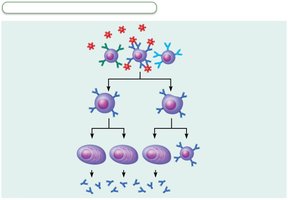
When B cells encounter their specific antigen, they are activated and differentiate into plasma cells (which secrete antibodies) and memory B cells (which provide immunological memory). Antibodies bind to extracellular targets, inactivating them and marking them for destruction.
Immunological Memory
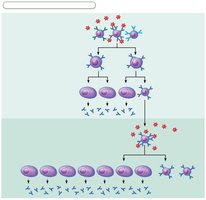
Primary immune response: Occurs upon first exposure to an antigen, with a lag period of 3–6 days and peak antibody levels at 10 days.
Secondary immune response: Upon re-exposure, memory cells respond rapidly and robustly, with higher antibody levels and greater affinity.
Active and Passive Humoral Immunity
Active immunity: B cells encounter antigens and produce antibodies (naturally by infection or artificially by vaccination).
Passive immunity: Ready-made antibodies are introduced (naturally from mother to fetus/infant or artificially by injection); no immunological memory is established.
Antibody Structure and Mechanisms
Antibodies (immunoglobulins) are Y-shaped proteins composed of two heavy and two light chains. The variable regions form antigen-binding sites, while the constant regions determine the antibody class and function. Antibodies inactivate antigens by:
Neutralization
Agglutination
Precipitation
Complement fixation
Cellular Immunity
T Lymphocytes and Their Functions
T cells defend against intracellular antigens (e.g., virus-infected cells, cancer cells, transplanted cells). They act directly by killing target cells or indirectly by releasing chemicals that regulate immune responses.
CD4 T cells: Differentiate into helper T cells (activate B cells, other T cells, and macrophages) or regulatory T cells (moderate immune response).
CD8 T cells: Differentiate into cytotoxic T cells (destroy cells harboring foreign antigens) and memory T cells.
Antigen Presentation and MHC Proteins
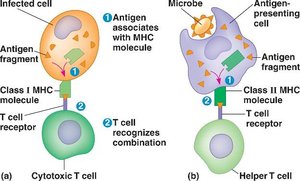
T cells respond only to processed antigen fragments presented by antigen-presenting cells (APCs) via major histocompatibility complex (MHC) proteins. MHC proteins are unique to each individual and come in two classes:
MHC class I: Present on all nucleated cells; present endogenous antigens to CD8 T cells.
MHC class II: Present on APCs; present exogenous antigens to CD4 T cells.
Immune System Disorders
Immunodeficiency
Immunodeficiency is a condition where the immune system's ability to fight infectious disease is compromised or entirely absent. Examples include:
Severe combined immunodeficiency (SCID): Genetic defect resulting in a deficit of B and T cells; treated with bone marrow transplants.
Acquired immune deficiency syndrome (AIDS): Caused by HIV, which destroys helper T cells, leading to severe immunosuppression.
Autoimmune Diseases
Autoimmune diseases occur when the immune system fails to distinguish self from nonself, attacking the body's own tissues. Examples include:
Rheumatoid arthritis: Destroys joints.
Graves’ disease: Causes hyperthyroidism.
Type 1 diabetes mellitus: Destroys pancreatic cells.
Hypersensitivities
Hypersensitivities are inappropriate or excessive immune responses to harmless antigens, causing tissue damage. Types include:
Type I (Immediate) hypersensitivity: Allergies; rapid onset, mediated by antibodies (e.g., anaphylactic shock).
Type IV (Delayed) hypersensitivity: Slow onset (1–3 days), mediated by T cells and macrophages (e.g., allergic contact dermatitis).
