 Back
Chapter 3: The Cell – Structure, Function, and Processes
Study Guide - Smart Notes
 Tailored notes based on your materials, expanded with key definitions, examples, and context.
Chapter 3: The Cell
Module 3.1: Introduction to Cells
The cell is the fundamental unit of life in all living organisms. Understanding its structure and function is essential for studying anatomy and physiology.
Three Main Parts of a Cell:
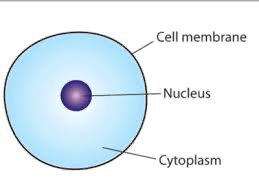
Plasma membrane: Separates the interior of the cell from the external environment; regulates entry and exit of substances.
Cytoplasm: The region between the plasma membrane and nucleus; contains cytosol and organelles.
Nucleus: The control center of the cell; stores genetic information and directs cellular activities.
Cell Types: The average adult has about 100 trillion cells, classified into four main types based on function and structure.
Intracellular vs. Extracellular Fluid:
Intracellular fluid: Located inside the cell.
Extracellular fluid: Located outside the cell.
Passive Transport: Movement of substances from high to low concentration without energy input.
Simple diffusion: Direct movement across the membrane; no protein required.
Facilitated diffusion: Movement through channel proteins; used for molecules like sugars.
Cytoplasm vs. Cytosol:
Cytoplasm: Includes cytosol and organelles.
Cytosol: The liquid portion of the cytoplasm.
Module 3.2: Structure of the Plasma Membrane
The plasma membrane is a selectively permeable barrier composed of lipids, proteins, and carbohydrates, crucial for maintaining cellular integrity and communication.
Lipid Distribution:
Phospholipid bilayer: Two layers arranged tail-to-tail; hydrophilic heads face outward, hydrophobic tails face inward.
Function: Provides selective permeability; polar molecules cannot cross easily.
Proteins and Carbohydrates:
Proteins: Scattered throughout the bilayer; include integral (span membrane) and peripheral (surface) proteins.
Functions: Ion channels, carrier proteins, receptors, enzymes, structural and linking proteins.
Carbohydrates: Attached to proteins (glycoproteins) and lipids (glycolipids) on the outer surface; involved in cell recognition, protection (glycocalyx), and adhesion.
Fluid Mosaic Model:
Describes the membrane as a flexible, dynamic structure with a mosaic of proteins embedded in a phospholipid bilayer.
Cholesterol stabilizes and maintains fluidity.
Carbohydrates facilitate cell recognition and communication.
Module 3.3: Transport Across the Plasma Membrane
Cells transport substances across their membranes using various mechanisms, each with distinct energy requirements and molecular targets.
Osmosis and Diffusion:
Osmosis: Movement of water through channel proteins (aquaporins) from high to low concentration; affects cell volume (tonicity).
Diffusion: Passive movement of molecules from high to low concentration.
Tonicity Effects:
Condition
Solute Concentration
Water Movement
Cell Effect
Hypertonic
Higher outside
Out of cell
Cell shrinks (crenation)
Isotonic
Equal inside/outside
No net movement
Cell size unchanged
Hypotonic
Lower outside
Into cell
Cell swells/bursts (lysis)
Active Transport:
Primary: Uses ATP to move substances from low to high concentration.
Secondary: Uses energy stored in ion gradients.
Vesicular Transport:
Endocytosis: Cell membrane forms vesicles to bring in materials; includes phagocytosis, pinocytosis, and receptor-mediated endocytosis.
Exocytosis: Vesicles fuse with membrane to release contents outside.
Transcytosis: Combination of endo- and exocytosis; transports materials across the cell.
Module 3.4: Cytoplasmic Organelles
Organelles are specialized structures within cells that perform essential functions for survival and operation.
Nucleus: Large, spherical organelle with a double membrane; stores genetic information and directs protein synthesis.
Mitochondria: Oval-shaped, double-membraned; produces ATP via cellular respiration.
Ribosomes: Small particles of RNA and protein; synthesize proteins.
Endoplasmic Reticulum (ER): Network of membranes; rough ER (with ribosomes) processes proteins, smooth ER synthesizes lipids and detoxifies.
Golgi Apparatus: Stack of flattened sacs; modifies, sorts, and packages proteins/lipids.
Lysosomes: Vesicles with digestive enzymes; break down waste and foreign substances.
Peroxisomes: Vesicles with oxidative enzymes; break down fatty acids and detoxify.
Centrioles: Cylindrical microtubule structures; organize cell division.
Cytoskeleton: Network of protein filaments; maintains shape, enables movement, organizes organelles.
Plasma Membrane: Phospholipid bilayer with proteins, cholesterol, and carbohydrates; controls entry/exit and communication.
Endomembrane System Interaction
The endomembrane system includes the nuclear envelope, ER, Golgi apparatus, lysosomes, vesicles, and plasma membrane. These organelles work together to modify, package, and transport lipids and proteins within the cell.
The Cytoskeleton
The cytoskeleton is a dynamic network of protein filaments that provides structural support, enables movement, and organizes cellular components.
Microfilaments (Actin): Thin strands; support shape, enable movement, assist in cell division.
Intermediate Filaments: Rope-like fibers; provide mechanical strength, anchor organelles.
Microtubules: Hollow tubes; form tracks for organelle movement, make up cilia/flagella, organize chromosomes during division.
Centrioles, Cilia, and Flagella
Centrioles: Organize microtubules during cell division.
Cilia: Short projections; move substances across cell surfaces.
Flagella: Long extensions; propel cells through liquid environments.
The Nucleus
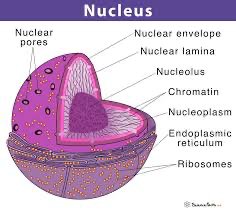
The nucleus is the cell's control center, responsible for storing genetic information and directing cellular activities.
Structure: Large, spherical organelle with a double membrane (nuclear envelope), nuclear pores, chromatin, nucleolus, and nucleoplasm.
Function: Stores genetic information, controls cell activities, directs protein synthesis.
Chromatin and Chromosomes
Chromatin: DNA-protein complex; DNA wraps around histones forming nucleosomes; can be loosely (euchromatin) or tightly (heterochromatin) packed.
Chromosomes: Highly condensed chromatin; visible during cell division; consists of two sister chromatids joined at a centromere.
Interrelationships
Chromatin condenses to form chromosomes before cell division.
Duplicated chromosomes have two sister chromatids, which separate during division.
Nucleolus
Structure: Dense region inside the nucleus; composed of RNA, proteins, and DNA.
Function: Produces ribosomes by synthesizing rRNA and assembling ribosomal subunits.
The Cell Cycle
The cell cycle is the series of events that cells undergo for growth, DNA replication, and division.
Interphase: Includes G1 (growth), S (DNA replication), and G2 (preparation for division).
Stages:
G1: Cell grows and performs normal functions.
S: DNA is replicated.
G2: Cell prepares for division.
Mitosis: Nucleus divides.
Cytokinesis: Cytoplasm divides, forming two daughter cells.
Mitosis vs. Cytokinesis:
Mitosis: Division of the nucleus and chromosomes.
Cytokinesis: Division of the cytoplasm.
DNA Replication:
DNA unwinds and unzips.
Each strand acts as a template.
Complementary nucleotides are added by DNA polymerase.
Two identical DNA molecules are produced, each with one old and one new strand.
Example: During mitosis, a skin cell divides to produce two identical daughter cells, ensuring tissue repair and growth.
Additional info: The cell cycle is tightly regulated by checkpoints to prevent uncontrolled cell division, which can lead to cancer.
