 Back
BackChapter 4: Histology – Study Guide for Human Anatomy & Physiology
Study Guide - Smart Notes
 Tailored notes based on your materials, expanded with key definitions, examples, and context.
Histology: The Study of Tissues
Definition and Overview
Histology is the branch of biology concerned with the study of tissues, which are groups of structurally and functionally related cells and their extracellular matrix (ECM). The four primary tissue types in the human body are epithelial, connective, muscle, and nervous tissues.
Extracellular Matrix (ECM)
Components and Functions
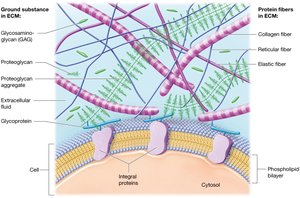
The extracellular matrix is a complex network of proteins and other molecules that provide structural and biochemical support to surrounding cells. It consists of:
Ground substance: The main component, containing water, nutrients, and ions.
Protein fibers:
Collagen fibers: Resist tension and pressure.
Elastic fibers: Composed of elastin; allow stretch and recoil.
Reticular fibers: Small collagen fibers; support cells and ground substance.
Cell Junctions
Types and Functions
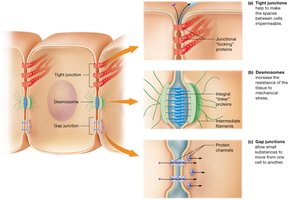
Cell junctions are specialized structures that connect neighboring cells via integral proteins. The three main types are:
Tight junctions: Seal spaces between cells, making the tissue impermeable.
Desmosomes: Provide mechanical strength by linking cells together.
Gap junctions: Allow substances to move directly from cell to cell.
Epithelial Tissues
Functions and Characteristics
Epithelial tissues cover every internal and external body surface. Their main functions include:
Protection: Acts as a barrier against physical and chemical injury.
Immune defense: Serves as a physical barrier to pathogens.
Secretion: Produces substances such as hormones and oils.
Transport: Facilitates movement of substances into other tissues.
Sensation: Rich nerve supply enables sensory functions.
Key characteristics:
Tight junctions and desmosomes maintain tissue integrity.
Avascular: Lacks blood vessels; nutrients diffuse from underlying connective tissue.
Basement membrane: Thin ECM layer anchoring epithelium to connective tissue, composed of basal lamina (collagen) and reticular lamina (reticular fibers).
Glandular Epithelia
Glandular epithelia are specialized for synthesizing and secreting products. Types include:
Endocrine glands: Release products directly into the blood, causing systemic effects.
Exocrine glands: Release products onto epithelial surfaces, causing local effects.
Goblet Cells
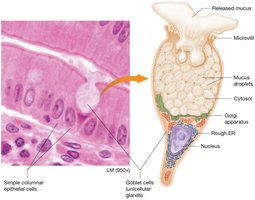
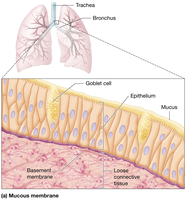
Goblet cells are the most common unicellular exocrine glands, secreting mucus for protection and lubrication.
Multicellular Exocrine Glands
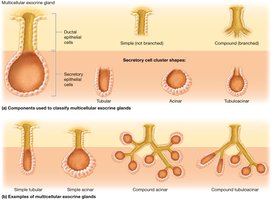
Most exocrine glands are multicellular, classified by duct structure and secretory cell cluster shape:
Simple (unbranched) or compound (branched) ducts
Acinar (rounded) or tubular (elongated) clusters
Methods of Secretion
Exocrine glands use different methods to release their products:
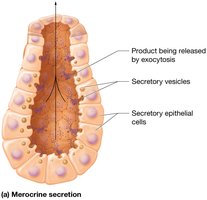
Merocrine: Most common; products released by exocytosis into ducts.
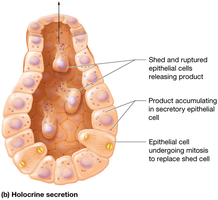
Holocrine: Products released when cells rupture.
Apocrine: Portion of cytoplasm pinched off with product.
Connective Tissues
Functions
Connective tissues serve to connect and bind tissues, provide support, protect organs, and transport substances (e.g., blood).
Connective Tissue Proper
This widely distributed tissue connects organs and tissues. Main cell types include:
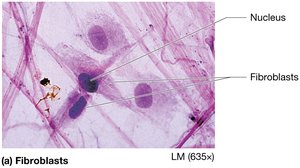
Fibroblasts: Most common; produce protein fibers and ground substance.
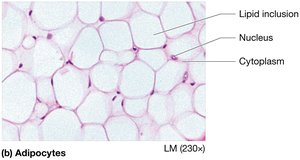
Adipocytes: Fat cells; store lipids.
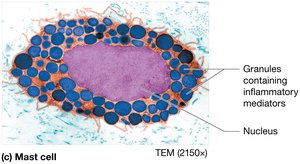
Mast cells: Immune cells; release histamine to trigger inflammation.
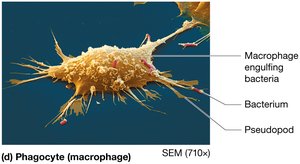
Phagocytes: Immune cells; ingest foreign substances (macrophages and neutrophils).
Specialized Connective Tissues
Cartilage: Contains chondrocytes; found in joints, ear, nose, and respiratory tract. Avascular, flexible, absorbs shock, resists tension and compression.
Bone: Contains osteocytes; supports and protects, attachment for muscles, stores calcium, houses bone marrow.
Blood: Contains RBCs, WBCs, platelets; plasma is the unique ECM, mostly water.
Muscle Tissues
Structure and Function
Muscle tissues are composed of myocytes (muscle cells) that are excitable and specialized for contraction. The endomysium is the ECM surrounding muscle tissue.
Nervous Tissues
Structure and Function
Nervous tissues consist of neurons (cells that send and receive messages) and neuroglia (supportive cells that can divide). The ECM contains unique proteoglycans and very few fibers. Nervous tissue is found in the brain, spinal cord, and nerves.
Membranes
Definition and Types
Membranes line body surfaces and cavities, consisting of an epithelial layer resting on a connective tissue layer. They anchor organs, serve as barriers, provide immunity, and facilitate secretion.
True Membranes
Serous membranes: Line pericardial, peritoneal, and pleural cavities. Composed of mesothelium, basement membrane, and connective tissue. Mesothelial cells produce serous fluid.
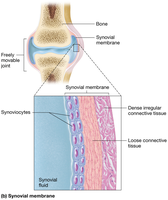
Synovial membranes: Line cavities surrounding some joints. Outer layer is connective tissue; inner layer contains modified fibroblasts that secrete synovial fluid.
Membrane-like Structures
Mucous membranes: Line passages open to the outside of the body. Composed of epithelium, basement membrane, and connective tissue. Goblet cells secrete mucus for protection.
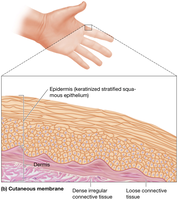
Cutaneous membrane: The skin; consists of epidermis (keratinized stratified squamous epithelium) and dermis (connective tissue).
Tissue Repair
Mechanisms of Repair
Tissue repair is the process of wound healing. There are two main mechanisms:
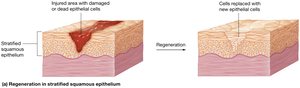
Regeneration: Damaged cells are replaced with cells of the same type, restoring normal function.
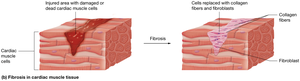
Fibrosis: Fibroblasts undergo mitosis and produce collagen, forming scar tissue (dense irregular connective tissue). The tissue loses its original function.
Capacity for Tissue Repair
Epithelial tissue: Regenerates via stem cells or mature cells undergoing mitosis.
Connective tissue: Regenerates, except cartilage.
Smooth muscle: Regenerates.
Cardiac and skeletal muscle: Mostly undergo fibrosis.
Nervous tissue: Undergoes fibrosis; neurons do not divide, neuroglia replace damaged neurons with scar tissue.
Factors Affecting Tissue Repair
Nutrition: Adequate supply of amino acids (e.g., for collagen protein) is essential.
Blood supply: Inadequate supply impairs healing.
