 Back
Chapter 9: The Central Nervous System – Structure, Function, and Integration
Study Guide - Smart Notes
 Tailored notes based on your materials, expanded with key definitions, examples, and context.
The Central Nervous System
Introduction
The central nervous system (CNS) is the primary control center of the body, integrating sensory information and coordinating motor output. It is responsible for higher-order functions such as thought, memory, and emotion. The CNS consists of the brain and spinal cord, both protected by bone, meninges, and cerebrospinal fluid.
Emergent Properties of Neural Networks
Complexity and Adaptation
Emergent properties are characteristics that arise from the interactions of simpler elements—in this case, billions of neurons forming complex networks.
Neural networks can restructure themselves in response to sensory input and experience, a process known as neuroplasticity.
Learning and memory depend on the formation, strengthening, or weakening of synaptic connections.
Evolution of Nervous Systems
Comparative Anatomy
All animals sense and respond to their environment, often using similar neural structures.
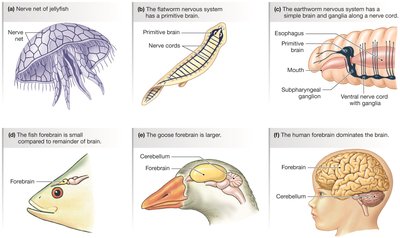
Primitive nervous systems (e.g., jellyfish) lack a CNS, while more complex animals (e.g., flatworms, earthworms) have simple brains and nerve cords.
Vertebrate evolution is marked by dramatic changes in the forebrain, especially the cerebrum.
Anatomy and Development of the Central Nervous System
Embryological Development
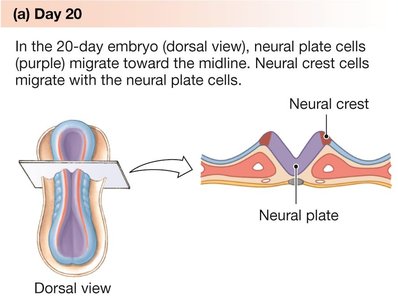
The CNS begins as a flat neural plate that folds to form a hollow neural tube.
Neural crest cells migrate with the neural plate and contribute to the peripheral nervous system.
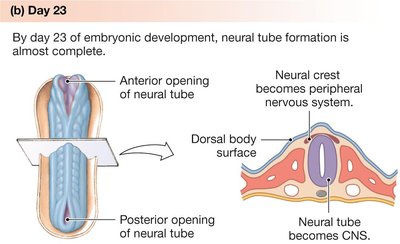
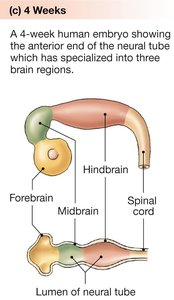
By 4 weeks, the neural tube differentiates into the forebrain, midbrain, hindbrain, and spinal cord.
At 6 weeks, further specialization occurs, forming the cerebrum, diencephalon, midbrain, cerebellum, pons, and medulla oblongata.
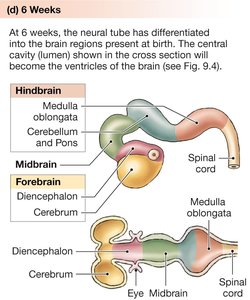
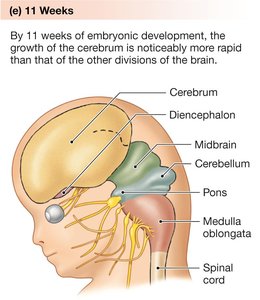
By 11 weeks, the cerebrum grows rapidly, eventually covering most other brain regions by birth (40 weeks).
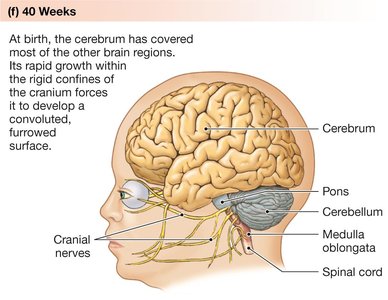
The folding of the cerebrum creates gyri and sulci, increasing surface area for cortical processing.
Structural Overview
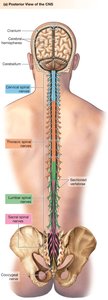
The CNS is protected by the skull, vertebral column, meninges, and is suspended in cerebrospinal fluid (CSF).
It integrates sensory information and produces motor output, as well as higher intellectual functions.
Metabolic Requirements
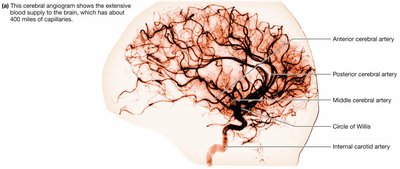
Neurons require a constant supply of oxygen and glucose due to limited energy reserves and no storage for O2.
The brain uses about 20% of the body's oxygen and 50% of its glucose.
Interruption of blood flow (ischemic stroke) or glucose supply can cause rapid and permanent damage.
The Spinal Cord
Function and Reflexes
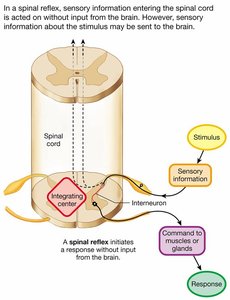
The spinal cord transmits information between the PNS and brain, and can act as an integration center for reflexes.
Spinal reflexes are rapid, automatic responses that do not require brain input, involving only two or three neurons.
The Brain
Major Divisions
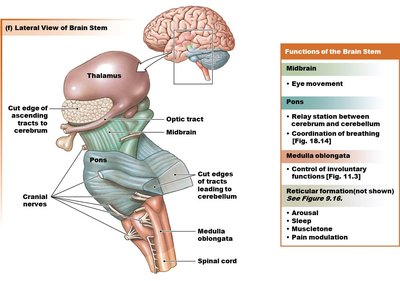
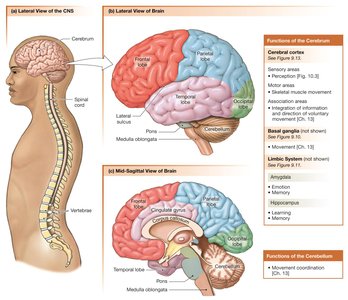
The brain is divided into the brainstem, cerebellum, diencephalon, and cerebrum.
The brainstem (medulla oblongata, pons, midbrain) controls autonomic functions and contains the reticular formation, which maintains consciousness.
The Cerebellum
Coordinates and adjusts body movements, using sensory input to fine-tune motor output.
Essential for complex, learned motor patterns.
The Diencephalon
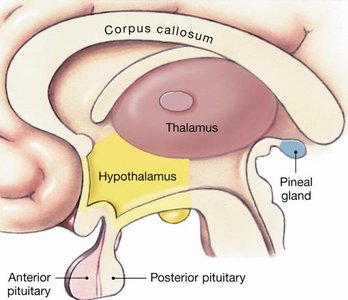
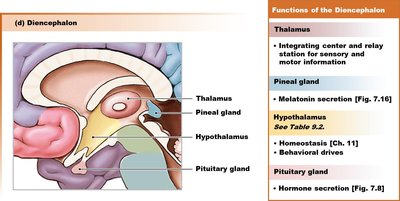
Composed of the epithalamus (pineal gland), thalamus, and hypothalamus.
The thalamus relays and modifies sensory/motor signals to/from the cerebrum.
The hypothalamus is a major homeostatic control center and links the nervous and endocrine systems.
The Cerebrum
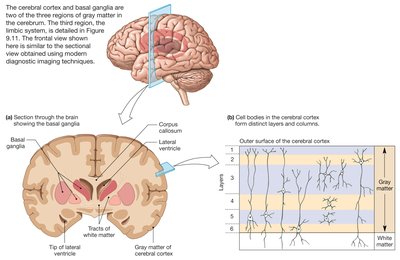
The largest brain region, responsible for higher-order functions such as thought, consciousness, and voluntary movement.
Contains the cerebral cortex (gray matter), basal nuclei, and limbic system.
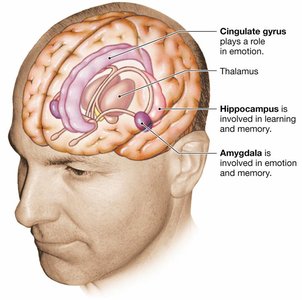
The Limbic System
Functional group involved in emotion, memory, and learning (includes amygdala, hippocampus, cingulate gyrus, etc.).
Links conscious and subconscious brain functions.
Brain Function and Organization
Functional Pathways
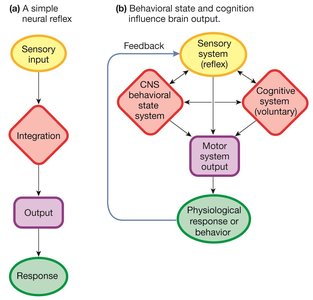
Brain functions are complex, involving interactions between sensory input, conscious (cognitive) processes, and subconscious (behavioral state) processes.
Unlike simple reflexes, these systems interact and can generate internal stimuli.
Cerebral Cortex Functional Areas
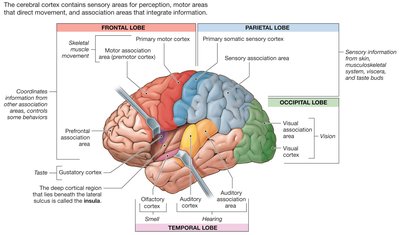
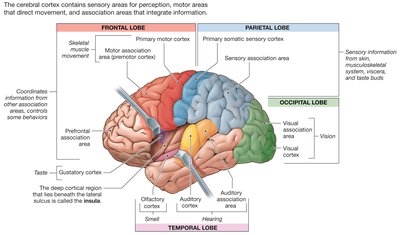
Divided into motor areas (voluntary movement), sensory areas (processing sensory input), and association areas (integration and interpretation).
Key regions include the primary motor cortex (frontal lobe), primary somatosensory cortex (parietal lobe), visual cortex (occipital lobe), auditory and olfactory cortices (temporal lobe), and gustatory cortex (insula/frontal lobe).
Association areas integrate sensory input with memory and other information for perception and planning.
Lateralization of Brain Functions
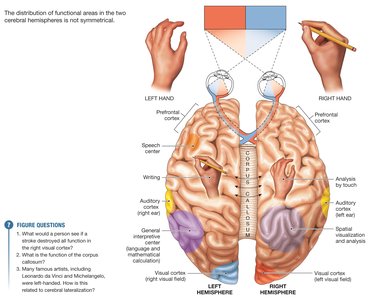
Some functions are localized to one hemisphere (lateralization), such as language (usually left) and spatial skills (usually right).
Wernicke's and Broca's areas are typically in the dominant hemisphere.
Perception
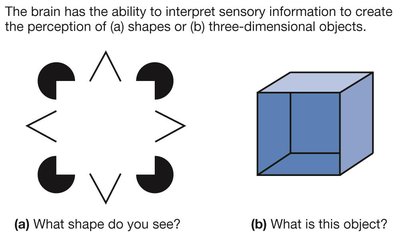
Perception is the conscious interpretation of sensory stimuli, constructed by the brain using both current input and stored information.
The brain can fill in missing details, which can lead to both accurate and inaccurate perceptions (e.g., optical illusions).
Behavioral State System and Modulation
Diffuse Modulatory Systems
Originating in the reticular formation, these systems use neurotransmitters (norepinephrine, serotonin, dopamine, acetylcholine) to regulate attention, arousal, memory, and motor control.
The dopaminergic system is crucial for motor control and reward pathways (implicated in addiction and Parkinson's disease).
Sleep and Circadian Rhythms
Sleep is a reversible state of inactivity, essential for brain function, memory consolidation, and waste clearance.
Sleep cycles include REM and non-REM stages (N1, N2, N3), with deep sleep (N3) being most restorative.
Circadian rhythms are regulated by the suprachiasmatic nucleus in the hypothalamus, which synchronizes with light input and controls melatonin production.
Emotion, Motivation, Learning, and Memory
Limbic System and Emotion
The limbic system (amygdala, hippocampus) is central to emotion, memory, and motivation.
Emotional states can trigger physiological responses (e.g., fight-or-flight).
Moods are long-lasting emotional states; mood disorders (e.g., depression) often involve altered neurotransmitter signaling.
Motivation and Drives
Motivation arises from internal signals and can be simple (hunger, thirst) or complex (curiosity).
Drives increase arousal and goal-oriented behavior, often ending when the need is satisfied.
Motivation works with autonomic and endocrine responses to maintain homeostasis.
Learning and Memory
Learning is the acquisition of knowledge, divided into associative (linking stimuli) and nonassociative (habituation, sensitization) types.
Memory involves the storage and recall of information in the cerebral cortex (memory traces).
Short-term memory is temporary; working memory is a form of short-term memory for active tasks.
Long-term memory is formed through consolidation, involving synaptic changes (long-term potentiation).
Declarative memory (facts, events) requires conscious recall; reflexive memory (skills, procedures) is automatic.
Some declarative memories can become reflexive with repetition.
Language
Language involves complex integration of sensory and motor pathways.
Wernicke's area (language comprehension) and Broca's area (speech production) are key regions.
