 Back
BackChemical Level of Organization: Study Notes for Anatomy & Physiology I
Study Guide - Smart Notes
 Tailored notes based on your materials, expanded with key definitions, examples, and context.
Chemical Level of Organization
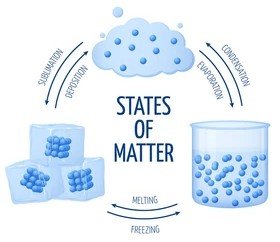
States of Matter
The physical world is composed of matter, which exists in different states: solid, liquid, and gas. Each state is characterized by the arrangement and movement of particles, and transitions between states involve energy changes.
Solid: Particles are tightly packed and maintain a fixed shape.
Liquid: Particles are less tightly packed, allowing flow and variable shape.
Gas: Particles are far apart and move freely, filling any container.
Phase Changes: Include melting, freezing, evaporation, condensation, sublimation, and deposition.
Organization of Matter
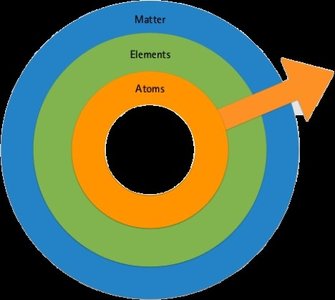
Matter is organized hierarchically, from elements to atoms, and then to molecules and compounds. Understanding this structure is fundamental to studying chemistry and biology.
Matter: Anything that has mass and occupies space.
Elements: Pure substances consisting of only one type of atom.
Atoms: The smallest unit of an element, composed of subatomic particles.
Atomic Structure
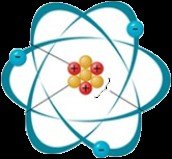
Atoms consist of a nucleus containing protons and neutrons, surrounded by electrons in shells. The arrangement of these particles determines the chemical properties of the atom.
Proton: Positively charged particle in the nucleus.
Neutron: Neutral particle in the nucleus.
Electron: Negatively charged particle orbiting the nucleus.
Elements and Isotopes
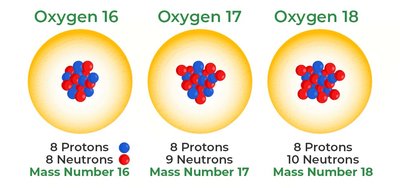
Elements are defined by their atomic number (number of protons). Isotopes are variants of elements with different numbers of neutrons, affecting their mass but not their chemical behavior.
Atomic Number: Number of protons in the nucleus.
Mass Number: Sum of protons and neutrons.
Isotopes: Atoms of the same element with different neutron counts.
Elemental Composition of the Human Body
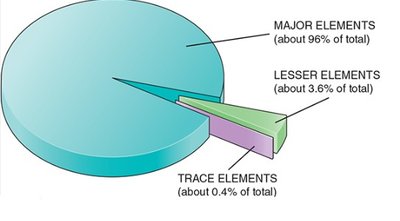
The human body is composed primarily of a few major elements, with lesser and trace elements playing important roles in physiological processes.
Major Elements: Oxygen, carbon, hydrogen, nitrogen (about 96%).
Lesser Elements: Calcium, phosphorus, potassium, sulfur, sodium, chlorine, magnesium, iron (about 3.6%).
Trace Elements: Required in minute amounts (about 0.4%).
Medical Applications of Radioactive Isotopes
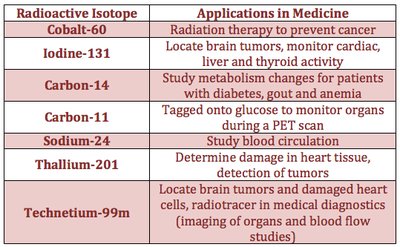
Radioactive isotopes are used in medicine for diagnosis and treatment. Their unique properties allow for imaging, tracing, and therapy in various conditions.
Cobalt-60: Radiation therapy for cancer.
Iodine-131: Locates brain tumors, monitors thyroid activity.
Carbon-14: Studies metabolism in diabetes, gout, anemia.
Technetium-99m: Imaging organs and blood flow.
Radioactive Isotope | Applications in Medicine |
|---|---|
Cobalt-60 | Radiation therapy to prevent cancer |
Iodine-131 | Locate brain tumors, monitor cardiac, liver and thyroid activity |
Carbon-14 | Study metabolism changes for patients with diabetes, gout and anemia |
Carbon-11 | Tagged onto glucose to monitor organs during a PET scan |
Sodium-24 | Study blood circulation |
Thallium-201 | Determine damage in heart tissue, detection of tumors |
Technetium-99m | Locate brain tumors and damaged heart cells, radiotracer in medical diagnostics |
Electron Shells and Valence Electrons
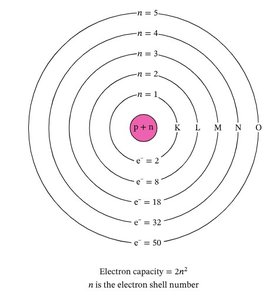
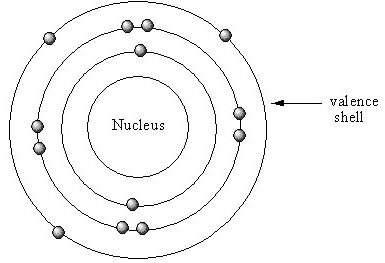
Electrons occupy shells around the nucleus. The outermost shell, called the valence shell, determines an atom's chemical reactivity and bonding behavior.
Electron Shells: Layers where electrons reside, each with a specific capacity.
Valence Electrons: Electrons in the outermost shell, involved in chemical bonding.
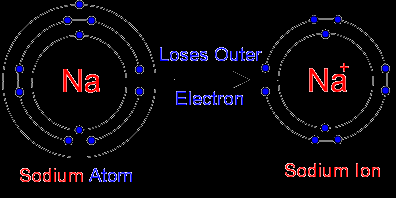
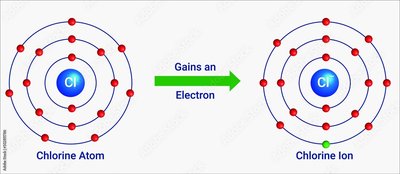
Octet Rule: Atoms are most stable with eight electrons in their valence shell.
Ions and Ionization
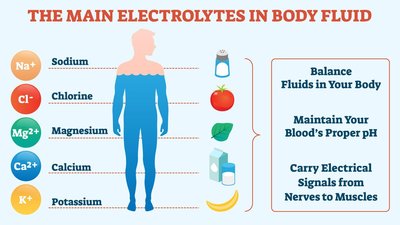
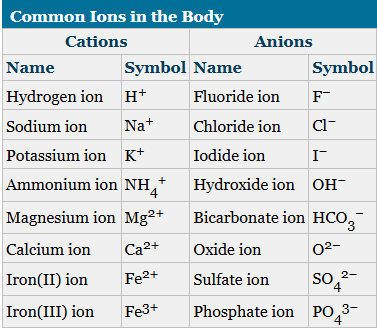
Ions are atoms or molecules with a net charge, formed by gaining or losing electrons. Ionization is crucial for many physiological processes, including nerve transmission and muscle contraction.
Cation: Positively charged ion (loss of electrons).
Anion: Negatively charged ion (gain of electrons).
Electrolytes: Ions in solution that conduct electricity.
Name | Symbol | Name | Symbol |
|---|---|---|---|
Hydrogen ion | H+ | Fluoride ion | F- |
Sodium ion | Na+ | Chloride ion | Cl- |
Potassium ion | K+ | Iodide ion | I- |
Ammonium ion | NH4+ | Hydroxide ion | OH- |
Magnesium ion | Mg2+ | Bicarbonate ion | HCO3- |
Calcium ion | Ca2+ | Oxide ion | O2- |
Iron(II) ion | Fe2+ | Sulfate ion | SO42- |
Iron(III) ion | Fe3+ | Phosphate ion | PO43- |
Free Radicals and Antioxidants
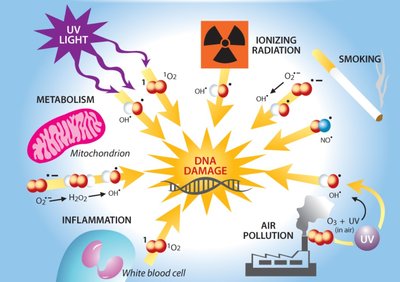
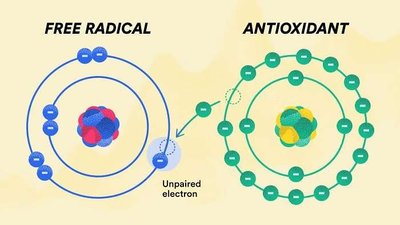
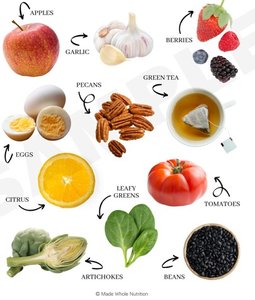
Free radicals are highly reactive molecules with unpaired electrons, capable of causing cellular damage. Antioxidants neutralize free radicals, protecting cells from harm.
Free Radicals: Molecules with unpaired electrons, often produced during metabolism or exposure to radiation.
Antioxidants: Substances that donate electrons to free radicals, preventing cellular damage.
Health Impact: Free radicals are linked to diseases such as cancer, Alzheimer's, and cardiovascular disorders.
Molecules and Compounds
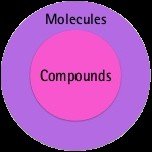
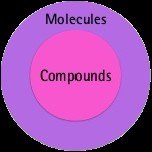
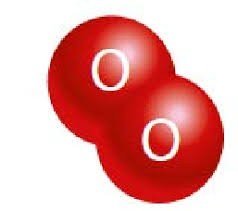
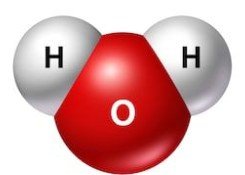
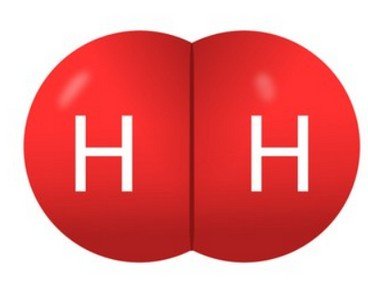
Molecules are formed when atoms share electrons. Compounds are molecules composed of different elements. All compounds are molecules, but not all molecules are compounds.
Molecule: Two or more atoms bonded together.
Compound: Molecule with atoms of different elements.
Chemical Bonds
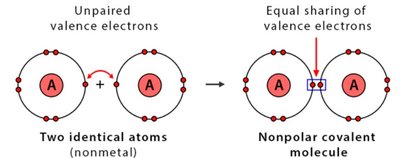
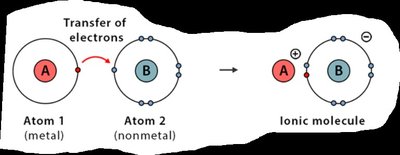
Atoms form bonds to achieve stability. The main types of chemical bonds are ionic, covalent, and hydrogen bonds, each with distinct properties and biological significance.
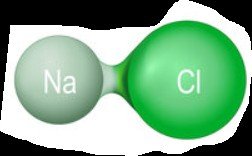
Ionic Bonds: Formed by transfer of electrons between atoms, resulting in charged ions.
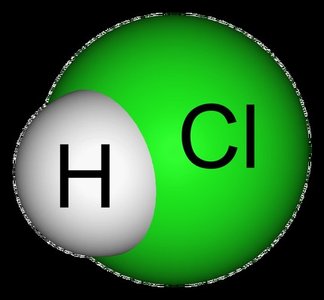
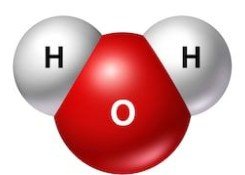
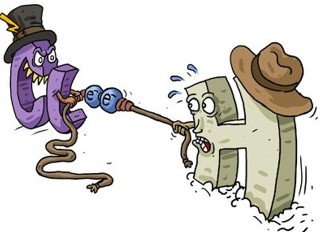
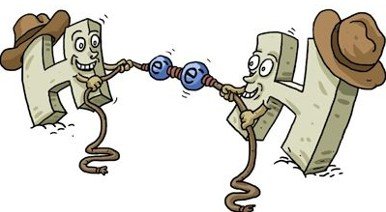
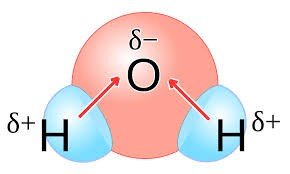
Covalent Bonds: Formed by sharing electrons between atoms. Can be nonpolar (equal sharing) or polar (unequal sharing).
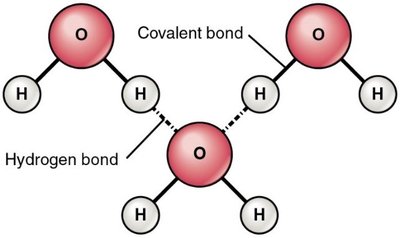
Hydrogen Bonds: Weak bonds between a hydrogen atom and an electronegative atom, important in water and biological molecules.
Chemical Reactions
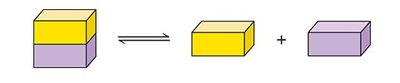
Chemical reactions involve the transformation of reactants into products. The main types include synthesis, decomposition, exchange, reversible, and oxidation-reduction (redox) reactions.
Synthesis Reaction: Two or more substances combine to form a new compound.
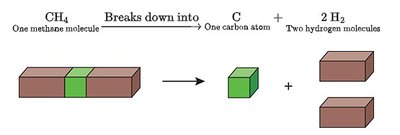
Decomposition Reaction: A compound breaks down into simpler substances.
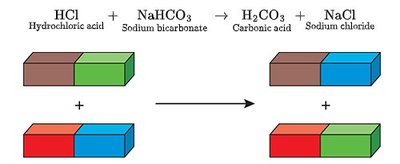
Exchange Reaction: Atoms are exchanged between reactants.
Reversible Reaction: Products can revert back to reactants.
Redox Reaction: Involves transfer of electrons; oxidation is loss, reduction is gain.

Metabolism and Energy
Metabolism encompasses all chemical reactions in the body, including anabolism (building up) and catabolism (breaking down). Energy changes accompany these reactions, with ATP serving as the main energy currency.
Anabolism: Synthesis reactions that build complex molecules.
Catabolism: Decomposition reactions that break down molecules.
ATP: Adenosine triphosphate, stores and releases energy for cellular processes.
Activation Energy and Enzymes
Activation energy is the minimum energy required to start a chemical reaction. Enzymes are biological catalysts that lower activation energy, speeding up reactions without being consumed.
Activation Energy: Energy barrier that reactants must overcome.
Enzymes: Proteins that catalyze reactions, highly specific to substrates.
Lock & Key Model: Substrate fits precisely into enzyme's active site.
Induced Fit Model: Enzyme changes shape to accommodate substrate.
Inorganic vs. Organic Compounds
Compounds in the body are classified as inorganic or organic. Inorganic compounds do not contain carbon, while organic compounds contain carbon, usually bonded to hydrogen.
Inorganic Compounds: Water, acids, bases, salts.
Organic Compounds: Carbohydrates, lipids, proteins, nucleic acids.
Biomolecules: Carbohydrates, Lipids, Proteins, Nucleic Acids
Biomolecules are essential for life, each with unique structures and functions.
Carbohydrates: Energy source, composed of C, H, O in 1:2:1 ratio. Monosaccharides, disaccharides, polysaccharides.
Lipids: Energy storage, insulation, cell membranes. Includes triglycerides, phospholipids, steroids.
Proteins: Structure, enzymes, transport, communication. Made of amino acids.
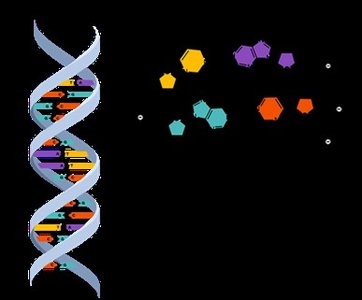
Nucleic Acids: DNA and RNA, store and transmit genetic information.
Summary Table: Types of Chemical Bonds
Bond Type | Formation | Example | Strength |
|---|---|---|---|
Ionic | Transfer of electrons | NaCl | Strong (in dry state) |
Covalent | Sharing of electrons | H2O | Strongest |
Hydrogen | Attraction between H and electronegative atom | Between water molecules | Weak |
Summary Table: Major Biomolecules
Biomolecule | Monomer | Polymer | Main Function |
|---|---|---|---|
Carbohydrate | Monosaccharide | Polysaccharide | Energy |
Lipid | Fatty acid & glycerol | Triglyceride, phospholipid | Energy, structure |
Protein | Amino acid | Polypeptide | Structure, enzymes |
Nucleic Acid | Nucleotide | DNA, RNA | Genetic info |
