 Back
BackChemical Level of Organization: Study Notes for Anatomy & Physiology
Study Guide - Smart Notes
 Tailored notes based on your materials, expanded with key definitions, examples, and context.
Chemical Level of Organization
Atoms and Atomic Structure
The chemical level of organization forms the foundation for understanding biological processes in anatomy and physiology. Atoms are the basic units of matter, and their structure determines the properties of elements and compounds.
Atom: The smallest unit of an element, composed of protons, neutrons, and electrons.
Atomic Number: The number of protons in the nucleus, unique to each element.
Atomic Weight: The average mass of an element's atoms, accounting for isotopes.
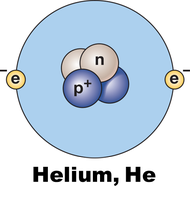
Electron Shells: Electrons orbit the nucleus in shells; only the outer shell electrons participate in chemical reactions.
Example: Helium atoms always have 2 protons; carbon has 6 protons and 6 electrons.
Electron Shells and Chemical Properties
The arrangement of electrons in shells determines an atom's reactivity. Atoms with unfilled outer shells are reactive, while those with filled shells are stable (inert).
First shell holds 2 electrons; second shell holds up to 8 electrons.
Atoms seek to fill their outer shell through chemical bonding.
Chemical Bonds
Chemical bonds are forces that hold atoms together in compounds. The main types are ionic, covalent, and hydrogen bonds.
Ionic Bonds
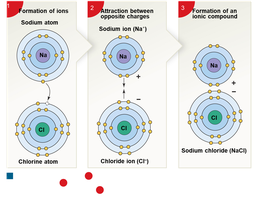
Formed by electrical attraction between oppositely charged ions (cations and anions).
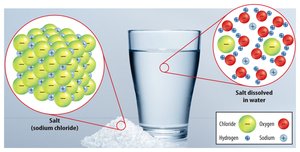
Example: Sodium (Na) donates an electron to chlorine (Cl), forming Na+ and Cl-, which combine to make sodium chloride (NaCl).
Covalent Bonds
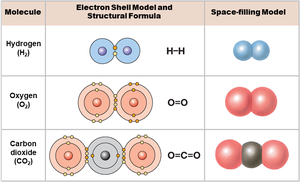
Formed by sharing electrons between atoms.
Single, double, or triple covalent bonds depending on the number of shared electron pairs.
Very strong bonds; examples include H2, O2, and CO2.
Polar and Nonpolar Covalent Bonds
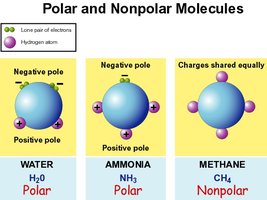
Nonpolar: Electrons shared equally (e.g., methane, CH4).
Polar: Electrons shared unequally, creating partial charges (e.g., water, H2O).
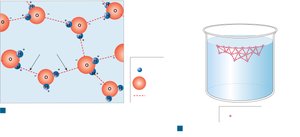
Hydrogen Bonds
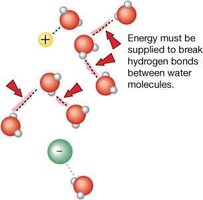
Weak attractions between a hydrogen atom (slightly positive) and an oxygen or nitrogen atom (slightly negative) in another molecule.
Important for water properties and biological molecules like DNA.
Chemical Reactions and Enzymes
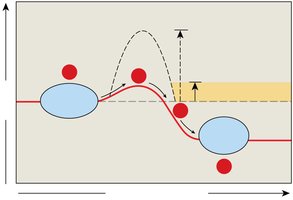
Chemical reactions involve breaking and forming bonds. Enzymes are biological catalysts that speed up reactions by lowering activation energy.
Activation Energy: Minimum energy required to start a reaction.
Enzymes: Proteins that accelerate reactions without being consumed.
Properties of Water
Water is essential for life due to its unique properties, which are critical for physiological processes.
High Heat Capacity: Water absorbs and retains heat, helping regulate body temperature.
Solvent: Water dissolves many substances, forming aqueous solutions.
Reactant: Water participates in hydrolysis and dehydration synthesis reactions.
pH and Buffers
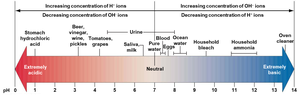
pH measures the concentration of hydrogen ions (H+) in a solution. Buffers help maintain pH within a narrow range, crucial for enzyme function and cellular health.
Normal blood pH: 7.35–7.45
Buffers stabilize pH by removing or adding H+ ions.
Major Biological Macromolecules
Carbohydrates
Carbohydrates are the primary short-term energy source for cells. They are classified by size and complexity.
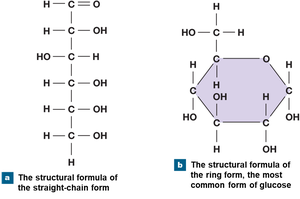
Monosaccharides: Simple sugars (e.g., glucose), dissolve readily in water.
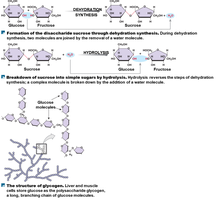
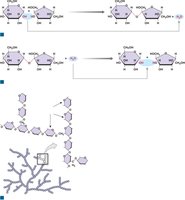
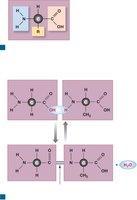
Disaccharides: Two monosaccharides linked (e.g., sucrose), formed by dehydration synthesis, broken by hydrolysis.
Polysaccharides: Long chains of monosaccharides (e.g., starch, glycogen, cellulose).
Lipids
Lipids are important for long-term energy storage, insulation, and cell membrane structure. Most lipids are insoluble in water.
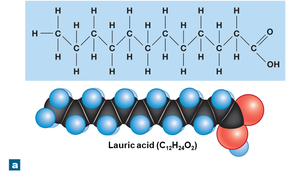
Fatty Acids: Long hydrocarbon chains with a carboxyl group.
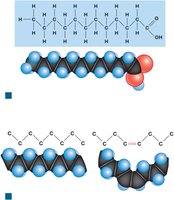
Saturated: Only single bonds between carbons.
Unsaturated: One or more double bonds; monounsaturated (one double bond), polyunsaturated (multiple).
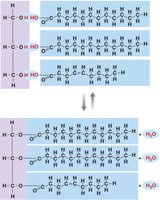
Triglycerides: Glycerol + three fatty acids; main fat in the body.
Steroids: Four-ring structure; cholesterol is a key steroid.
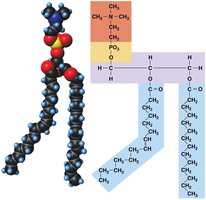
Phospholipids: Amphipathic molecules; major component of cell membranes.
Proteins
Proteins are the most abundant organic molecules in the body, serving structural, functional, and regulatory roles.
Functions: Support, movement, transport, buffering, metabolic regulation, coordination, defense.
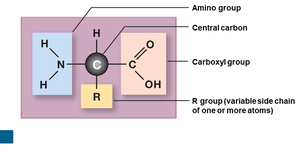
Structure: Composed of amino acids linked by peptide bonds.
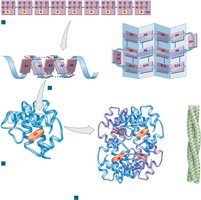
Levels of Structure: Primary (sequence), secondary (alpha helix/beta sheet), tertiary (3D folding), quaternary (multiple polypeptides).
Denaturation: Loss of structure and function due to environmental changes.
Nucleic Acids
Nucleic acids store and transmit genetic information. The two main types are DNA and RNA.
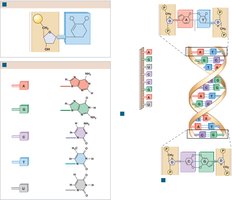
Nucleotides: Building blocks composed of a sugar (ribose or deoxyribose), phosphate group, and nitrogenous base.
DNA: Deoxyribonucleic acid; stores genetic information.
RNA: Ribonucleic acid; involved in protein synthesis.
Summary Table: Macromolecule Functions
Macromolecule | Main Function | Example |
|---|---|---|
Carbohydrates | Short-term energy | Glucose, glycogen |
Lipids | Long-term energy, membranes | Triglycerides, phospholipids |
Proteins | Structure, enzymes, transport | Hemoglobin, enzymes |
Nucleic Acids | Genetic information | DNA, RNA |
Additional info: These notes expand on brief points from the original slides, providing definitions, examples, and context for each major topic. All images included directly reinforce the adjacent explanations and are essential for visualizing key concepts.
