 Back
Chemistry Comes Alive: Biochemistry and Organic Molecules in Human Physiology
Study Guide - Smart Notes
 Tailored notes based on your materials, expanded with key definitions, examples, and context.
Chemistry Comes Alive: Part B
Biochemistry and Classes of Compounds
Biochemistry is the study of the chemical composition and reactions of living matter. All chemicals in the body are classified as either organic or inorganic compounds. Both types are essential for life.
Inorganic compounds: Include water, salts, acids, and bases. They do not contain carbon.
Organic compounds: Include carbohydrates, fats, proteins, and nucleic acids. They contain carbon, are usually large, and are covalently bonded.
Water in Living Organisms
Water is the most abundant and important inorganic compound in living organisms, making up 60–80% of cell volume. Its unique properties are critical for life.
High Specific Heat Capacity: Water absorbs and releases heat with minimal temperature change, helping maintain stable internal conditions.
High Heat of Vaporization: Evaporation of water requires significant energy, enabling cooling mechanisms such as sweating.
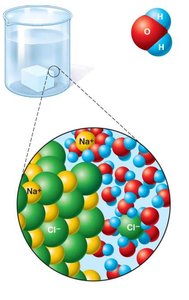
Polar Solvent Properties: Water dissolves and dissociates ionic substances, forms hydration layers around charged molecules, and is the body's major transport medium.
Reactivity: Water is involved in hydrolysis and dehydration synthesis reactions.
Cushioning: Water protects organs from physical trauma, e.g., cerebrospinal fluid.
Salts, Acids, Bases, and Buffers
Salts, acids, and bases are inorganic compounds that play vital roles in physiological processes.
Salts: Ionic compounds that dissociate in water to form ions (electrolytes), which conduct electrical currents and are essential for homeostasis.
Acids: Proton donors that release H+ ions in solution.
Bases: Proton acceptors that reduce H+ concentration, often by releasing OH– ions.
Buffer: Substances that minimize changes in H+ and OH– concentrations, often a combination of a salt and a weak acid.
pH Scale and Acid-Base Balance
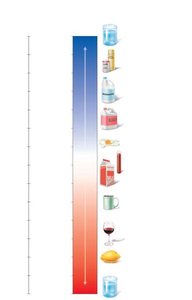
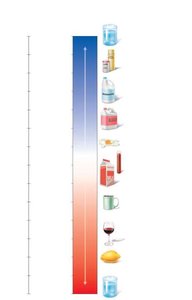
The pH scale measures the relative concentration of H+ ions in a solution, ranging from 0 (most acidic) to 14 (most basic). Maintaining pH homeostasis is critical for cell function.
Acidic solutions: pH 0–6.99, higher [H+]
Neutral solutions: pH 7, equal [H+] and [OH–]
Alkaline (basic) solutions: pH 7.01–14, lower [H+], higher [OH–]
pH Equation:
Each unit change in pH represents a tenfold change in acidity.
Buffers and Acid-Base Homeostasis
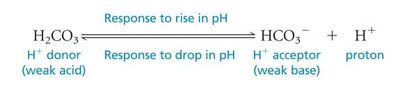
Buffers resist abrupt changes in pH by converting strong acids or bases into weak ones. The carbonic acid-bicarbonate system is a key buffer in blood.
Buffer Reaction:
Buffers release H+ if pH rises and bind H+ if pH falls.
pH is regulated by kidneys, lungs, and chemical buffers.
Organic Compounds: Structure and Function
Polymer Formation: Dehydration Synthesis and Hydrolysis
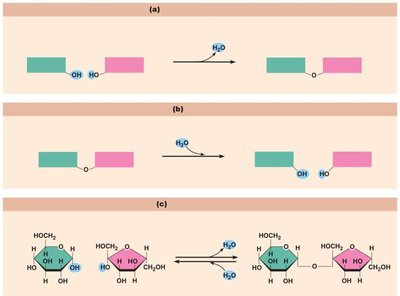
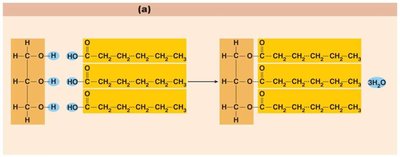
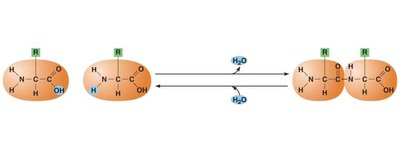
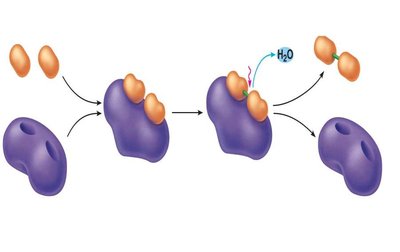
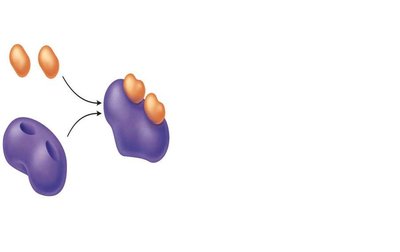
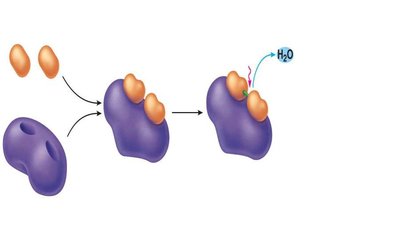
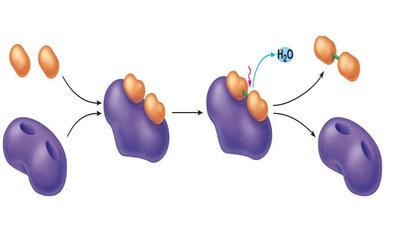
Many organic compounds are polymers, formed by joining monomers through dehydration synthesis and broken down by hydrolysis.
Dehydration Synthesis: Removal of water to form a covalent bond between monomers.
Hydrolysis: Addition of water to break covalent bonds between monomers.
Carbohydrates
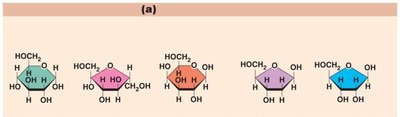
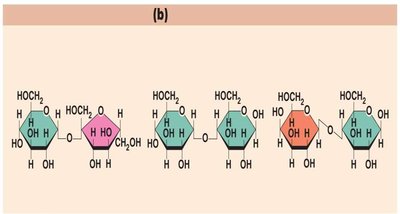
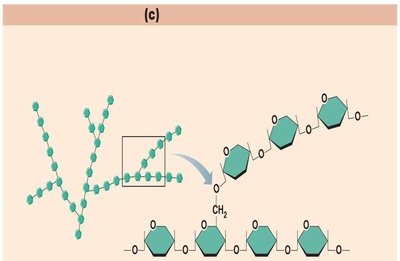
Carbohydrates are sugars and starches, serving as major sources of cellular fuel and structural molecules. They contain C, H, and O in the general formula (CH2O)n.
Monosaccharides: Simple sugars (3–7 C atoms), e.g., glucose, ribose, deoxyribose.
Disaccharides: Double sugars, e.g., sucrose, maltose, lactose.
Polysaccharides: Polymers of monosaccharides, e.g., starch, glycogen.
Lipids
Types and Functions of Lipids
Lipids are hydrophobic molecules containing C, H, O (less O than carbohydrates), and sometimes P. They serve as energy storage, insulation, and protection.
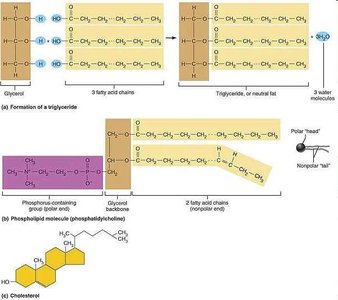
Neutral fats (triglycerides): Three fatty acids bonded to glycerol.
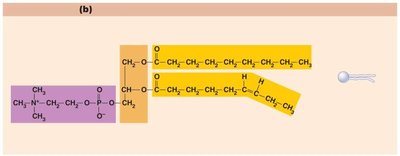
Phospholipids: Modified triglycerides with a phosphorus-containing group, important in cell membranes.
Steroids: Four interlocking rings, e.g., cholesterol, steroid hormones.
Eicosanoids: Derived from arachidonic acid, e.g., prostaglandins.
Proteins
Structure and Function of Proteins
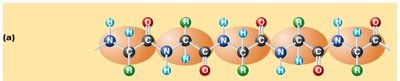
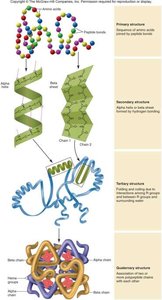
Proteins are polymers of amino acids, containing C, H, O, N, and sometimes S and P. They are essential for structure, function, and regulation of the body's tissues and organs.
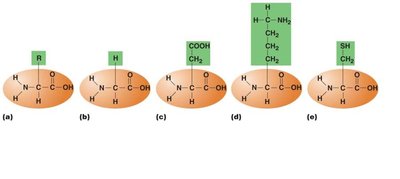
Amino acids: 20 types, each with a unique R group.
Peptide bonds: Covalent bonds joining amino acids.
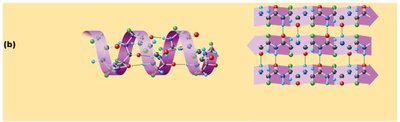
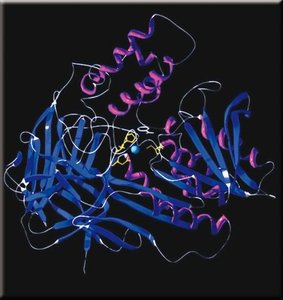
Structural levels: Primary, secondary, tertiary, and quaternary.
Fibrous and Globular Proteins
Proteins are classified as fibrous (structural) or globular (functional).
Fibrous proteins: Strandlike, water-insoluble, stable; provide mechanical support (e.g., collagen).
Globular proteins: Compact, spherical, water-soluble; have specific functional regions (e.g., enzymes, antibodies).
Protein Denaturation and Molecular Chaperones
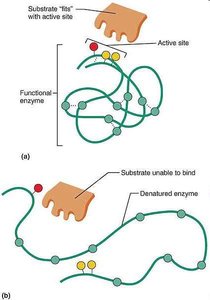
Denaturation is the loss of protein structure and function due to environmental changes. Molecular chaperones assist in proper protein folding and repair.
Denaturation: Unfolding of proteins, often reversible unless extreme conditions.
Molecular chaperones: Help fold proteins, prevent incorrect folding, and assist in repair.
Enzymes
Enzyme Structure and Function
Enzymes are globular proteins that act as biological catalysts, increasing the speed of chemical reactions by lowering activation energy.
Holoenzymes: Consist of an apoenzyme (protein) and a cofactor (metal ion or coenzyme).
Specificity: Enzymes act on specific substrates and are named for the reactions they catalyze (e.g., hydrolases, oxidases).
Nucleic Acids
Structure and Function of DNA and RNA
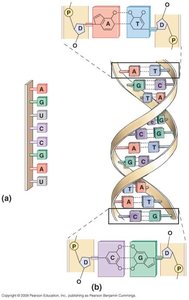
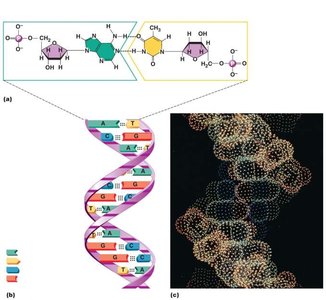
Nucleic acids are polymers of nucleotides, which consist of a nitrogen base, a pentose sugar, and a phosphate group. DNA and RNA are the two main types.
DNA: Double-stranded helix, contains adenine (A), guanine (G), cytosine (C), and thymine (T). Provides instructions for protein synthesis and genetic continuity.
RNA: Single-stranded, contains adenine (A), guanine (G), cytosine (C), and uracil (U). Carries out DNA instructions for protein synthesis.
Adenosine Triphosphate (ATP)
Structure and Function of ATP
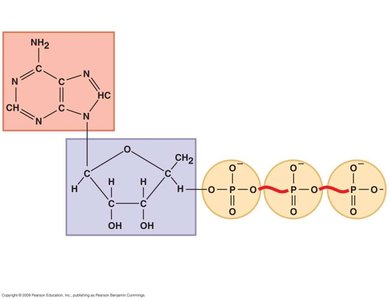
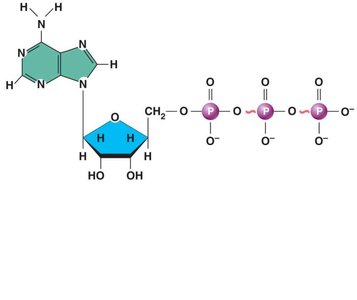
ATP is the primary energy carrier in cells, directly powering cellular work. It is an adenine-containing RNA nucleotide with three phosphate groups.
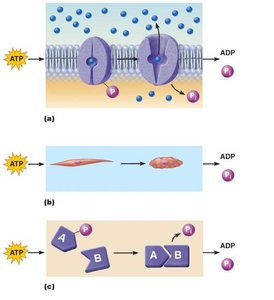
Phosphorylation: Terminal phosphates are transferred to other molecules, energizing them for cellular work.
ATP Hydrolysis: Releases energy for transport, mechanical, and chemical work.
Compound | Structure | Function |
|---|---|---|
Carbohydrates | Monosaccharides, Disaccharides, Polysaccharides | Energy, Structure |
Lipids | Triglycerides, Phospholipids, Steroids | Energy storage, Membranes, Hormones |
Proteins | Amino acids, Peptide bonds, Structural levels | Structure, Enzymes, Regulation |
Nucleic Acids | Nucleotides, DNA, RNA | Genetic information, Protein synthesis |
ATP | Adenine, Ribose, 3 Phosphates | Cellular energy |
Additional info: The notes expand on brief points from the slides, providing definitions, examples, and academic context for each major class of biomolecules and their physiological relevance.
