 Back
Chemistry Comes Alive: Essential Concepts for Human Anatomy & Physiology
Study Guide - Smart Notes
 Tailored notes based on your materials, expanded with key definitions, examples, and context.
Chapter 2: Chemistry Comes Alive
Introduction
Chemistry forms the foundation of all physiological processes in the human body. Understanding basic chemistry and biochemistry is essential for comprehending movement, digestion, heart function, and nervous system activity.
Basic Chemistry
2.1 Matter and Energy
Matter and energy are fundamental concepts in chemistry and physiology.
Matter: Anything that has mass and occupies space. Exists in three states: solid (definite shape and volume), liquid (changeable shape, definite volume), and gas (changeable shape and volume).
Energy: The capacity to do work or put matter into motion. Exists as kinetic energy (energy in action) and potential energy (stored energy).
Forms of Energy:
Chemical energy: Stored in chemical bonds.
Electrical energy: Movement of charged particles.
Mechanical energy: Directly moves matter.
Radiant energy: Travels in waves (e.g., light, X-rays).
Energy conversion is inefficient; some energy is lost as heat.
Atoms and Elements
2.2 Atoms and Elements
All matter is composed of elements, which are substances that cannot be broken down by ordinary chemical methods.
Four elements make up 96% of the human body: Carbon (C), Oxygen (O), Hydrogen (H), Nitrogen (N).
Atoms are the smallest particles of an element, possessing its properties.
Atomic symbol: One- or two-letter shorthand for each element (e.g., "O" for oxygen).
Element | Atomic Symbol | Approx. % Body Mass | Functions |
|---|---|---|---|
Oxygen | O | 65.0 | Component of organic/inorganic molecules; needed for cellular energy (ATP). |
Carbon | C | 18.5 | Component of all organic molecules. |
Hydrogen | H | 9.5 | Component of organic molecules; influences pH. |
Nitrogen | N | 3.2 | Component of proteins and nucleic acids. |
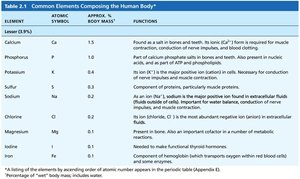
Element | Atomic Symbol | Approx. % Body Mass | Functions |
|---|---|---|---|
Calcium | Ca | 1.5 | Bone structure, muscle contraction, blood clotting. |
Phosphorus | P | 1.0 | Part of bones, nucleic acids, ATP. |
Potassium | K | 0.4 | Intracellular cation, nerve impulse, muscle contraction. |
Sulfur | S | 0.3 | Component of proteins. |
Sodium | Na | 0.2 | Extracellular cation, water balance, nerve function. |
Chlorine | Cl | 0.2 | Extracellular anion, water balance. |
Magnesium | Mg | 0.1 | Enzyme cofactor. |
Iodine | I | 0.1 | Thyroid hormone production. |
Iron | Fe | 0.1 | Hemoglobin, oxygen transport. |
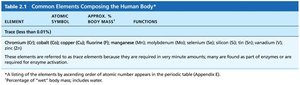
Element | Functions |
|---|---|
Chromium, Cobalt, Copper, Fluorine, Manganese, Molybdenum, Selenium, Silicon, Tin, Vanadium, Zinc | Trace elements, often enzyme cofactors. |
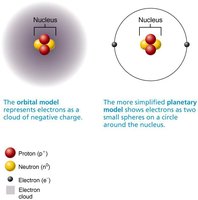
Atomic Structure
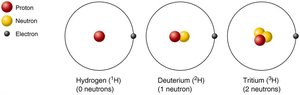
Atoms consist of a nucleus (protons and neutrons) and electrons in shells.
Protons (+), Neutrons (neutral), Electrons (-)
Atomic number: Number of protons
Mass number: Protons + neutrons
Isotopes: Variations in neutron number
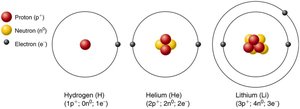
Combining Matter
2.3 Molecules, Compounds, and Mixtures
Molecule: Two or more atoms bonded together.
Compound: Molecule with two or more different atoms.
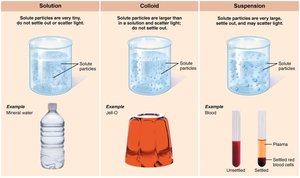
Mixtures: Physical combinations of substances. Types: solutions (homogeneous), colloids (heterogeneous, cloudy), suspensions (heterogeneous, particles settle out).
Differences Between Mixtures and Compounds
Mixtures do not involve chemical bonding; compounds do.
Mixtures can be separated physically; compounds require breaking chemical bonds.
Mixtures can be heterogeneous or homogeneous; compounds are always homogeneous.
Chemical Bonds
2.4 Chemical Bonds
Chemical bonds are energy relationships between electrons of reacting atoms.
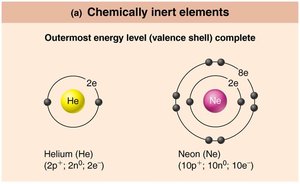
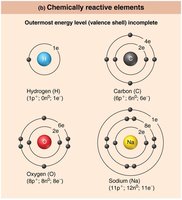
Electrons occupy electron shells; the outermost shell is the valence shell.
Atoms seek full valence shells for stability.
Types of Chemical Bonds
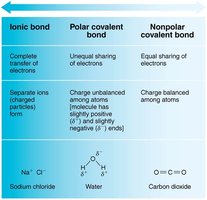
Ionic bonds: Transfer of electrons, forming ions (cations and anions).
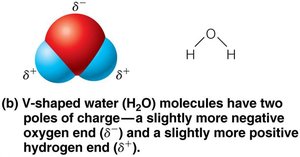
Covalent bonds: Sharing of electrons. Can be nonpolar (equal sharing) or polar (unequal sharing).
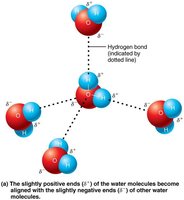
Hydrogen bonds: Weak attractions between electropositive hydrogen and electronegative atoms.
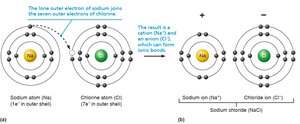
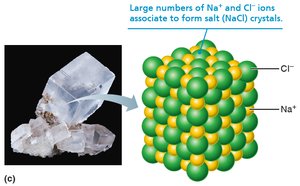
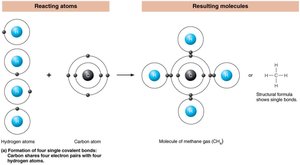
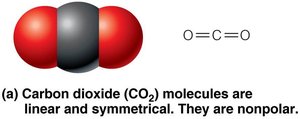
Ionic Bond | Polar Covalent Bond | Nonpolar Covalent Bond |
|---|---|---|
Complete transfer of electrons; separate ions form | Unequal sharing; charge unbalanced | Equal sharing; charge balanced |
NaCl | H2O | CO2 |
Chemical Reactions
2.5 Chemical Reactions
Chemical reactions involve the formation, rearrangement, or breaking of chemical bonds.
Synthesis (anabolic): Building larger molecules.
Decomposition (catabolic): Breaking down molecules.
Exchange (redox): Both synthesis and decomposition; electrons are transferred.
Exergonic reactions: Release energy.
Endergonic reactions: Absorb energy.
Catalysts: Speed up reactions without being consumed; enzymes are biological catalysts.
Biochemistry
2.6 Inorganic and Organic Compounds
Inorganic compounds: Water, salts, acids, bases; do not contain carbon.
Organic compounds: Carbohydrates, lipids, proteins, nucleic acids; contain carbon, usually large, covalently bonded.
Acids, Bases, and pH
Acids and Bases
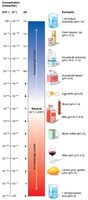
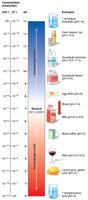
Acids: Proton donors; release H+ ions.
Bases: Proton acceptors; release OH- ions.
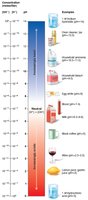
pH scale: Measures [H+] concentration; ranges from 0 (acidic) to 14 (basic).
Neutralization: Mixing acids and bases forms water and a salt.
Buffers: Resist changes in pH; important for blood and tissue homeostasis.
Organic Compounds: Synthesis and Hydrolysis
Dehydration Synthesis and Hydrolysis
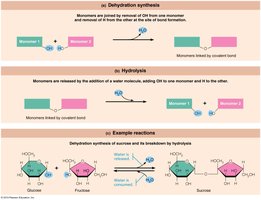
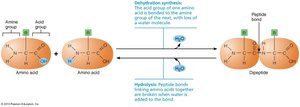
Dehydration synthesis: Monomers join by removing water.
Hydrolysis: Monomers are released by adding water.
Carbohydrates
2.8 Carbohydrates
Carbohydrates are sugars and starches, essential for energy.
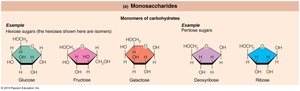
Contain C, H, O; hydrogen and oxygen in 2:1 ratio.
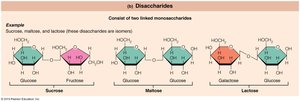
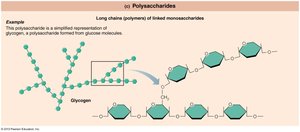
Three classes: Monosaccharides (single sugars), Disaccharides (two sugars), Polysaccharides (many sugars).
Lipids
2.9 Lipids
Lipids are hydrophobic molecules, including fats, oils, phospholipids, steroids, and eicosanoids.
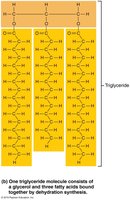
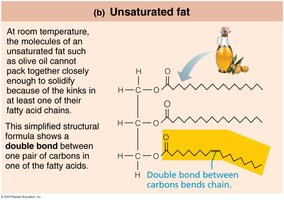
Triglycerides: Three fatty acids + glycerol; energy storage, insulation, protection.
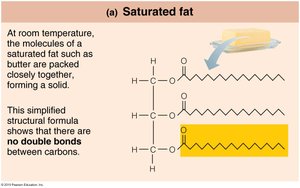
Saturated fatty acids: Single bonds, solid at room temperature.
Unsaturated fatty acids: Double bonds, liquid at room temperature.
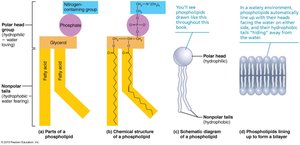
Phospholipids: Modified triglycerides; important in cell membranes.
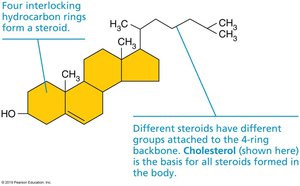
Steroids: Four-ring structure; cholesterol is the most important steroid.
Proteins
2.10 Proteins
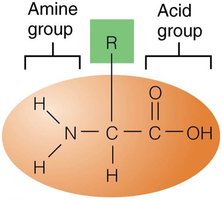
Proteins are polymers of amino acids, essential for structure and function.
Contain C, H, O, N, sometimes S and P.
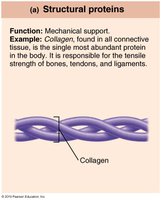
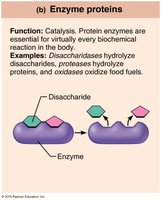
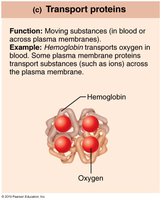
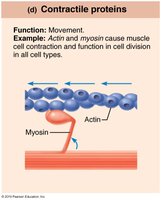
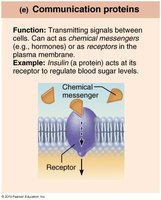
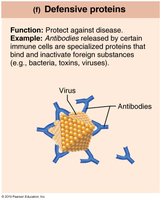
Functions: structural, enzymatic, contractile, transport, communication, defensive.
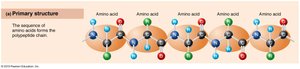
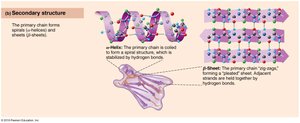
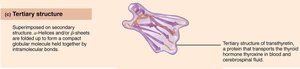
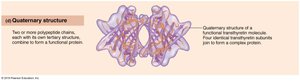
Four structural levels: Primary (sequence), Secondary (α-helix, β-sheet), Tertiary (3D folding), Quaternary (multiple polypeptides).
Denaturation: Loss of structure and function due to pH or temperature changes.
Enzymes
Enzyme Structure and Function
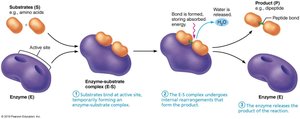
Enzymes are globular proteins acting as biological catalysts.
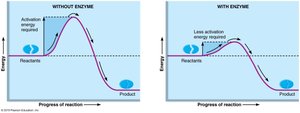
Lower activation energy, speeding up reactions.
Specific for substrates; often end in "-ase".
Enzyme action: substrate binds, rearrangement occurs, product released.
Nucleic Acids
2.11 Nucleic Acids
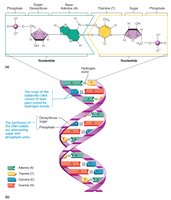
Nucleic acids (DNA and RNA) store and transmit genetic information.
Polymers of nucleotides (nitrogen base, pentose sugar, phosphate group).
DNA: Double helix, in nucleus, contains A, T, G, C.
RNA: Single-stranded, outside nucleus, contains A, U, G, C.
ATP: Cellular Energy
2.12 ATP
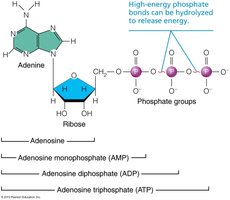
ATP (adenosine triphosphate) is the primary energy carrier in cells.
Structure: Adenine, ribose, three phosphate groups.
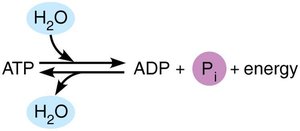
Energy released by breaking phosphate bonds.
ATP → ADP + Pi + energy
Summary Table: Major Chemical Concepts
Concept | Definition | Example |
|---|---|---|
Matter | Has mass and occupies space | Solid, liquid, gas |
Energy | Capacity to do work | Kinetic, potential |
Element | Cannot be broken down | Oxygen, carbon |
Atom | Smallest unit of element | Hydrogen atom |
Molecule | Two or more atoms | H2O, O2 |
Compound | Two or more different atoms | CO2, NaCl |
Mixture | Physical combination | Blood, air |
Chemical bond | Energy relationship between electrons | Ionic, covalent, hydrogen |
Enzyme | Biological catalyst | Hydrolase, oxidase |
ATP | Cellular energy carrier | Muscle contraction |
Key Equations
pH calculation:
ATP hydrolysis:
Dehydration synthesis:
Conclusion
Understanding basic chemistry is essential for studying human anatomy and physiology. The concepts of matter, energy, atoms, elements, chemical bonds, and reactions provide the foundation for all biological processes. Organic and inorganic compounds, including carbohydrates, lipids, proteins, nucleic acids, and ATP, are vital for cellular structure and function.
