 Back
Chemistry Comes Alive: Essential Concepts for ANP College Students
Study Guide - Smart Notes
 Tailored notes based on your materials, expanded with key definitions, examples, and context.
Chemistry Comes Alive
Matter and Its States
Matter is the fundamental substance that makes up the universe, defined as anything that has mass and occupies space. It exists in three primary states: solid, liquid, and gas, each with distinct properties.
Solid: Definite shape and volume.
Liquid: Definite volume, changeable shape.
Gas: Changeable shape and volume.
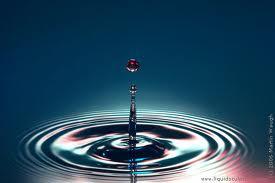
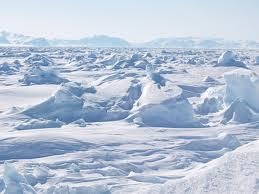
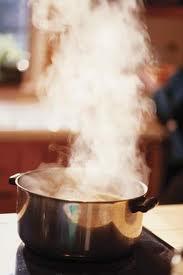
Example: Water can exist as ice (solid), liquid water, or steam (gas).
Energy and Its Forms
Energy is the capacity to do work or put matter into motion. It exists in two main forms: kinetic (energy in action) and potential (stored energy). Energy can be converted from one form to another, but some is lost as heat.
Chemical Energy: Stored in bonds of chemical substances.
Electrical Energy: Results from movement of charged particles.
Mechanical Energy: Directly involved in moving matter.
Electromagnetic Energy: Travels in waves (e.g., visible light, ultraviolet light, x-rays).
Elements and Atoms
Elements of the Human Body
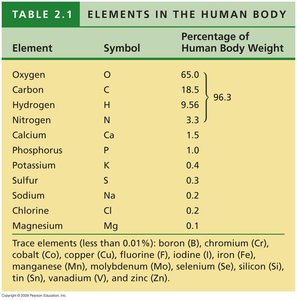
Elements are substances that cannot be broken down by ordinary chemical processes. Life requires 25 essential elements, with four major elements making up the majority of the human body: carbon (C), oxygen (O), hydrogen (H), and nitrogen (N).
Major Elements: C, O, H, N
Lesser Elements: Ca, P, K, S, Na, Cl, Mg, I, Fe
Trace Elements: Required in very small amounts; deficiencies can cause disease (e.g., iron deficiency leads to anemia, iodine deficiency leads to goiter).
Element | Symbol | Percentage of Human Body Weight |
|---|---|---|
Oxygen | O | 65.0 |
Carbon | C | 18.5 |
Hydrogen | H | 9.5 |
Nitrogen | N | 3.3 |
Calcium | Ca | 1.5 |
Phosphorus | P | 1.0 |
Potassium | K | 0.4 |
Sulfur | S | 0.3 |
Sodium | Na | 0.2 |
Chlorine | Cl | 0.2 |
Magnesium | Mg | 0.1 |
Trace Elements and Nutrition
Trace elements are common additives to food and water, often included to preserve, enhance nutrition, or improve appearance. Deficiencies in trace elements can lead to health issues.
Iron: Essential for hemoglobin formation.
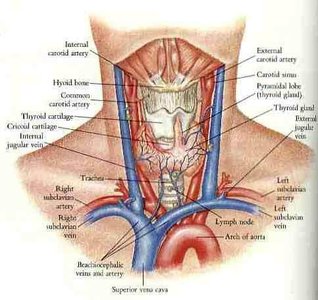
Iodine: Required for thyroid hormone production.
Example: Goiter is caused by iodine deficiency.

Atomic Structure and Chemical Bonds
Atoms and Subatomic Particles
An atom is the smallest unit of matter that retains the properties of an element. Atoms are composed of subatomic particles: protons (positive charge), neutrons (neutral), and electrons (negative charge).
Proton: +1 charge
Neutron: 0 charge
Electron: -1 charge
Example: Hydrogen (1p+, 0n0, 1e–), Helium (2p+, 2n0, 2e–), Lithium (3p+, 4n0, 3e–)
Electron Shells and the Octet Rule
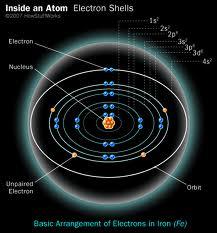
Electrons are arranged in shells or energy levels around the nucleus. The outermost shell, called the valence shell, determines chemical reactivity. The octet rule states that atoms tend to interact to have eight electrons in their valence shell (except the first shell, which is full with two electrons).
Valence Shell: Outermost energy level containing chemically active electrons.
Octet Rule: Atoms seek to fill their valence shell with eight electrons.
Chemically Inert vs. Reactive Elements
Elements with a full valence shell are chemically inert and do not readily form bonds. Elements with incomplete valence shells are chemically reactive.
Inert Elements: Helium, Neon (valence shell complete).
Reactive Elements: Hydrogen, Carbon, Oxygen, Sodium (valence shell incomplete).
Types of Chemical Bonds
Chemical bonds are formed by interactions between electrons in the valence shell. The main types are ionic, covalent, and hydrogen bonds.
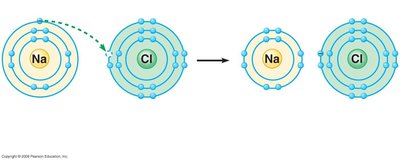
Ionic Bonds: Formed by transfer of electrons between ions of opposite charge. Most ionic bonds are salts.
Covalent Bonds: Formed by sharing electrons between atoms. Can be polar (unequal sharing) or non-polar (equal sharing).
Hydrogen Bonds: Weak bonds formed between a hydrogen atom and an electronegative atom (e.g., oxygen, nitrogen).
Mixtures and Solutions
Types of Mixtures
Mixtures are combinations of two or more components physically intermixed. They are classified as solutions, colloids, or suspensions.
Solution: Homogeneous mixture; solute particles do not settle or scatter light.
Colloid: Heterogeneous mixture; solute particles do not settle but scatter light (e.g., cytosol).
Suspension: Heterogeneous mixture; solute particles settle out and scatter light (e.g., blood).
Solutes, Solvents, and Dissolving
A solution consists of a solvent (dissolving agent) and solute (substance dissolved). Hydrogen bonds help dissolve substances, making water a universal solvent.
Solvent: The medium in which solutes are dissolved (usually water).
Solute: The substance dissolved in the solvent.
Acids, Bases, and pH
Acid-Base Chemistry and pH Scale
The chemistry of life is sensitive to acidic and basic conditions. The pH scale measures the concentration of hydrogen ions (H+) in a solution, ranging from 0 (most acidic) to 14 (most basic), with 7 being neutral.
Acid: Substance that increases H+ concentration in solution (e.g., HCl).
Base: Substance that decreases H+ concentration by providing OH– (e.g., NaOH).
pH: Potential of hydrogen; regulated by kidneys, lungs, and chemical buffers.
Buffers: Resist abrupt changes in pH by releasing or binding H+ ions.
Solution | pH |
|---|---|
Battery acid | 0 |
Lemon juice, gastric juice | 2 |
Human blood, tears | 7.4 |
Seawater | 8 |
Household bleach | 13 |
Chemical Reactions
Types of Chemical Reactions
Chemical reactions involve making and breaking bonds, changing the composition of matter. The main types are synthesis, decomposition, and exchange reactions.
Synthesis Reaction: Atoms or molecules combine (A+B→AB); energy is absorbed.
Decomposition Reaction: Molecule is broken down (AB→A+B); energy is released.
Exchange Reaction: Bonds are both made and broken (AB+C→AC+B); involves both synthesis and decomposition.
Inorganic Compounds: Water and Salts
Importance of Water
Water is an inorganic compound that makes up 60-80% of cells. Its unique polarity makes it a universal solvent, and it plays critical roles in temperature regulation, chemical reactions, and cushioning organs.
Universal Solvent: Dissolves more substances than any other liquid.
High Heat Capacity: Absorbs heat before changing temperature.
Reactant: Involved in hydrolysis and dehydration synthesis reactions.
Cushion: Protects organs from physical damage.
Salts and Electrolytes
Salts are ionic compounds with a cation other than H+ and an anion other than OH– (e.g., NaCl). They serve as electrolytes, conducting electrical current and forming bones and teeth.
Electrolytes: Conduct electrical current in the body.
Bone Formation: Essential for structural integrity.
Summary Table: Types of Chemical Bonds
Bond Type | Formation | Example | Properties |
|---|---|---|---|
Ionic | Transfer of electrons | NaCl | Forms crystals, strong bond |
Covalent | Sharing of electrons | H2O, CH4 | Can be polar or non-polar, strong bond |
Hydrogen | Attraction between H and electronegative atom | Water molecules | Weak, important for 3D structure |
Additional info: Academic context was added to clarify definitions, examples, and applications for each topic. Tables were recreated and expanded for clarity. Only images directly relevant to the explanation were included.
