 Back
Chemistry Comes Alive: Foundations for Human Anatomy & Physiology
Study Guide - Smart Notes
 Tailored notes based on your materials, expanded with key definitions, examples, and context.
Chapter 2: Chemistry Comes Alive
Introduction
Chemistry is fundamental to understanding physiological processes in the human body. All body functions, from movement to digestion, are governed by chemical and biochemical reactions. This chapter introduces the basic principles of chemistry as they relate to anatomy and physiology.
2.1 Matter and Energy
Matter
Matter is anything that has mass and occupies space. It can be seen, smelled, or felt.
States of Matter:
Solid: Definite shape and volume.
Liquid: Changeable shape, definite volume.
Gas: Changeable shape and volume.
Weight is mass plus the effects of gravity.
Energy
Energy is the capacity to do work or put matter into motion. It does not have mass or occupy space.
Forms of Energy:
Kinetic Energy: Energy in action.
Potential Energy: Stored (inactive) energy.
Chemical Energy: Stored in bonds of chemical substances.
Electrical Energy: Results from movement of charged particles.
Mechanical Energy: Directly involved in moving matter.
Radiant/Electromagnetic Energy: Travels in waves (e.g., heat, light, X-rays).
Energy Conversion: Energy can be transformed from one form to another, but some energy is always lost as heat.
2.2 Atoms and Elements
Elements
Elements are substances that cannot be broken down into simpler substances by ordinary chemical methods.
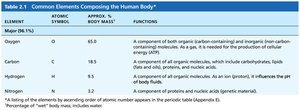
Four elements make up 96% of the human body: Oxygen, Carbon, Hydrogen, Nitrogen.
The periodic table lists all known elements.
Element | Symbol | Approx. % Body Mass | Functions |
|---|---|---|---|
Oxygen | O | 65.0 | Component of organic/inorganic molecules; needed for ATP production |
Carbon | C | 18.5 | Component of all organic molecules |
Hydrogen | H | 9.5 | Component of organic molecules; influences pH |
Nitrogen | N | 3.2 | Component of proteins and nucleic acids |
Atoms
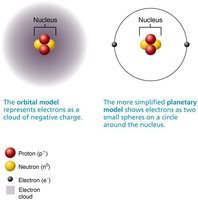
Atoms are the smallest units of an element that retain its properties.
Composed of protons (positive), neutrons (neutral), and electrons (negative).
Protons and neutrons are in the nucleus; electrons orbit the nucleus.
Atomic Structure
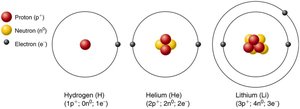
Atomic number = number of protons.
Mass number = protons + neutrons.
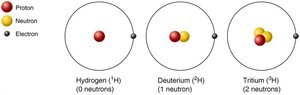
Isotopes: Atoms with the same number of protons but different numbers of neutrons.
Atomic weight: Average of mass numbers of all isotopes.
Radioisotopes
Radioisotopes are unstable isotopes that decay, emitting radiation.
Used in medical diagnosis and treatment, but can also cause tissue damage.
2.3 Combining Matter
Molecules and Compounds
Molecule: Two or more atoms bonded together (e.g., O2).
Compound: Molecule with two or more different atoms (e.g., H2O).
Mixtures
Most matter exists as mixtures: physical combinations of two or more substances.
Types of mixtures:
Solutions: Homogeneous mixtures; solute particles are very small and do not settle out (e.g., mineral water).
Colloids: Heterogeneous mixtures; solute particles are larger and do not settle out (e.g., Jell-O).
Suspensions: Heterogeneous mixtures; solute particles are large, settle out, and may scatter light (e.g., blood).
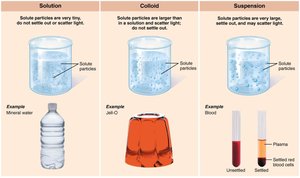
Differences Between Mixtures and Compounds
Mixtures do not involve chemical bonding; compounds do.
Mixtures can be separated physically; compounds require chemical means.
Mixtures can be homogeneous or heterogeneous; compounds are always homogeneous.
2.4 Chemical Bonds
Role of Electrons in Chemical Bonding
Electrons occupy energy levels called electron shells.
The outermost shell is the valence shell; electrons here are involved in bonding.
Octet Rule: Atoms tend to gain, lose, or share electrons to achieve 8 electrons in their valence shell (except H and He, which seek 2).
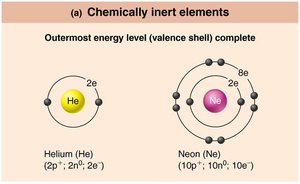
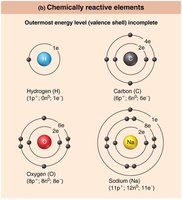
Types of Chemical Bonds
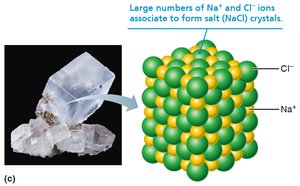
Ionic Bonds: Formed by transfer of electrons from one atom to another, creating ions (cations and anions). Opposite charges attract.
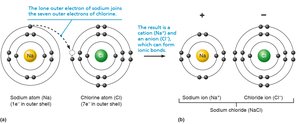
Covalent Bonds: Formed by sharing electrons between atoms. Can be single, double, or triple bonds.
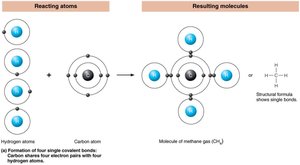
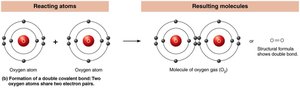
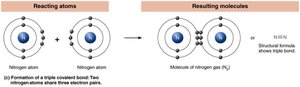
Nonpolar Covalent Bonds: Equal sharing of electrons (e.g., CO2).
Polar Covalent Bonds: Unequal sharing of electrons, resulting in partial charges (e.g., H2O).
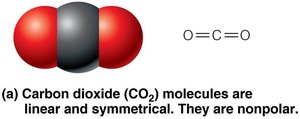
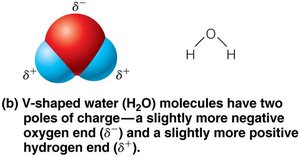
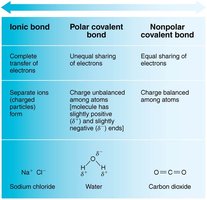
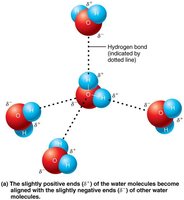
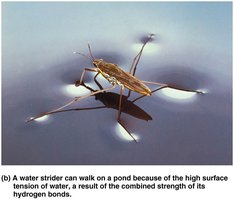
Hydrogen Bonds: Weak attractions between a hydrogen atom (already covalently bonded) and an electronegative atom (e.g., O or N). Important in water and biological molecules.
2.5 Chemical Reactions
Chemical Equations
Chemical reactions involve the formation, rearrangement, or breaking of chemical bonds.
Reactants are substances entering the reaction; products are the resulting substances.
Chemical equations use molecular formulas (e.g., H2O, C6H12O6).
Types of Chemical Reactions
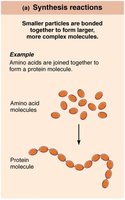
Synthesis (Combination) Reactions: Atoms or molecules combine to form larger, more complex molecules. Important in anabolic processes.
General equation:
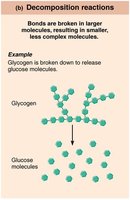
Decomposition Reactions: Molecules are broken down into smaller molecules or atoms. Important in catabolic processes.
General equation:
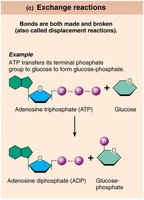
Exchange (Displacement) Reactions: Involve both synthesis and decomposition; bonds are made and broken.
General equation:
Redox (Oxidation-Reduction) Reactions: Involve transfer of electrons between atoms. Atoms are oxidized when they lose electrons and reduced when they gain electrons.
Energy Flow in Chemical Reactions
Exergonic Reactions: Release energy; products have less potential energy than reactants (e.g., catabolic reactions).
Endergonic Reactions: Absorb energy; products have more potential energy than reactants (e.g., anabolic reactions).
Reversibility of Chemical Reactions
All chemical reactions are theoretically reversible:
Chemical equilibrium occurs when neither the forward nor reverse reaction is dominant.
Many biological reactions are not easily reversible due to energy requirements or removal of products.
Rate of Chemical Reactions
Factors affecting reaction rate:
Temperature (higher = faster)
Concentration of reactants (higher = faster)
Particle size (smaller = faster)
Catalysts: Substances that increase reaction rate without being changed. Enzymes are biological catalysts.
Additional info: Understanding these chemical principles is essential for grasping more advanced topics in anatomy and physiology, such as cellular metabolism, nerve conduction, and muscle contraction.
