 Back
Chemistry Comes Alive: Foundations for Human Anatomy & Physiology
Study Guide - Smart Notes
 Tailored notes based on your materials, expanded with key definitions, examples, and context.
Chemistry and Physiological Reactions
Introduction to Chemistry in Human Physiology
Chemistry is fundamental to understanding physiological processes in the human body, including movement, digestion, heart function, and nervous system activity. The study of chemistry in anatomy and physiology is divided into basic chemistry and biochemistry.
Basic Chemistry: Focuses on the properties of matter and energy.
Biochemistry: Examines the chemical composition and reactions of living matter.
2.1 Matter and Energy
Matter
Matter is anything that has mass and occupies space. It can exist in three states:
Solid: Definite shape and volume.
Liquid: Changeable shape, definite volume.
Gas: Changeable shape and volume.
Energy
Energy is the capacity to do work or put matter into motion. It exists in two main forms:
Kinetic Energy: Energy in action.
Potential Energy: Stored energy.
Energy can be transformed from one form to another, but some is lost as heat during conversion.
2.2 Atoms and Elements
Elements and Their Importance
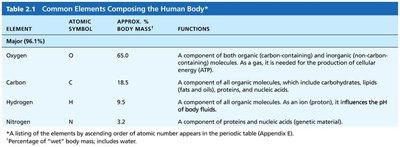
All matter is composed of elements, which are substances that cannot be broken down by ordinary chemical methods. Four elements make up 96% of the human body: carbon, oxygen, hydrogen, and nitrogen.
Atomic Structure
Atoms are the smallest units of elements, consisting of:
Protons: Positive charge, 1 amu.
Neutrons: No charge, 1 amu.
Electrons: Negative charge, virtually no weight.
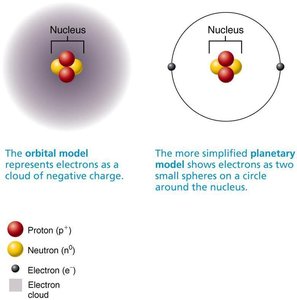
Protons and neutrons are located in the nucleus, while electrons orbit around it. Two models describe atomic structure:
Planetary Model: Electrons in fixed orbits (simplified).
Orbital Model: Electrons in probable regions, forming an electron cloud.
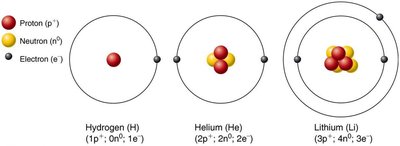
Atomic Structure of Smallest Atoms
Hydrogen, helium, and lithium have distinct numbers of protons, neutrons, and electrons.
Isotopes
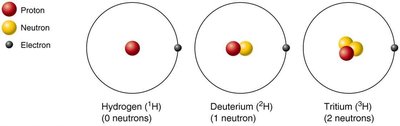
Isotopes are structural variations of the same element, differing in neutron number. Some isotopes are radioactive (radioisotopes), which decay and emit energy.
2.3 Combining Matter
Molecules, Compounds, and Mixtures
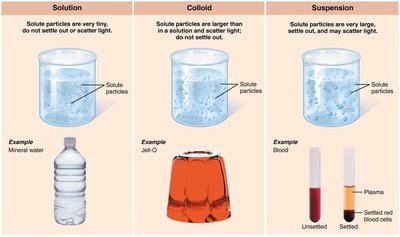
Atoms combine to form molecules and compounds. Most matter exists as mixtures, which can be:
Solutions: Homogeneous mixtures (e.g., mineral water).
Colloids: Heterogeneous mixtures (e.g., Jell-O).
Suspensions: Heterogeneous mixtures with large particles that settle out (e.g., blood).
2.4 Chemical Bonds
Role of Electrons in Bonding
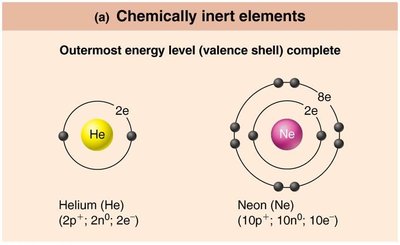
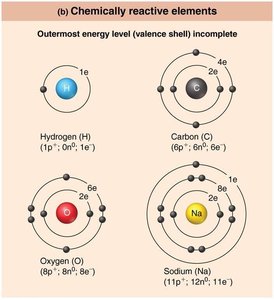
Electrons occupy shells around the nucleus. The outermost shell (valence shell) determines chemical reactivity. Atoms seek stability by achieving a full valence shell, usually eight electrons (octet rule).
Types of Chemical Bonds
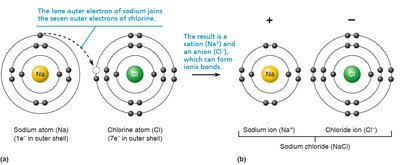
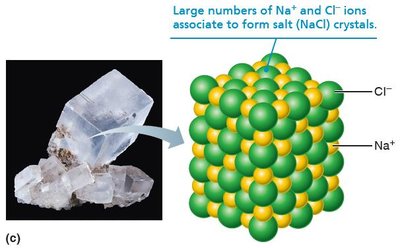
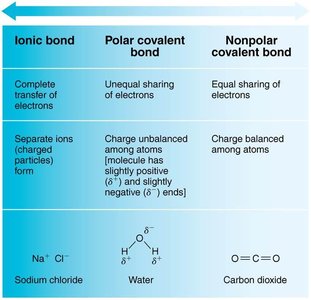
Ionic Bonds: Transfer of electrons, forming charged ions (cations and anions).
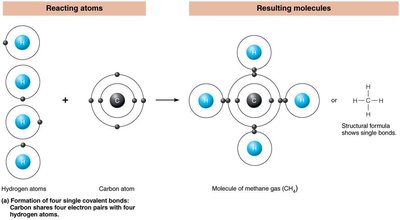
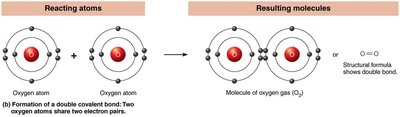
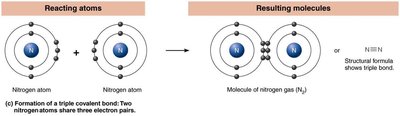
Covalent Bonds: Sharing of electrons. Can be single, double, or triple bonds.
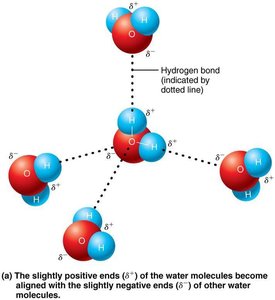
Hydrogen Bonds: Weak attractions between electropositive hydrogen and electronegative atoms.
Polar and Nonpolar Covalent Bonds
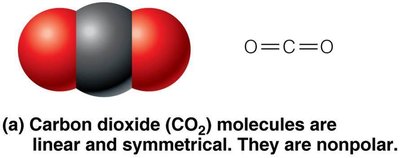
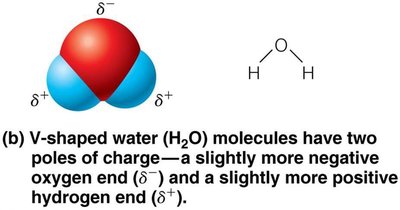
Nonpolar bonds share electrons equally (e.g., CO2), while polar bonds share unequally (e.g., H2O), resulting in dipoles.
Hydrogen Bonding
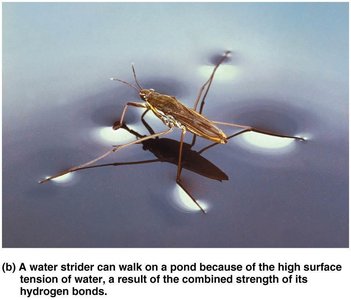
Hydrogen bonds are crucial for water's properties and for stabilizing large molecules.
2.5 Chemical Reactions
Types of Chemical Reactions
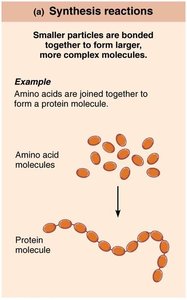
Synthesis: Formation of larger molecules from smaller ones (anabolic).
Decomposition: Breakdown of molecules into smaller units (catabolic).
Exchange: Bonds are both made and broken (displacement).
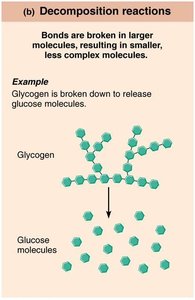
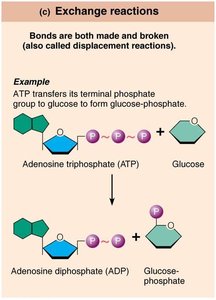
2.6 Inorganic Compounds
Water
Water is the most abundant inorganic compound in cells, with properties such as high heat capacity, solvent abilities, reactivity, and cushioning.
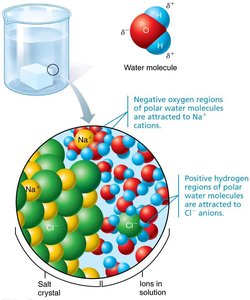
Acids, Bases, and pH
Acids are proton donors, bases are proton acceptors. The pH scale measures hydrogen ion concentration, ranging from 0 (acidic) to 14 (basic).
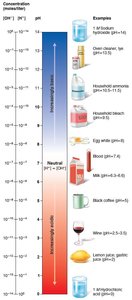
2.7 Organic Compounds: Synthesis and Hydrolysis
Polymer Formation and Breakdown
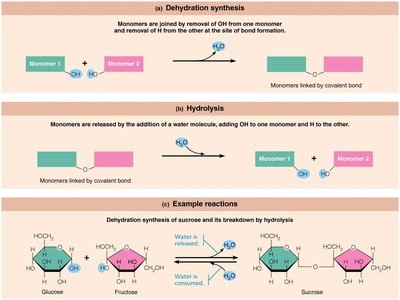
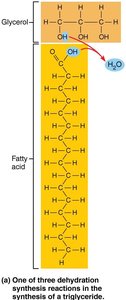
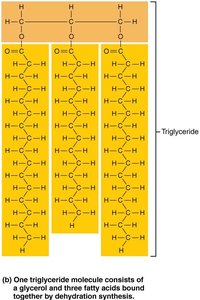
Organic molecules are often polymers, formed by dehydration synthesis and broken down by hydrolysis.
2.8 Carbohydrates
Types of Carbohydrates
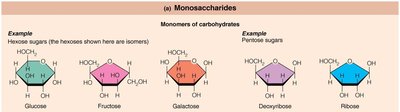
Monosaccharides: Simple sugars (glucose, fructose, galactose, ribose, deoxyribose).
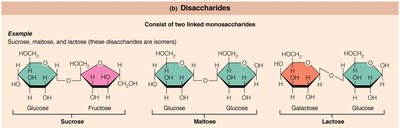
Disaccharides: Two monosaccharides linked (sucrose, maltose, lactose).
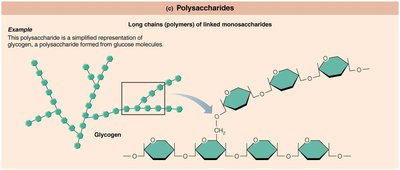
Polysaccharides: Long chains of monosaccharides (starch, glycogen).
2.9 Lipids
Types of Lipids
Triglycerides: Energy storage, insulation, protection.
Phospholipids: Major component of cell membranes.
Steroids: Cholesterol, hormones, vitamin D.
Eicosanoids: Prostaglandins, involved in inflammation and blood clotting.
Summary Table: Major Elements in the Human Body
Element | Atomic Symbol | Approx. % Body Mass | Functions |
|---|---|---|---|
Oxygen | O | 65.0 | Component of organic and inorganic molecules; needed for cellular energy (ATP). |
Carbon | C | 18.5 | Component of all organic molecules. |
Hydrogen | H | 9.5 | Component of organic molecules; influences pH of body fluids. |
Nitrogen | N | 3.2 | Component of proteins and nucleic acids. |
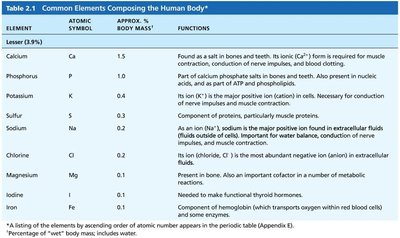
Summary Table: Lesser Elements in the Human Body
Element | Atomic Symbol | Approx. % Body Mass | Functions |
|---|---|---|---|
Calcium | Ca | 1.5 | Bone and teeth; muscle contraction; blood clotting. |
Phosphorus | P | 1.0 | Bone and teeth; nucleic acids; ATP. |
Potassium | K | 0.4 | Major positive ion in cells; nerve impulse conduction. |
Sulfur | S | 0.3 | Proteins; metabolic functions. |
Sodium | Na | 0.2 | Major positive ion in extracellular fluids; water balance. |
Chlorine | Cl | 0.2 | Most abundant negative ion in extracellular fluids. |
Magnesium | Mg | 0.1 | Bone; metabolic reactions. |
Iodine | I | 0.1 | Thyroid hormones. |
Iron | Fe | 0.1 | Hemoglobin; oxygen transport. |
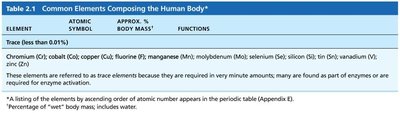
Summary Table: Trace Elements in the Human Body
Element | Functions |
|---|---|
Chromium, cobalt, copper, fluorine, manganese, molybdenum, selenium, silicon, tin, vanadium, zinc | Required in minute amounts; many are enzyme cofactors or required for enzyme activation. |
