 Back
Chemistry Comes Alive: Foundations for Human Anatomy & Physiology
Study Guide - Smart Notes
 Tailored notes based on your materials, expanded with key definitions, examples, and context.
Chemistry and Physiological Reactions
Introduction to Chemistry in Physiology
Chemistry is fundamental to understanding physiological processes in the human body. All bodily functions, from movement to digestion and neural activity, are governed by chemical and biochemical reactions. Mastery of basic chemistry is essential for comprehending biochemistry and the mechanisms underlying health and disease.
Basic Chemistry: Focuses on the structure and properties of matter and energy.
Biochemistry: Examines the chemical processes within and related to living organisms.
2.1 Matter and Energy
Matter
Matter is anything that has mass and occupies space. It can be observed, smelled, or felt, and exists in three states:
Solid: Definite shape and volume.
Liquid: Definite volume, changeable shape.
Gas: Changeable shape and volume.
Energy
Energy is the capacity to do work or put matter into motion. It does not have mass or occupy space. The two main forms are:
Kinetic Energy: Energy in action.
Potential Energy: Stored energy, which can be converted to kinetic energy.
Energy can be transformed between forms, but some is always lost as heat, making conversions inefficient.
Chemical Energy: Stored in chemical bonds.
Electrical Energy: Movement of charged particles.
Mechanical Energy: Directly moves matter.
Radiant/Electromagnetic Energy: Travels in waves (e.g., light, X-rays).
2.2 Atoms and Elements
Elements
Elements are pure substances that cannot be broken down by ordinary chemical means. The human body is primarily composed of four elements: carbon, oxygen, hydrogen, and nitrogen, which make up 96% of body mass.
Element | Symbol | Approx. % Body Mass | Functions |
|---|---|---|---|
Oxygen | O | 65.0 | Component of organic/inorganic molecules; needed for ATP production |
Carbon | C | 18.5 | Component of all organic molecules |
Hydrogen | H | 9.5 | Component of organic molecules; influences pH |
Nitrogen | N | 3.2 | Component of proteins and nucleic acids |
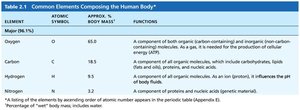
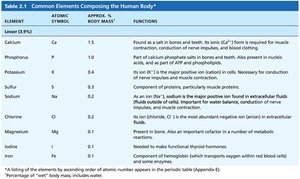
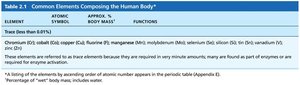
Other elements are present in lesser or trace amounts and are essential for various physiological functions.
Atoms
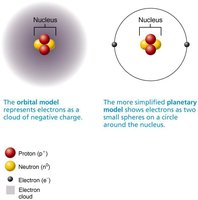
Atoms are the smallest units of elements that retain their properties. They consist of:
Protons: Positively charged, in the nucleus.
Neutrons: No charge, in the nucleus.
Electrons: Negatively charged, orbit the nucleus.
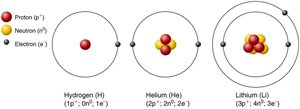
Atomic Number, Mass Number, Isotopes, and Atomic Weight
Atomic Number: Number of protons in the nucleus.
Mass Number: Total number of protons and neutrons.
Isotopes: Atoms of the same element with different numbers of neutrons.
Atomic Weight: Average mass of all isotopes of an element.
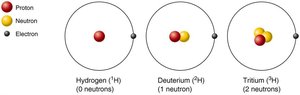
Radioisotopes
Radioisotopes are unstable isotopes that decay, emitting radiation. They are used in medical diagnostics and treatments but can also be harmful due to their radioactivity.
2.3 Combining Matter
Molecules and Compounds
Atoms combine to form molecules and compounds:
Molecule: Two or more atoms bonded together (e.g., O2).
Compound: Molecule with two or more different atoms (e.g., H2O).
Mixtures
Mixtures are physical combinations of substances. Three main types:
Solutions: Homogeneous mixtures; solute particles are very small and do not settle out (e.g., mineral water).
Colloids: Heterogeneous mixtures; larger particles that do not settle out (e.g., Jell-O).
Suspensions: Heterogeneous mixtures; large particles that settle out (e.g., blood).
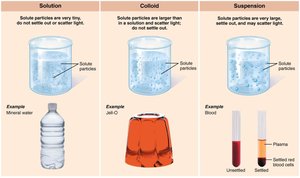
Key Differences Between Mixtures and Compounds:
Mixtures do not involve chemical bonding; compounds do.
Mixtures can be separated physically; compounds require chemical means.
Mixtures can be homogeneous or heterogeneous; compounds are always homogeneous.
2.4 Chemical Bonds
Role of Electrons in Chemical Bonding
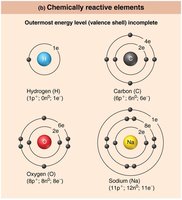
Electrons occupy energy levels called shells. The outermost shell (valence shell) determines chemical reactivity. Atoms strive for stability, often seeking eight electrons in their valence shell (octet rule).
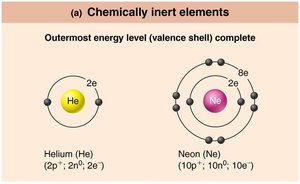
Types of Chemical Bonds
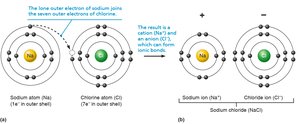
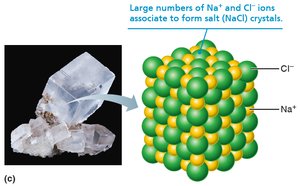
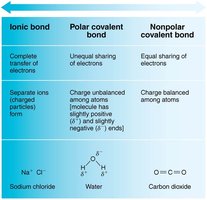
Ionic Bonds: Formed by transfer of electrons, creating charged ions (cations and anions) that attract each other (e.g., NaCl).
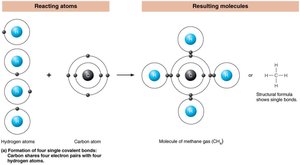
Covalent Bonds: Formed by sharing electrons between atoms. Can be single, double, or triple bonds.
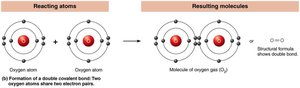
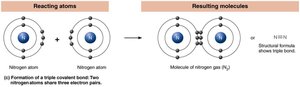
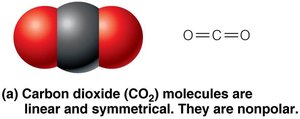
Nonpolar Covalent Bonds: Equal sharing of electrons (e.g., CO2).
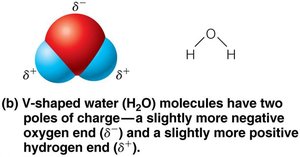
Polar Covalent Bonds: Unequal sharing, resulting in partial charges (e.g., H2O).
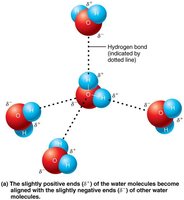
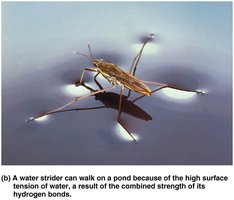
Hydrogen Bonds: Weak attractions between a hydrogen atom and an electronegative atom (e.g., between water molecules). Important for the properties of water and the structure of biological molecules.
2.5 Chemical Reactions
Chemical Equations
Chemical reactions involve the formation, rearrangement, or breaking of chemical bonds. They are represented by chemical equations, showing reactants and products.
Types of Chemical Reactions
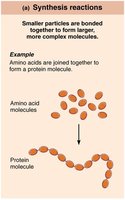
Synthesis (Combination) Reactions: Atoms or molecules combine to form larger, more complex molecules. Important in anabolic processes.
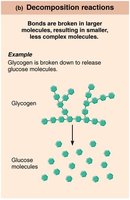
Decomposition Reactions: Molecules are broken down into smaller molecules or atoms. Important in catabolic processes.
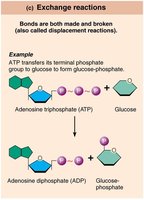
Exchange (Displacement) Reactions: Involve both synthesis and decomposition; bonds are made and broken.
Redox Reactions
Reduction-oxidation (redox) reactions involve the transfer of electrons. Atoms are reduced when they gain electrons and oxidized when they lose electrons.
Energy Flow in Chemical Reactions
Exergonic Reactions: Release energy; products have less potential energy than reactants (e.g., catabolic reactions).
Endergonic Reactions: Absorb energy; products have more potential energy than reactants (e.g., anabolic reactions).
Reversibility of Chemical Reactions
All chemical reactions are theoretically reversible. Chemical equilibrium is reached when neither the forward nor reverse reaction is dominant. In biological systems, many reactions are not easily reversible due to energy requirements or removal of products.
Rate of Chemical Reactions
Temperature: Higher temperature increases reaction rate.
Concentration: Higher concentration increases reaction rate.
Particle Size: Smaller particles increase reaction rate.
Catalysts: Substances that increase reaction rate without being consumed. Enzymes are biological catalysts.
Summary Table: Types of Chemical Bonds
Ionic Bond | Polar Covalent Bond | Nonpolar Covalent Bond | |
|---|---|---|---|
Electron Sharing | Complete transfer | Unequal sharing | Equal sharing |
Resulting Particles | Separate ions | Charge unbalanced (dipole) | Charge balanced |
Example | NaCl | H2O | CO2 |
Additional info: This summary provides foundational chemistry concepts essential for understanding physiological processes in anatomy and physiology. Mastery of these topics is critical for further study in biochemistry, cell biology, and human physiology.
