 Back
Chemistry Comes Alive: The Chemical Basis of Life
Study Guide - Smart Notes
 Tailored notes based on your materials, expanded with key definitions, examples, and context.
Introduction to Chemistry for Health Science
The Chemical Level of Organization
Chemistry is the science of change, focusing on the structure of atoms, the basic chemical building blocks, and how atoms combine to form complex structures. Understanding chemistry is essential for comprehending the molecular basis of life and the processes that sustain it.
Matter and Energy
States of Matter
Matter: Anything that has mass and occupies space.
Weight: The pull of gravity on mass.
Three states of matter:
Solid: Definite shape and volume.
Liquid: Changeable shape; definite volume.
Gas: Changeable shape and volume.
Energy
Energy: The capacity to do work or put matter into motion.
Types of energy:
Kinetic energy: Energy in action.
Potential energy: Stored (inactive) energy.
Energy can be transferred from potential to kinetic energy.
Forms of energy:
Chemical energy: Stored in bonds of chemical substances.
Electrical energy: Results from movement of charged particles.
Mechanical energy: Directly involved in moving matter.
Radiant or electromagnetic energy: Travels in waves (e.g., visible light, ultraviolet light, x-rays).
Energy conversion is inefficient; some energy is lost as heat.
Composition of Matter: Elements and Atoms
Elements
Elements: Substances that cannot be broken into simpler substances by ordinary chemical methods. Each element is made of atoms.
Each element has unique physical and chemical properties.
Represented by atomic symbols (e.g., H for hydrogen, O for oxygen).
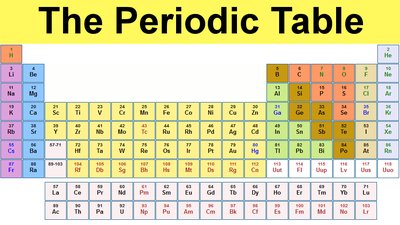
Major, Lesser, and Trace Elements of the Human Body
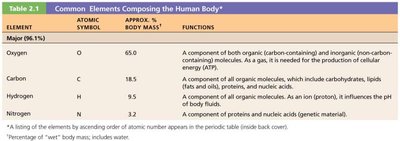
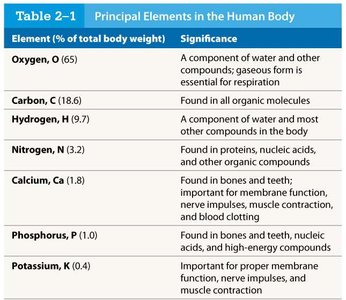
Four elements make up 96.1% of body mass: Oxygen (O), Carbon (C), Hydrogen (H), Nitrogen (N).
Lesser elements (e.g., Calcium, Phosphorus, Potassium, Sulfur, Sodium, Chlorine, Magnesium, Iodine, Iron) make up 3.9% of body mass.
Trace elements (e.g., Chromium, Copper, Fluorine, Manganese, Silicon, Zinc) make up less than 0.01% of body mass and are often enzyme cofactors.
Element | Atomic Symbol | Approx. % Body Mass | Functions |
|---|---|---|---|
Oxygen | O | 65.0 | Component of organic and inorganic molecules; needed for ATP production |
Carbon | C | 18.5 | Component of all organic molecules |
Hydrogen | H | 9.5 | Component of organic molecules; influences pH |
Nitrogen | N | 3.2 | Component of proteins and nucleic acids |
Atoms and Atomic Structure
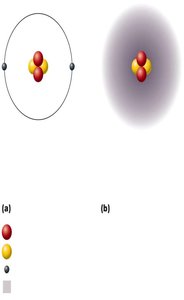
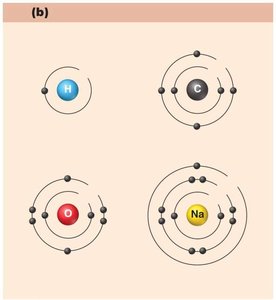
Atoms: Smallest units of an element that retain its properties.
Composed of subatomic particles:
Protons: Positive charge, mass = 1 amu, found in nucleus.
Neutrons: No charge, mass = 1 amu, found in nucleus.
Electrons: Negative charge, 1/2000 mass of proton, orbit nucleus in electron cloud.
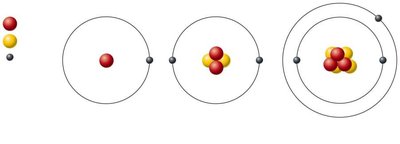
Atomic Number, Mass Number, Isotopes, and Atomic Weight
Atomic number: Number of protons in the nucleus.
Mass number: Total number of protons and neutrons.
Isotopes: Atoms of the same element with different numbers of neutrons.
Atomic weight: Average of mass numbers of all isotopes of an atom.
Radioisotopes and Medical Imaging
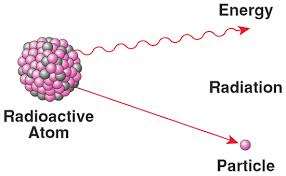
Radioisotopes: Unstable isotopes that decay, emitting radiation (radioactivity).
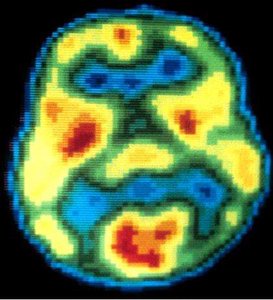
Used in biological research, diagnosis, and treatment (e.g., PET scans, radiation therapy).
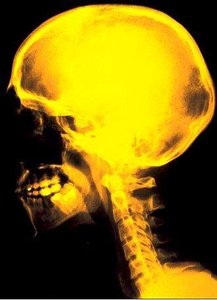
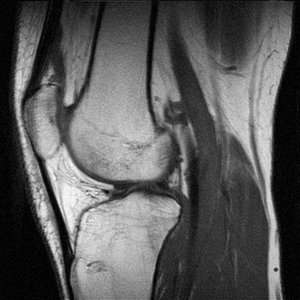
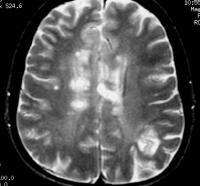
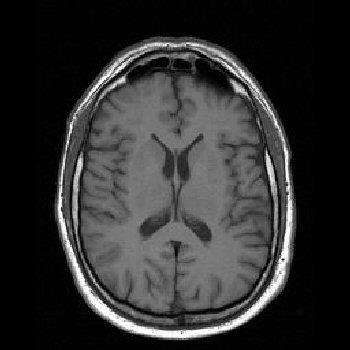
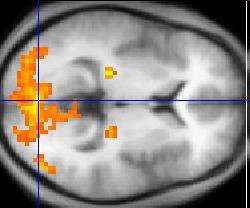
Medical imaging techniques include X-ray, CT, PET, MRI, and others.
Chemical Bonds and Compounds
Molecules and Compounds
Molecule: Two or more atoms bonded together (e.g., H2, O2).
Compound: Two or more different kinds of atoms bonded together (e.g., H2O).
All compounds are molecules, but not all molecules are compounds.
Types of Chemical Bonds
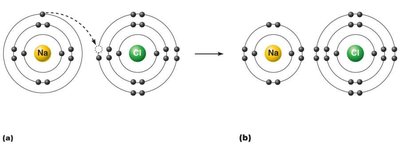
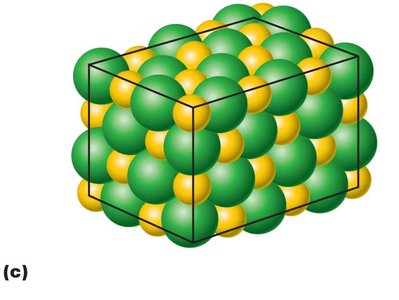
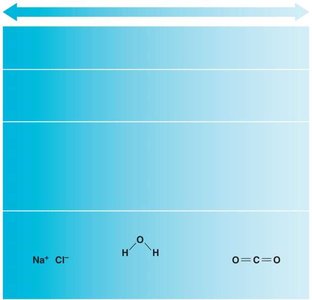
Ionic bonds: Transfer of electrons from one atom to another, forming ions (cations and anions).
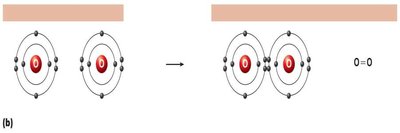
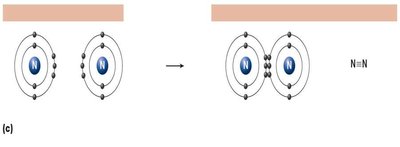
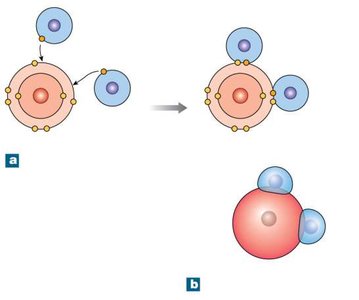
Covalent bonds: Sharing of electrons between atoms.
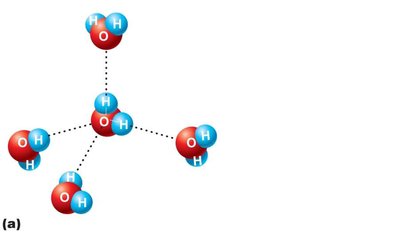
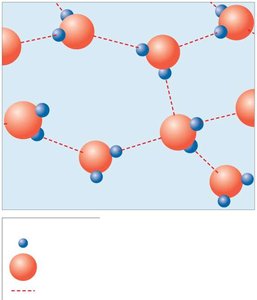
Hydrogen bonds: Weak attractions between polar molecules (e.g., between water molecules).
Ionic Bonds and Ions
Cation: Atom that loses electrons (positive charge).
Anion: Atom that gains electrons (negative charge).
Example: Sodium (Na) donates an electron to chlorine (Cl) to form Na+ and Cl–, creating NaCl (table salt).
Covalent Bonds
Single bond: Sharing one pair of electrons (e.g., H2).
Double bond: Sharing two pairs of electrons (e.g., O2).
Triple bond: Sharing three pairs of electrons (e.g., N2).
Polar and Nonpolar Covalent Bonds
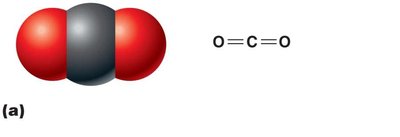
Nonpolar covalent bonds: Electrons shared equally (e.g., CO2).
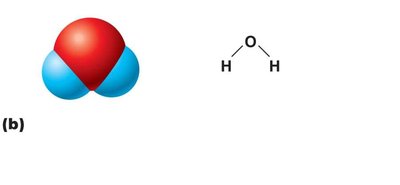
Polar covalent bonds: Electrons shared unequally, creating dipoles (e.g., H2O).
Electronegativity: Atom's ability to attract electrons (e.g., oxygen is highly electronegative).
Hydrogen Bonds
Attractive force between electropositive hydrogen of one molecule and an electronegative atom of another molecule.
Important in water properties and in stabilizing large molecules (e.g., proteins, DNA).
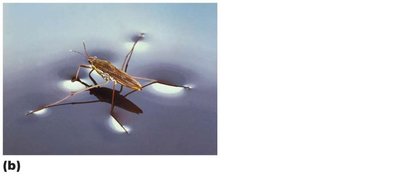
Responsible for surface tension in water.
Mixtures and Compounds
Types of Mixtures
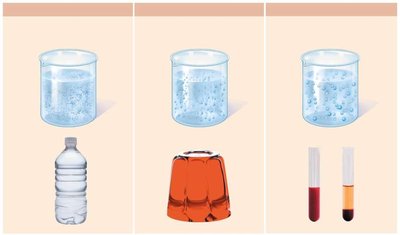
Solutions: Homogeneous mixtures; solute particles do not settle out (e.g., saline solution).
Colloids: Heterogeneous mixtures; larger particles that do not settle out (e.g., cytosol, Jello).
Suspensions: Heterogeneous mixtures; large, visible solutes that settle out (e.g., blood).
Mixtures vs. Compounds
Mixtures: No chemical bonding, can be separated by physical means, can be heterogeneous or homogeneous.
Compounds: Chemical bonding, can only be separated by breaking bonds, always homogeneous.
Chemical Reactions
Types of Chemical Reactions
Synthesis (Combination) Reactions: Atoms or molecules combine to form larger molecules. Anabolic process.
General equation:
Decomposition Reactions: Molecule is broken down into smaller molecules or atoms. Catabolic process.
General equation:
Exchange (Displacement) Reactions: Bonds are both made and broken; atoms are exchanged between molecules.
General equation:
Oxidation-Reduction (Redox) Reactions: Electrons are transferred between reactants; important in energy production.
Example:
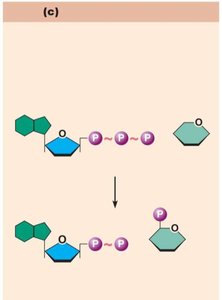
Energy Flow in Chemical Reactions
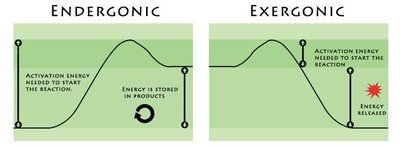
Exergonic reactions: Net release of energy; products have less potential energy than reactants (catabolic, oxidative reactions).
Endergonic reactions: Net absorption of energy; products have more potential energy than reactants (anabolic reactions).
Enzymes and Activation Energy
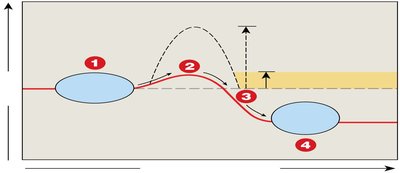
Activation energy: Minimum energy required to start a chemical reaction.
Enzymes: Biological catalysts that lower activation energy, increasing reaction rates without being consumed.
Summary Table: Types of Chemical Bonds
Bond Type | Description | Example |
|---|---|---|
Ionic | Transfer of electrons; attraction between cations and anions | NaCl |
Covalent (Nonpolar) | Equal sharing of electrons | O2, CO2 |
Covalent (Polar) | Unequal sharing of electrons | H2O |
Hydrogen | Attraction between polar molecules | Between H2O molecules |
Additional info: This guide covers foundational chemistry concepts essential for understanding human anatomy and physiology, including atomic structure, chemical bonding, and the role of elements in the human body. It also introduces the importance of chemical reactions and enzymes in biological systems.
