 Back
Chemistry Comes Alive: The Chemical Level of Organization
Study Guide - Smart Notes
 Tailored notes based on your materials, expanded with key definitions, examples, and context.
Chemistry Comes Alive: The Chemical Level of Organization
Introduction to Chemistry in Health Science
Chemistry is the science of change, fundamental to understanding the structure and function of the human body. This chapter explores the atomic structure, elements, chemical bonds, and reactions that underpin biological processes.
Matter and Energy
States of Matter
Matter is anything that has mass and occupies space. It exists in three states:
Solid: Definite shape and volume.
Liquid: Changeable shape, definite volume.
Gas: Changeable shape and volume.
Energy Types and Forms
Energy is the capacity to do work or put matter into motion. It exists as:
Kinetic Energy: Energy in action.
Potential Energy: Stored energy.
Chemical Energy: Stored in chemical bonds.
Electrical Energy: Movement of charged particles.
Mechanical Energy: Directly involved in moving matter.
Radiant/Electromagnetic Energy: Travels in waves (e.g., light, x-rays).
Energy conversion is inefficient; some energy is lost as heat.
Elements and Atomic Structure
Elements of the Human Body
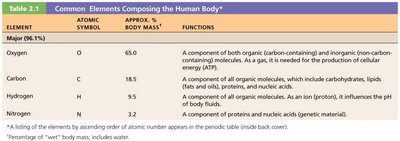
Elements are substances that cannot be broken down by ordinary chemical methods. The human body is primarily composed of four major elements:
Element | Atomic Symbol | Approx. % Body Mass | Functions |
|---|---|---|---|
Oxygen | O | 65.0 | Component of water and compounds; essential for cellular respiration. |
Carbon | C | 18.5 | Found in all organic molecules. |
Hydrogen | H | 9.5 | Component of water and most other compounds. |
Nitrogen | N | 3.2 | Component of proteins and nucleic acids. |
Atomic Structure
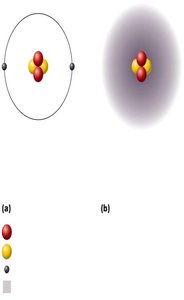
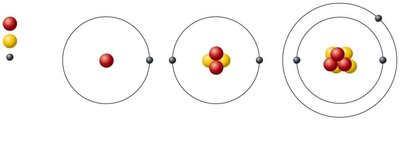
Atoms are the smallest units of elements, composed of:
Protons: Positive charge, found in nucleus, mass = 1 amu.
Neutrons: No charge, found in nucleus, mass = 1 amu.
Electrons: Negative charge, orbit nucleus, mass ≈ 0 amu.
Electrons occupy energy levels (shells); the outermost shell (valence shell) determines chemical reactivity.
Identifying Elements
Atomic Number: Number of protons in nucleus.
Mass Number: Total number of protons and neutrons.
Isotopes: Variants of elements with different numbers of neutrons.
Atomic Weight: Average mass of all isotopes.
Radioisotopes and Medical Imaging
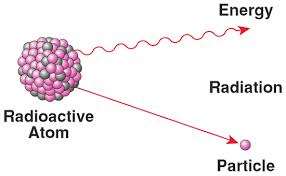
Radioisotopes are unstable isotopes that decay, emitting radiation. They are used in medical diagnostics and treatments, such as PET scans and radiation therapy.
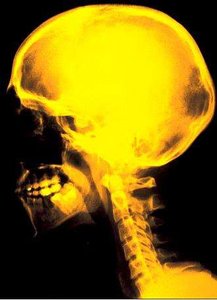
X-ray: Imaging of dense tissues.
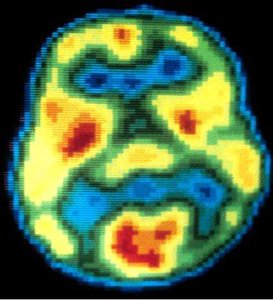
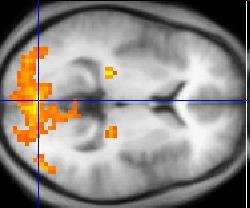
PET Scan: Assesses metabolic activity using radioactive tracers.
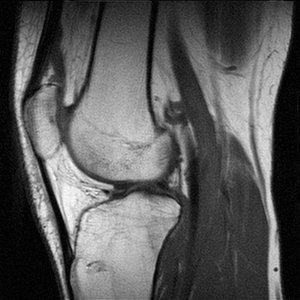
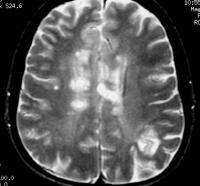
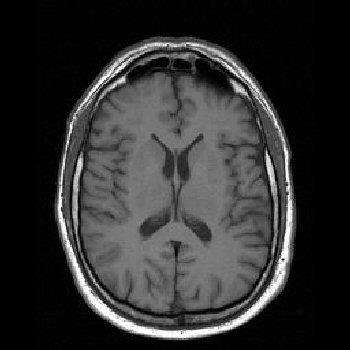
MRI: Uses magnetic fields to image soft tissues.
Combining Matter: Molecules and Compounds
Molecules and Compounds
Atoms combine to form molecules and compounds:
Molecule: Two or more atoms bonded together (e.g., H2).
Compound: Two or more different atoms bonded together (e.g., H2O).
Chemical Bonds
Chemical bonds involve the interaction of electrons in the valence shell. The three major types are:
Ionic Bonds: Transfer of electrons, forming cations and anions.
Covalent Bonds: Sharing of electrons between atoms.
Hydrogen Bonds: Weak attractions between polar molecules.
Ionic Bonds and Ions
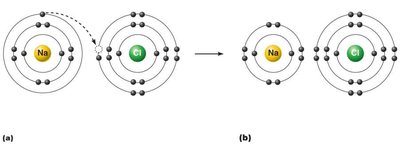
Ionic bonds form when atoms transfer electrons, resulting in charged ions:
Cation: Positive ion (lost electrons).
Anion: Negative ion (gained electrons).
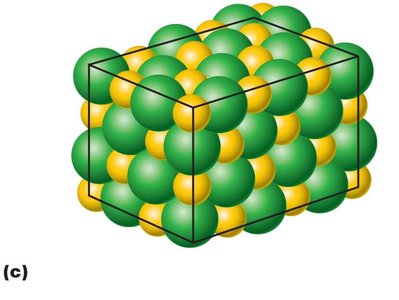
Example: Formation of sodium chloride (NaCl).
Covalent Bonds
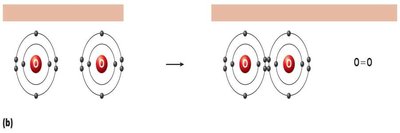
Covalent bonds are formed by sharing electrons:
Single Bond: One pair of electrons shared (e.g., CH4).
Double Bond: Two pairs shared (e.g., O2).
Triple Bond: Three pairs shared (e.g., N2).
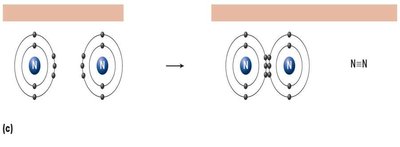
Polar and Nonpolar Covalent Bonds
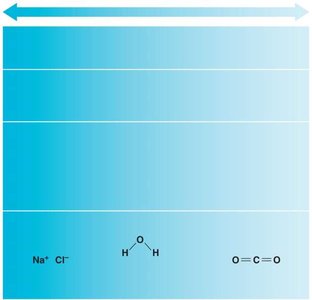
Nonpolar Covalent: Electrons shared equally (e.g., CO2).
Polar Covalent: Unequal sharing, creating dipoles (e.g., H2O).
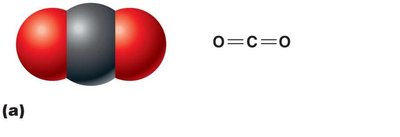
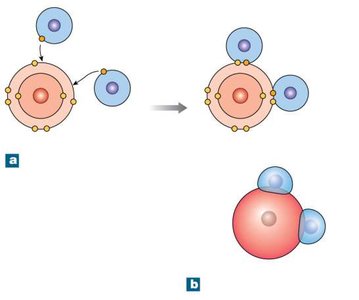
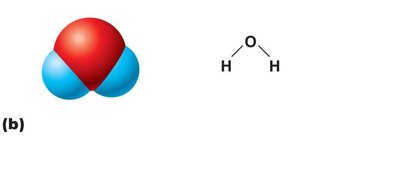
Hydrogen Bonds
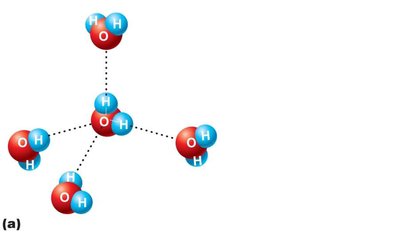
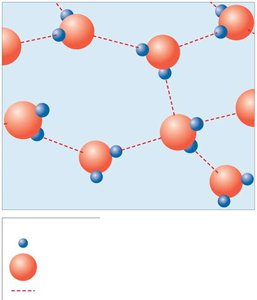
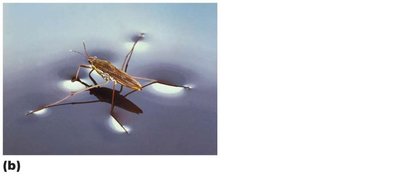
Hydrogen bonds are weak attractions between the slightly positive hydrogen of one molecule and the slightly negative atom of another. They are crucial for water's properties and the three-dimensional structure of biomolecules.
Mixtures and Solutions
Types of Mixtures
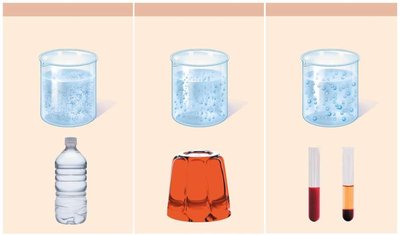
Solutions: Homogeneous mixtures; solute particles do not settle out.
Colloids: Heterogeneous mixtures; larger particles, do not settle out.
Suspensions: Heterogeneous mixtures; large particles settle out.
Mixtures vs. Compounds
Mixtures: No chemical bonding; can be separated physically.
Compounds: Chemical bonding; can only be separated by breaking bonds.
Chemical Reactions
Types of Chemical Reactions
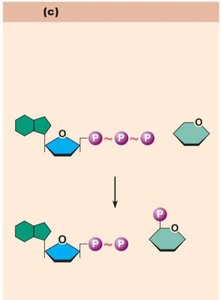
Synthesis (Anabolism): A + B → AB; forms larger molecules.
Decomposition (Catabolism): AB → A + B; breaks down molecules.
Exchange: AB + C → AC + B; involves both synthesis and decomposition.
Redox Reactions
Oxidation-reduction reactions involve the transfer of electrons:
Oxidation: Loss of electrons.
Reduction: Gain of electrons.
Example: Cellular respiration.
Energy Flow in Reactions
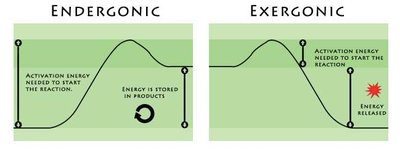
Exergonic: Net release of energy; products have less potential energy.
Endergonic: Net absorption of energy; products have more potential energy.
Enzymes and Activation Energy
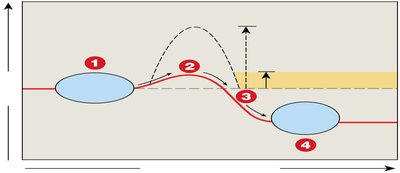
Enzymes are protein catalysts that lower the activation energy required for reactions, increasing the rate without being consumed.
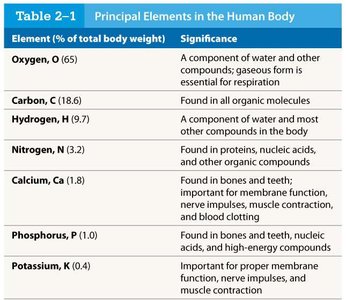
Summary Table: Principal Elements in the Human Body
Element | % of Total Body Weight | Significance |
|---|---|---|
Oxygen (O) | 65 | Component of water and other compounds; essential for respiration. |
Carbon (C) | 18.6 | Found in all organic molecules. |
Hydrogen (H) | 9.7 | Component of water and most other compounds. |
Nitrogen (N) | 3.2 | Component of proteins, nucleic acids, and other organic compounds. |
Calcium (Ca) | 1.8 | Found in bones and teeth; important for membrane function, nerve impulses, muscle contraction, and blood clotting. |
Phosphorus (P) | 1.0 | Found in bones and teeth, nucleic acids, and high-energy compounds. |
Potassium (K) | 0.4 | Important for proper membrane function, nerve impulses, and muscle contraction. |
Additional info: These notes expand on the original lecture slides and tables, providing definitions, examples, and academic context for each topic. All images included are directly relevant to the adjacent explanations, visually reinforcing key concepts in chemistry as applied to anatomy and physiology.
