 Back
BackChemistry of Life: Organic Compounds and Biological Macromolecules
Study Guide - Smart Notes
 Tailored notes based on your materials, expanded with key definitions, examples, and context.
Chemistry Comes Alive: Organic Compounds and Biological Macromolecules
Organic Compounds in the Human Body
Organic compounds are essential chemicals in the body, characterized by the presence of carbon. They include carbohydrates, lipids, proteins, and nucleic acids, all of which play critical roles in cellular structure and function.
Definition: Organic compounds contain carbon and are typically found in living organisms.
Key Types: Carbohydrates, lipids, proteins, nucleic acids.
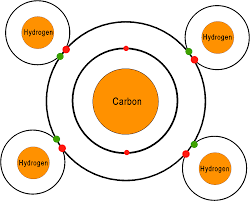
Carbon's Versatility: Carbon can form four covalent bonds, allowing for diverse molecular configurations.
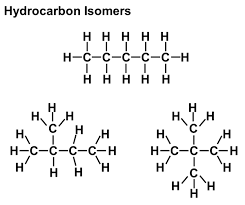
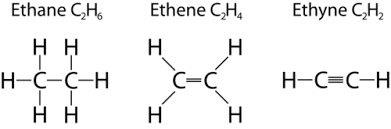
Hydrocarbons: Molecules composed entirely of carbon and hydrogen, forming stable and energy-rich structures.
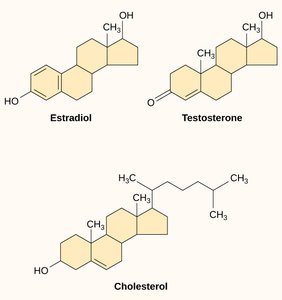
Functional Groups: Specific groups of atoms attached to carbon backbones that confer distinct chemical properties (e.g., differences between estrogen and testosterone).
Biological Macromolecules: Structure and Formation
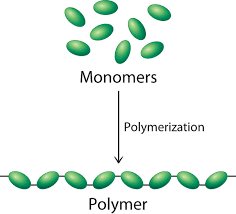
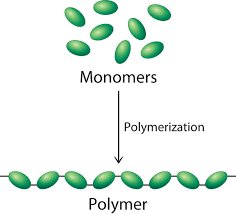
Biological macromolecules are large organic molecules essential for life. They are polymers, formed by linking smaller units called monomers through chemical reactions.
Monomer: A small organic molecule that serves as a building block.
Polymer: A large molecule made of repeating monomer units.
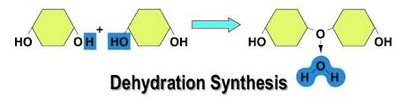
Dehydration Synthesis: The process by which monomers join to form polymers, releasing water.
Hydrolysis: The process of breaking polymers into monomers by adding water.
Carbohydrates
Structure and Function
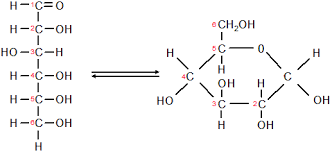
Carbohydrates are organic molecules composed of carbon, hydrogen, and oxygen. They serve as energy sources, structural components, and signaling molecules.
Monosaccharides: Simple sugars (e.g., glucose, fructose) that cannot be broken down further.
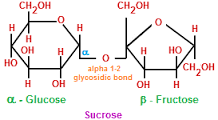
Disaccharides: Double sugars formed by joining two monosaccharides (e.g., sucrose, lactose).
Polysaccharides: Large polymers of monosaccharides (e.g., starch, glycogen, cellulose).
General Formula: Most carbohydrates have a formula that is a multiple of CH2O.
Glycosidic Linkages: Covalent bonds joining monosaccharides in disaccharides and polysaccharides.
Proteins
Structure and Diversity
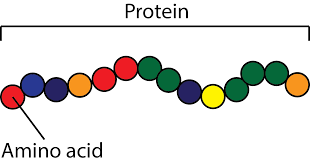
Proteins are polymers of amino acids and constitute more than half the dry mass of most cells. Their structure determines their function, which ranges from catalysis to structural support.
Amino Acids: Monomers of proteins, each with an amino group, carboxyl group, and unique R-group.
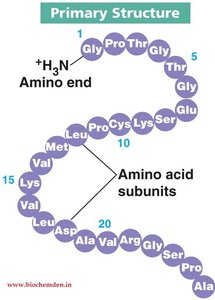
Primary Structure: Linear sequence of amino acids.
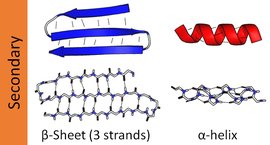
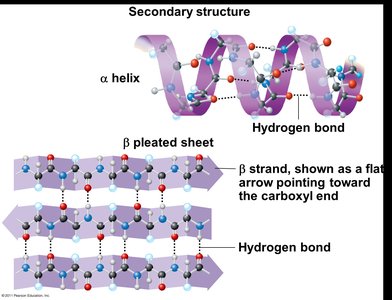
Secondary Structure: Hydrogen bonding forms alpha helices and beta sheets.
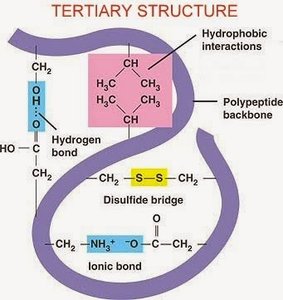
Tertiary Structure: Three-dimensional folding stabilized by interactions among side chains.
Quaternary Structure: Association of multiple polypeptide chains (not present in all proteins).
Fibrous Proteins: Structural, stable, and often only secondary structure (e.g., collagen, keratin).
Globular Proteins: Functional, water-soluble, and have tertiary/quaternary structure (e.g., enzymes).
Protein Denaturation: Loss of structure and function due to disruption of weak bonds.
Enzymes
Enzymes are globular proteins that act as catalysts, increasing the rate of biochemical reactions without being consumed.
Active Site: Region where substrates bind and reactions occur.
Enzyme Naming: Enzymes often end with "-ase" (e.g., lactase, lipase, protease).
Nucleic Acids
DNA and RNA
Nucleic acids are polymers of nucleotides and are responsible for storing and transmitting genetic information.
Nucleotide: Monomer consisting of a 5-carbon sugar, nitrogenous base, and phosphate group.
DNA: Double-stranded, contains deoxyribose, bases A, T, C, G; remains in the nucleus.
RNA: Single-stranded, contains ribose, bases A, U, C, G; can leave the nucleus.
Adenosine Triphosphate (ATP)
Cellular Energy Currency
ATP is the primary energy carrier in cells. It is generated from glucose and used to power cellular processes.
ATP Structure: Adenosine molecule with three phosphate groups.
Energy Release: ATP is converted to ADP (adenosine diphosphate) when energy is used, and can be recharged back to ATP.
Lipids
Types and Functions
Lipids are hydrophobic molecules, including fats, phospholipids, and steroids. They are important for energy storage, membrane structure, and signaling.
Fats/Triglycerides: Used for energy storage, cell growth, and maintenance.
Phospholipids: Essential for membrane function due to hydrophobic and hydrophilic ends.
Steroids: Characterized by four fused carbon rings; includes cholesterol and sex hormones.
Cholesterol: Component of cell membranes and precursor for other steroids.
Lipoproteins: Cholesterol attaches to proteins for transport; HDL (good) and LDL (bad) cholesterol.
Summary Table: Major Biological Macromolecules
Macromolecule | Monomer | Polymer | Main Functions |
|---|---|---|---|
Carbohydrates | Monosaccharide | Polysaccharide | Energy storage, structure, signaling |
Proteins | Amino acid | Polypeptide | Catalysis, structure, transport, signaling |
Nucleic Acids | Nucleotide | DNA/RNA | Genetic information, protein synthesis |
Lipids | Fatty acid (not true monomer) | Triglyceride, phospholipid, steroid | Energy storage, membranes, hormones |
Key Equations
Dehydration Synthesis:
Hydrolysis:
Additional info: The notes cover foundational concepts from Chapter 2 (Chemistry Comes Alive) of an Anatomy & Physiology course, focusing on the chemistry of life and the structure/function of organic compounds.
