 Back
BackClassification of Multicellular Glands by Structure
Study Guide - Smart Notes
 Tailored notes based on your materials, expanded with key definitions, examples, and context.
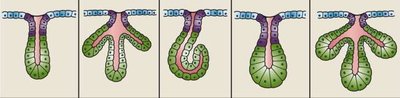
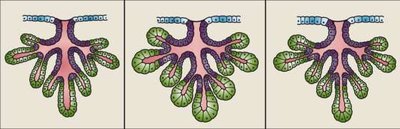
Q1. Identify each type of gland shown in the images and briefly describe their structural differences.
Background
Topic: Histology – Glandular Epithelium
This question is testing your understanding of how multicellular exocrine glands are classified based on the structure of their ducts and secretory units. Recognizing these structural differences is important for understanding how glands function in the body.
Key Terms and Concepts:
Simple gland: A gland with an unbranched duct.
Compound gland: A gland with a branched duct.
Tubular: Secretory cells form tubes.
Alveolar (acinar): Secretory cells form small, flask-like sacs.
Tubuloalveolar: Secretory units have both tubular and alveolar portions.
Step-by-Step Guidance
Observe the overall shape of each gland in the images. Note whether the duct is branched or unbranched.
Identify the shape of the secretory portion: is it tube-like (tubular), round/sac-like (alveolar/acinar), or a combination (tubuloalveolar)?
Classify each gland as either simple or compound based on the duct structure. Simple glands have a single, unbranched duct; compound glands have a branched duct system.
Match each image to the correct gland type (e.g., simple tubular, simple alveolar, compound tubular, compound alveolar, compound tubuloalveolar) based on your observations.
Briefly describe the structural difference between each type you identified (for example, "simple tubular glands have straight, unbranched tubes, while compound alveolar glands have branched ducts ending in sac-like secretory units").
Try solving on your own before revealing the answer!
Final Answer:
The images show (from left to right): simple tubular, simple branched tubular, simple coiled tubular, simple alveolar, simple branched alveolar, compound tubular, compound alveolar, and compound tubuloalveolar glands. Simple glands have unbranched ducts, while compound glands have branched ducts. Tubular glands have tube-shaped secretory units, alveolar glands have sac-like units, and tubuloalveolar glands have both.
