 Back
Comprehensive Study Guide for Human Anatomy & Physiology II: Endocrine, Blood, Cardiovascular, Lymphatic, Immune, Respiratory, Digestive, Urinary, Fluid/Electrolyte, and Reproductive Systems
Study Guide - Smart Notes
 Tailored notes based on your materials, expanded with key definitions, examples, and context.
Endocrine System
Major Glands and Their Functions
The endocrine system is composed of glands that secrete hormones directly into the bloodstream to regulate various body functions.
Pituitary Gland: Often called the 'master gland,' it regulates other endocrine glands and produces hormones such as growth hormone (GH), prolactin, and antidiuretic hormone (ADH).
Pineal Gland: Secretes melatonin, which regulates sleep-wake cycles.
Thyroid Gland: Produces thyroid hormones (T3 and T4) that regulate metabolism, growth, and development.
Parathyroid Glands: Regulate calcium and phosphate balance through parathyroid hormone (PTH).
Adrenal Glands: Produce corticosteroids (cortisol, aldosterone) and catecholamines (epinephrine, norepinephrine) for stress response and metabolic regulation.
Pancreas: Secretes insulin and glucagon to regulate blood glucose levels.
Gonads (Ovaries/Testes): Produce sex hormones (estrogen, progesterone, testosterone) for reproductive function.
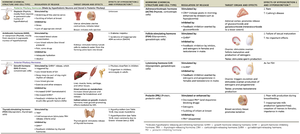
Summary Table of Endocrine Glands, Hormones, and Effects
The following table summarizes the major endocrine glands, their hormones, target tissues, and physiological effects:
Gland | Hormone(s) | Target Tissue(s) | Main Effects |
|---|---|---|---|
Pituitary (anterior) | GH, TSH, ACTH, FSH, LH, PRL | Various (bones, thyroid, adrenal cortex, gonads, mammary glands) | Growth, metabolism, stress response, reproductive function, lactation |
Pituitary (posterior) | ADH, Oxytocin | Kidneys, uterus, mammary glands | Water balance, uterine contraction, milk ejection |
Thyroid | T3, T4, Calcitonin | Most tissues, bones | Metabolic rate, calcium regulation |
Parathyroid | PTH | Bones, kidneys, intestines | Increases blood calcium |
Adrenal Cortex | Cortisol, Aldosterone | Most tissues, kidneys | Stress response, sodium/potassium balance |
Adrenal Medulla | Epinephrine, Norepinephrine | Heart, muscles, blood vessels | Fight-or-flight response |
Pancreas | Insulin, Glucagon | Liver, muscle, adipose tissue | Blood glucose regulation |
Ovaries/Testes | Estrogen, Progesterone, Testosterone | Reproductive organs | Sexual development, reproduction |
Blood
Formed Elements of Blood
Blood consists of plasma and formed elements:
Red Blood Cells (Erythrocytes): Transport oxygen and carbon dioxide using hemoglobin.
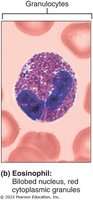
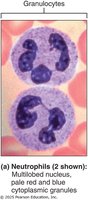
White Blood Cells (Leukocytes): Defend the body against infection and foreign substances. Types include neutrophils, eosinophils, basophils, lymphocytes, and monocytes.
Platelets (Thrombocytes): Cell fragments involved in blood clotting.
White Blood Cell Types and Functions
Neutrophils: Phagocytize bacteria and fungi.
Eosinophils: Combat parasitic infections and modulate allergic responses.
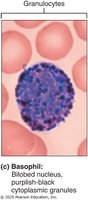
Basophils: Release histamine for inflammatory responses.
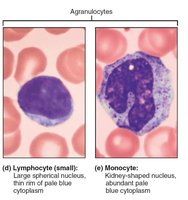
Lymphocytes: Mediate immune responses (B cells and T cells).
Monocytes: Differentiate into macrophages for phagocytosis.
ABO Blood Group System
ABO System: Based on the presence or absence of antigens (A, B) on RBCs. Type A has A antigen, B has B antigen, AB has both, O has neither.
Blood Typing: Mixing blood with anti-A and anti-B sera determines blood type by agglutination.
Cardiovascular System: Heart and Blood Vessels
Heart Anatomy and Cardiac Cycle
The heart is a muscular organ with four chambers (two atria, two ventricles) that pumps blood throughout the body.
Internal Anatomy: Includes valves (tricuspid, bicuspid/mitral, pulmonary, aortic), septa, and major vessels (aorta, vena cava, pulmonary arteries/veins).
Cardiac Cycle: Sequence of events in one heartbeat, including atrial systole, ventricular systole, and diastole.
Heart Sounds: The first sound ("lub") is closure of AV valves; the second ("dub") is closure of semilunar valves.
ECG Waves: P wave (atrial depolarization), QRS complex (ventricular depolarization), T wave (ventricular repolarization).
Blood Vessels: Arteries and Veins
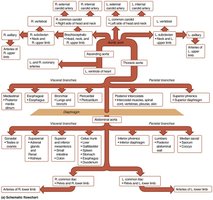
Arteries: Carry blood away from the heart; have thicker tunica media for high pressure.
Veins: Carry blood toward the heart; have thicker tunica externa and valves to prevent backflow.
Blood Pressure: Systolic pressure is the peak during ventricular contraction; diastolic is the minimum during relaxation. Normal adult BP is about 120/80 mmHg.
Hypertension: High blood pressure (≥140/90 mmHg). Hypotension: Low blood pressure (≤90/60 mmHg).
Lymphatic System
Major Components and Flow of Lymph
The lymphatic system returns interstitial fluid to the bloodstream and provides immune defense.
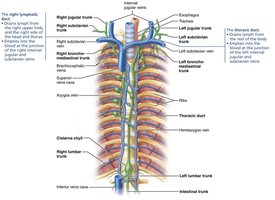
Major Components: Lymph, lymphatic vessels, lymph nodes, spleen, thymus, tonsils, MALT (mucosa-associated lymphoid tissue).
Lymph Flow: Lymphatic capillaries → lymphatic vessels → lymph nodes → lymphatic trunks → lymphatic ducts → subclavian veins.
Lymphoid Tissues and Lymph Nodes
Lymphoid Tissues: Include tonsils, Peyer's patches, appendix, and MALT, which protect mucosal surfaces.
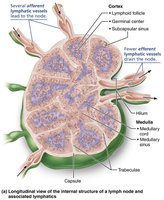
Lymph Node Structure: Cortex (with follicles and germinal centers), medulla (cords and sinuses), afferent/efferent vessels, hilum.
Immune System
Lines of Defense
The immune system protects against pathogens through three lines of defense:
First Line: Physical and chemical barriers (skin, mucous membranes, secretions).
Second Line: Innate immunity (phagocytes, inflammation, fever, antimicrobial proteins).
Third Line: Adaptive immunity (B cells for humoral, T cells for cell-mediated immunity).
Humoral vs. Cell-Mediated Immunity
Humoral Immunity: Mediated by B cells producing antibodies against extracellular pathogens.
Cell-Mediated Immunity: Mediated by T cells targeting infected or abnormal cells.
Respiratory System
Anatomy and Gas Exchange
The respiratory system enables gas exchange between the atmosphere and blood.
Major Structures: Nasal cavity, pharynx, larynx, trachea, bronchi, lungs, alveoli, diaphragm.
Gas Exchange: Occurs by diffusion across alveolar and capillary walls, driven by partial pressure gradients of O2 and CO2.
Boyle's Law and Ventilation
Boyle's Law: At constant temperature, the pressure of a gas is inversely proportional to its volume:
Application: During inspiration, thoracic volume increases and pressure decreases, drawing air into the lungs.
Digestive System
Anatomy and Function
The digestive system breaks down food into absorbable units and eliminates waste.
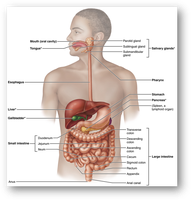
Main Organs: Mouth, pharynx, esophagus, stomach, small intestine, large intestine, rectum, anus.
Accessory Organs: Salivary glands, liver, gallbladder, pancreas.
Chemical Digestion of Nutrients
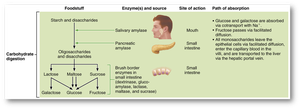
Carbohydrates: Digested by salivary and pancreatic amylase, then brush border enzymes to monosaccharides.
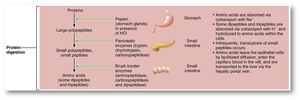
Proteins: Digested by pepsin (stomach), pancreatic enzymes, and brush border enzymes to amino acids.
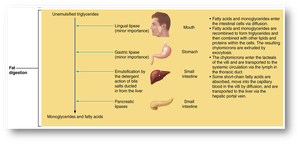
Lipids: Emulsified by bile, digested by lipases to fatty acids and monoglycerides.
Urinary System
Organs and Nephron Structure
The urinary system removes waste and regulates fluid, electrolyte, and acid-base balance.
Main Organs: Kidneys, ureters, urinary bladder, urethra.
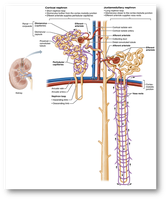
Kidney Structure: Cortex, medulla, renal pelvis; functional unit is the nephron.
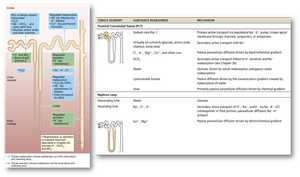
Nephron: Consists of renal corpuscle (glomerulus + Bowman's capsule) and renal tubule (PCT, loop of Henle, DCT, collecting duct).
Filtrate Concentration in Nephrons
Filtration: Occurs in the glomerulus; filtrate enters the tubule.
Reabsorption and Secretion: Water and solutes are reabsorbed or secreted along the tubule, concentrating urine.
Fluid, Electrolyte, and Acid-Base Balance
Electrolyte Regulation
Sodium: Regulated by aldosterone (increases reabsorption) and ANP (decreases reabsorption).
Potassium: Regulated by aldosterone (increases secretion).
Calcium: Regulated by PTH (increases blood Ca2+), calcitonin (decreases blood Ca2+).
Acid-Base Balance
Acidosis: Blood pH < 7.35; Alkalosis: Blood pH > 7.45.
Compensation: Kidneys excrete or retain H+/HCO3-; lungs regulate CO2 exhalation.
Reproductive System
Male and Female Anatomy
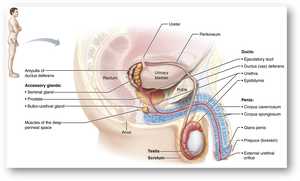
Male: Testes, epididymis, vas deferens, seminal vesicles, prostate, bulbourethral glands, penis.
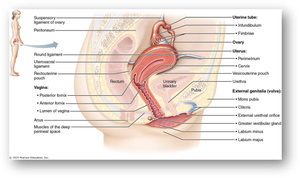
Female: Ovaries, uterine tubes, uterus, vagina, external genitalia.
Gametogenesis and Fertilization
Spermatogenesis: Formation of sperm in testes via meiosis.
Oogenesis: Formation of ova in ovaries via meiosis.
Fertilization: Fusion of sperm and egg to form a zygote.
Menstrual Cycle and Development
Menstrual Cycle: Follicular phase, ovulation, luteal phase, menstruation.
Development: Zygote → embryo → fetus; organogenesis, gastrulation, neurulation, formation of germ layers (ectoderm, mesoderm, endoderm).
HCG: Hormone produced by the embryo; maintains corpus luteum in early pregnancy.
Stages of Labor
Dilation: Cervix dilates.
Expulsion: Delivery of baby.
Placental: Delivery of placenta.
