 Back
BackComprehensive Study Guide: Reproductive System, Fluid, Electrolyte, and Acid-Base Homeostasis
Study Guide - Smart Notes
 Tailored notes based on your materials, expanded with key definitions, examples, and context.
Overview of the Reproductive System and Meiosis
Introduction to Cell Division
The reproductive system relies on specialized cell division processes to ensure genetic diversity and the continuation of species. Two main types of cell division are mitosis and meiosis.
Mitosis: Produces two genetically identical diploid daughter cells; occurs in somatic (body) cells.
Meiosis: Produces four genetically unique haploid cells (gametes); occurs only in cells destined to become sperm or eggs.
Zygote: The cell formed by the fusion of two gametes (sperm and egg).
Diploid (2n): A cell with two sets of chromosomes (46 in humans).
Haploid (n): A cell with one set of chromosomes (23 in humans).
Homologous pairs: Chromosome pairs, one from each parent, with the same genes but possibly different alleles.
Sister chromatids: Identical copies of a chromosome, joined at the centromere.
Allele: Different versions of a gene.
Chromatin: DNA and protein complex that condenses to form chromosomes during cell division.
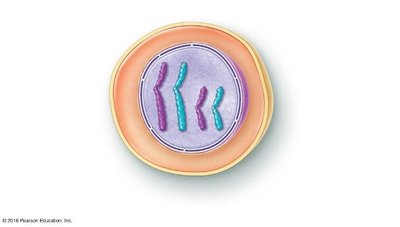
Phases of Meiosis
Meiosis consists of two consecutive divisions: Meiosis I and Meiosis II. Each phase has distinct events, especially regarding chromosome behavior.
Prophase I: Homologous chromosomes pair up and crossing over occurs, increasing genetic diversity.
Metaphase I: Homologous pairs align at the cell equator.
Anaphase I: Homologous chromosomes separate to opposite poles.
Telophase I and Cytokinesis: Two haploid cells form, each with duplicated chromosomes.
Meiosis II: Similar to mitosis; sister chromatids separate, resulting in four unique haploid cells.
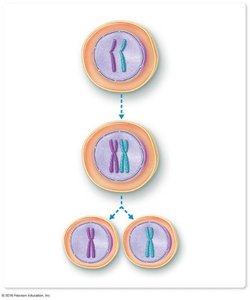
Comparison of Mitosis and Meiosis
Mitosis: One division, two identical diploid cells, no crossing over.
Meiosis: Two divisions, four unique haploid cells, crossing over and independent assortment increase genetic variation.
Anatomy of the Male Reproductive System
Testes and Associated Structures
The testes are the male gonads, located in the scrotum outside the abdominopelvic cavity. They produce sperm and testosterone.
Seminiferous tubules: Site of sperm production; each lobule contains 1-4 tubules.
Spermatogenic cells: Form sperm.
Sustentacular (Sertoli) cells: Support and nourish developing sperm.
Interstitial (Leydig) cells: Found between tubules; produce androgens (testosterone).
Pampiniform venous plexus: Network of veins that helps cool arterial blood before it reaches the testes.
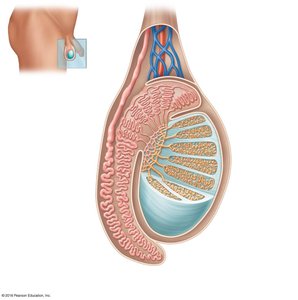
Pathway of Sperm
Sperm produced in seminiferous tubules → straight tubules → rete testis → efferent ductules → epididymis (head, body, tail).
Epididymis: Site of sperm maturation and storage; duct is about 6 meters long.
Sperm then travel through the ductus (vas) deferens, ampulla, ejaculatory duct (formed by merging with seminal vesicle duct), and finally the urethra (prostatic, membranous, and spongy regions).
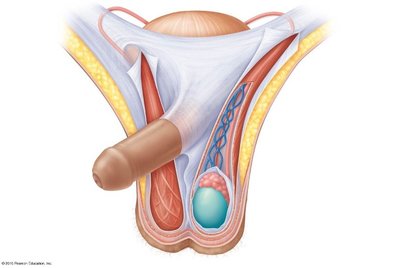
Penis and Perineum
Penis: Composed of three erectile tissues: two corpora cavernosa and one corpus spongiosum.
Glans penis: Expanded tip; prepuce (foreskin) may be removed by circumcision.
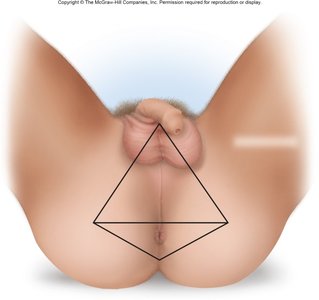
Perineum: Bounded by pubic symphysis, ischial tuberosities, and coccyx; contains urogenital and anal triangles.
Fluid, Electrolyte, and Acid-Base Homeostasis
Body Fluids and Electrolytes
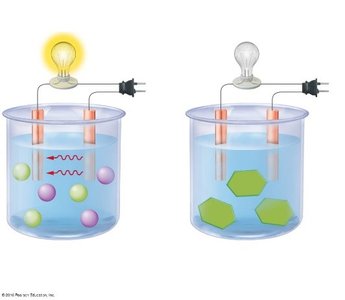
Water is the main component of all body fluids. Electrolytes are substances that dissociate into ions in water and conduct electricity.
Common electrolytes: Sodium (Na+), potassium (K+), calcium (Ca2+), chloride (Cl-).
Ion: A charged particle.
Electrolyte balance: Intake equals loss; critical for nerve and muscle function.
Fluid balance affects electrolyte concentration and vice versa.
Acids, Bases, and pH
Acid: Releases H+ in solution.
Base: Accepts H+; most common in the body is bicarbonate (HCO3-).
pH scale: Measures hydrogen ion concentration; lower pH = more acidic.
Anatomy of the Female Reproductive System
Ovaries and Uterine Tubes
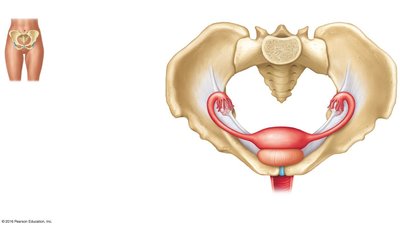
The ovaries are the female gonads, located on the lateral walls of the pelvic cavity. They produce ova and secrete hormones. The uterine tubes (fallopian tubes or oviducts) transport ova from the ovaries to the uterus and are the usual site of fertilization.
Ovaries are held in place by the broad, ovarian, and suspensory ligaments.
Regions of the uterine tube: infundibulum (with fimbriae), ampulla, isthmus.
Uterus and Vagina
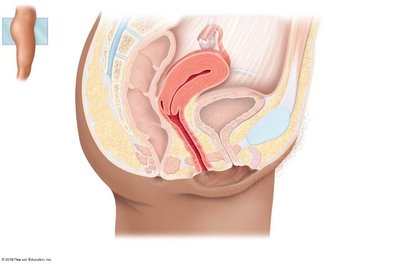
Uterus: Inverted pear-shaped organ; supports developing embryo/fetus.
Three layers: perimetrium (outer), myometrium (muscular middle), endometrium (inner mucosa).
Vagina: Muscular tube extending from cervix to exterior; receives penis, serves as birth canal, and allows menstrual flow.
External Genitalia and Mammary Glands
Vulva: Collective term for external female genitalia (mons pubis, labia majora/minora, clitoris, vestibule).
Mammary glands: Modified sweat glands for milk production; areola is the pigmented area around the nipple.
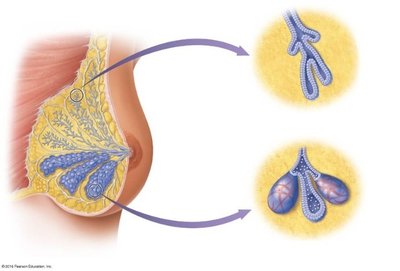
Fluid Compartments and Water Movement
Distribution of Body Water
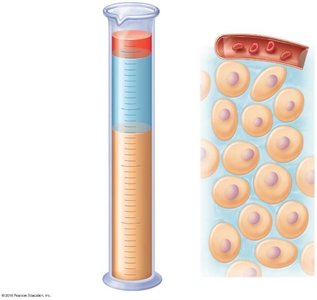
About 60% of body mass is water, varying with age, sex, and adipose tissue content.
Two main compartments: intracellular fluid (ICF, ~60%) and extracellular fluid (ECF, ~40%).
ECF includes plasma and interstitial fluid.
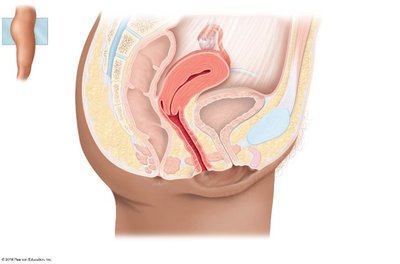
Osmotic and Hydrostatic Pressure
Water moves freely between compartments, driven by hydrostatic and osmotic pressures.
Hydrostatic pressure pushes water out; osmotic pressure pulls water in.
Normally, ECF and ICF are isotonic; changes in solute concentration can cause water to move, leading to cell swelling or shrinking.
Summary Table: Comparison of Mitosis and Meiosis
Feature | Mitosis | Meiosis |
|---|---|---|
Number of Divisions | 1 | 2 |
Number of Daughter Cells | 2 | 4 |
Genetic Identity | Identical | Unique |
Chromosome Number | Diploid (2n) | Haploid (n) |
Role | Growth, repair | Gamete production |
Key Equations
Osmotic Pressure:
Carbonic Acid-Bicarbonate Buffer System:
Additional info: This guide integrates foundational concepts from anatomy and physiology, focusing on reproductive and fluid/electrolyte systems, and is suitable for exam preparation in a college-level ANP course.
