 Back
Comprehensive Study Notes for Human Physiology: Molecular Interactions, Metabolism, and System Integration
Study Guide - Smart Notes
 Tailored notes based on your materials, expanded with key definitions, examples, and context.
Molecular Interactions
Basic Chemical Principles in Physiology
Physiology is the study of the normal functioning of living organisms and their component parts. Understanding molecular interactions is foundational for grasping physiological processes.
Ion: An atom or molecule with a net electric charge due to the loss or gain of electrons. Anion (gains electrons, negative), Cation (loses electrons, positive).
Ligand: Any molecule or ion that binds to another molecule, often a protein.
Polar Molecules: Molecules with regions of partial positive and negative charge (e.g., water).
Nonpolar Molecules: Molecules with evenly distributed electrons and no partial charges (e.g., carbon dioxide).
Hydrophilic: Water-loving; dissolves easily in water.
Hydrophobic: Water-fearing; does not dissolve in water.
Mixtures and Solutions
Solution: Homogeneous mixture where solute is evenly distributed in solvent.
Suspension: Heterogeneous mixture where particles settle out over time.
Colloid: Heterogeneous mixture where particles remain suspended but do not settle.
pH Scale: Measures acidity/alkalinity; higher H+ = more acidic, higher OH- = more basic.
Buffers: Substances that resist changes in pH (e.g., bicarbonate in blood).
Biomolecules
Carbohydrates: Composed of C, H, O; main energy source. Includes monosaccharides (glucose, fructose, galactose), disaccharides (sucrose, lactose, maltose), and polysaccharides (starch, glycogen, cellulose).
Lipids: Hydrophobic molecules including fats, oils, waxes, and steroids. Important for energy storage, membrane structure, and signaling.
Proteins: Polymers of amino acids; serve structural, enzymatic, and regulatory roles. Structure levels: primary, secondary, tertiary, quaternary.
Nucleic Acids: DNA and RNA; store and transmit genetic information.
Enzyme Function and Regulation
Enzyme Structure and Mechanism
Enzymes are biological catalysts that speed up chemical reactions by lowering activation energy. They are highly specific for their substrates and can be regulated by various mechanisms.
Active Site: Region on the enzyme where the substrate binds and the reaction occurs.
Enzyme-Substrate Complex: Temporary complex formed when an enzyme binds its substrate.
Product: The molecule(s) resulting from the enzymatic reaction.
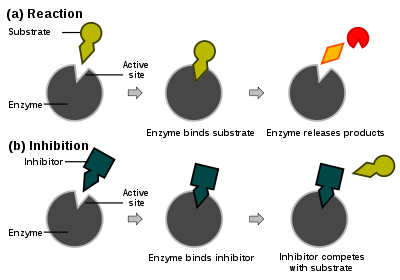
Competitive Inhibition: Inhibitor resembles the substrate and competes for the active site.
Allosteric Regulation: Modulator binds at a site other than the active site, changing enzyme activity.
Classification of Enzymatic Reactions
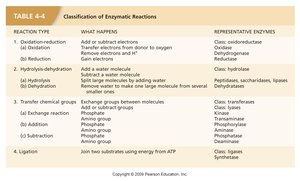
Reaction Type | What Happens | Representative Enzymes |
|---|---|---|
Oxidation-reduction | Add or subtract electrons | Oxidase, dehydrogenase |
Hydrolysis-dehydration | Add/remove water molecule | Hydrolase, lipase |
Transfer chemical groups | Exchange groups between molecules | Kinase, transaminase |
Ligation | Join two substrates using ATP energy | Synthetase, ligase |
Energy and Cellular Metabolism
Basic Principles
First Law of Thermodynamics: Energy cannot be created or destroyed.
Second Law of Thermodynamics: Energy tends to disperse or dissipate.
Anabolism: Building up molecules, requires energy input.
Catabolism: Breaking down molecules, releases energy.
ATP: Main energy currency of the cell.
Gluconeogenesis and the Cori Cycle
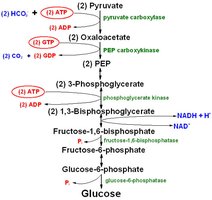
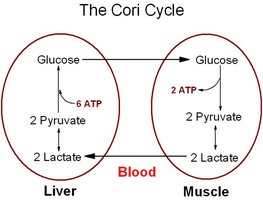
Gluconeogenesis is the synthesis of glucose from non-carbohydrate sources, crucial during fasting or intense exercise. The Cori cycle describes the recycling of lactate from muscles to the liver for glucose production.
Cardiovascular Physiology
Frank-Starling Mechanism and Cardiac Output
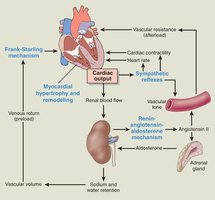
The Frank-Starling law states that the heart's stroke volume increases in response to an increase in the volume of blood filling the heart (venous return), due to the stretching of cardiac muscle fibers.
Cardiac Output (CO): Volume of blood pumped by each ventricle per minute.
Regulation: Cardiac output is regulated by heart rate, stroke volume, vascular resistance, and neurohormonal mechanisms (e.g., renin-angiotensin-aldosterone system).
Hormonal Regulation and Endocrine Integration
Steroid Hormone Synthesis
Steroid hormones are synthesized from cholesterol through a series of enzymatic steps. These hormones include cortisol, aldosterone, and sex hormones (testosterone, estradiol).
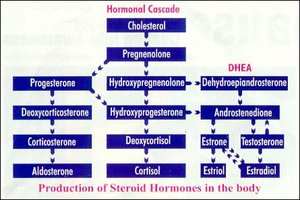
Cholesterol: Precursor for all steroid hormones.
Enzymatic Steps: Each conversion is catalyzed by a specific enzyme, leading to the production of glucocorticoids, mineralocorticoids, and sex steroids.
Diagnostic Enzymes in Clinical Practice
Enzymes as Disease Markers
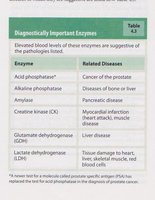
Certain enzymes are used as biomarkers for diagnosing diseases. Elevated levels in blood can indicate tissue damage or disease in specific organs.
Enzyme | Related Diseases |
|---|---|
Acid phosphatase | Cancer of the prostate |
Alkaline phosphatase | Disease of bone or liver |
Amylase | Pancreatic disease |
Creatine kinase (CK) | Myocardial infarction, muscle diseases |
Glutamate dehydrogenase (GDH) | Liver disease |
Lactate dehydrogenase (LDH) | Tissue damage to heart, liver, skeletal muscle, red blood cells |
Antibiotics: Classification and Mechanisms
Overview of Antibiotic Classes
Antibiotics are classified based on their chemical structure and mechanism of action. They target various aspects of bacterial physiology, such as cell wall synthesis, protein synthesis, and DNA replication.
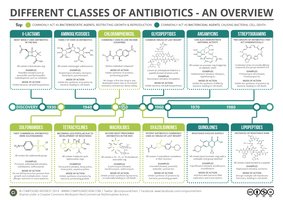
β-lactams: Inhibit cell wall synthesis (e.g., penicillins, cephalosporins).
Aminoglycosides: Inhibit protein synthesis (e.g., gentamicin).
Macrolides: Inhibit protein synthesis (e.g., erythromycin).
Quinolones: Inhibit DNA gyrase (e.g., ciprofloxacin).
Allosteric Regulation of Enzymes
Allosteric Modulation
Allosteric enzymes can exist in active (relaxed, R) or inactive (tense, T) states. Binding of effectors at allosteric sites induces conformational changes that regulate enzyme activity.
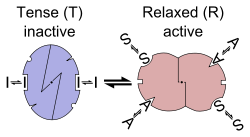
Allosteric Activators: Stabilize the active form, increasing enzyme activity.
Allosteric Inhibitors: Stabilize the inactive form, decreasing enzyme activity.
Metabolic Pathways: Fatty Acid and Glucose Metabolism
Fatty Acid Metabolism
Fatty acids are broken down via β-oxidation to produce acetyl-CoA, which enters the citric acid cycle for ATP production. Excess acetyl-CoA can be converted to ketone bodies during fasting or diabetes.
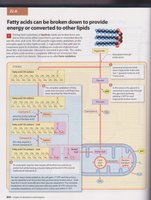
Summary of Gluconeogenesis
Gluconeogenesis is the process of synthesizing glucose from non-carbohydrate precursors, essential during prolonged fasting or intense exercise.
Key Steps: Conversion of pyruvate to glucose via several enzymatic reactions, requiring ATP and GTP.
Regulation: Controlled by hormonal signals (e.g., glucagon, cortisol) and substrate availability.
Summary Table: Classification of Enzymatic Reactions
Reaction Type | What Happens | Representative Enzymes |
|---|---|---|
Oxidation-reduction | Add or subtract electrons | Oxidase, dehydrogenase |
Hydrolysis-dehydration | Add/remove water molecule | Hydrolase, lipase |
Transfer chemical groups | Exchange groups between molecules | Kinase, transaminase |
Ligation | Join two substrates using ATP energy | Synthetase, ligase |
Additional info: These notes integrate foundational concepts from molecular interactions, enzyme function, metabolism, cardiovascular regulation, and clinical applications, providing a comprehensive overview suitable for ANP college students preparing for exams.
