 Back
BackCore Concepts of Physiology: Foundations for ANP College Study
Study Guide - Smart Notes
 Tailored notes based on your materials, expanded with key definitions, examples, and context.
Core Concepts of Physiology
Introduction to Core Concepts
Core concepts in physiology are fundamental ideas that underpin the understanding of how living organisms function. These concepts are broad, explanatory, and serve as organizational frameworks for connecting facts and principles across the discipline. Mastery of these concepts enables students to apply physiological knowledge to diverse inquiries and issues.
Causality: Living organisms operate through cause-and-effect mechanisms, allowing their functions to be explained scientifically.
Cell to cell communication: Cells coordinate activities via signaling, including endocrine and neuronal pathways.
Cell membranes: The plasma membrane regulates entry and exit of substances, crucial for signaling and transport.
Cell theory: All cells share DNA and common functions, but also possess specialized roles.
Energy: Organisms require constant energy acquisition, transformation, and transport.
Evolution: Adaptive changes through evolution shape structure-function relationships.
Flow down gradient: Transport of ions, molecules, blood, and gases is governed by gradients.
Genes to proteins: DNA codes for protein synthesis, determining cell function.
Homeostasis: Internal environment is actively maintained by negative feedback systems.
Interdependence: Cells, tissues, organs, and systems rely on each other to sustain life.
Levels of organization: Understanding physiology requires knowledge from molecular to social levels.
Mass Balance: The quantity of substances is determined by inputs and outputs.
Physics/chemistry: Biological functions are governed by physical and chemical laws.
Scientific reasoning: Physiology is studied through scientific methods, with knowledge evolving as new data emerges.
Structure/function: The form of cells, tissues, and organs determines their function.

Structure/Function and Compartmentation
Compartmentation in Physiology
Compartmentation refers to the division of the body and cells into distinct regions separated by membranes or barriers. This organization maximizes efficiency, protects against harmful reactions, and allows for specialized functions within each compartment.
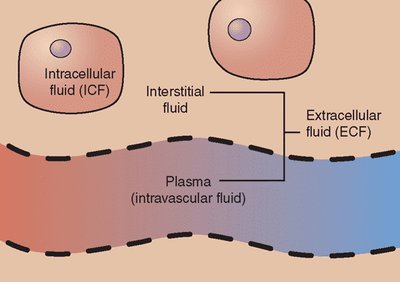
Internal environment: Includes plasma, interstitial fluid (ISF), and intracellular fluid (ICF).
Organelles: Specialized compartments such as mitochondria and endoplasmic reticulum.
Benefits: Segregation of molecules, efficient grouping of enzymes, and protection from harmful reactions.
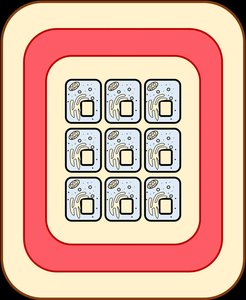
Intracellular Compartments
Within cells, organelles create further compartmentation, each with unique functions essential for cellular metabolism and signaling.
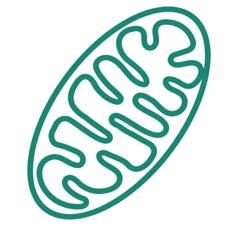
Mitochondrial compartment: Site of ATP production.
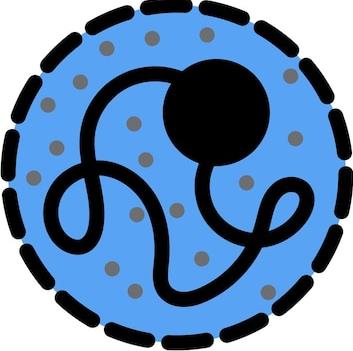
Nuclear compartment: Contains genetic material and is the site of transcription.
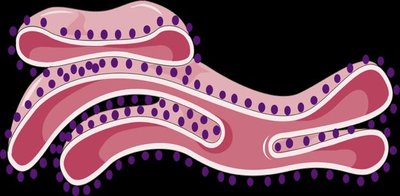
Endoplasmic reticulum compartment: Involved in protein and lipid synthesis.
Body Fluid Compartments
Types of Body Fluids
The body contains several fluid compartments, each with distinct roles in physiological processes.
Intracellular fluid (ICF): Fluid within cells, comprising about 65% of total body fluid.
Interstitial fluid (ISF): Fluid surrounding cells, about 28% of total body fluid.
Plasma: Fluid within blood vessels, about 7% of total body fluid.
Extracellular fluid (ECF): Includes plasma and ISF.
Selective Permeability and Capillary Filtration
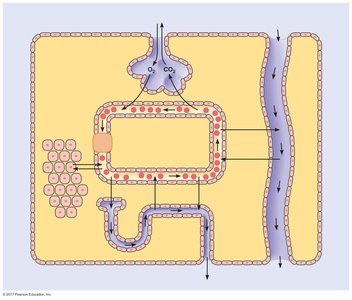
Cell membranes are selectively permeable, regulating the movement of substances. Capillaries filter substances based on size, allowing water and small molecules to move freely.
Mass Balance in Physiology
Definition and Application
Mass balance is the principle that the quantity of a substance in a system is determined by the difference between inputs and outputs. This concept applies to mass, volume, concentration, and energy.
Formula:
Application: Fluid volume in the body is regulated by balancing intake and loss through urination, sweat, and respiration.
Input | Output | Net Change |
|---|---|---|
3L water ingested | 1L urine, 0.5L sweat, 0.3L respiration | 1.2L net gain |
Variable intake | Variable output | Balance required for homeostasis |
Homeostasis
Definition and Mechanisms
Homeostasis is the ability to maintain a stable internal environment through continuous, energy-dependent processes. It involves compensation for changes, maintaining steady state rather than equilibrium.
Equilibrium: Equal and opposite forces or concentrations.
Steady state: No net change, but not necessarily at equilibrium.
Regulated variables: Physiological values maintained within setpoint ranges.
Controlled variables: Values adjusted to maintain regulated variables.
Regulated Variable | Controlled Variable |
|---|---|
Mean arterial blood pressure | Heart rate, force of contraction |
Plasma fluid volume | Reabsorption/secretion in renal tubules |
Plasma glucose levels | Insulin/glucagon-dependent transport |
Homeostatic Regulation: Response Loops
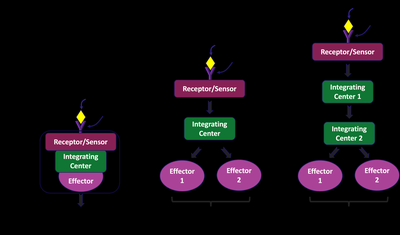
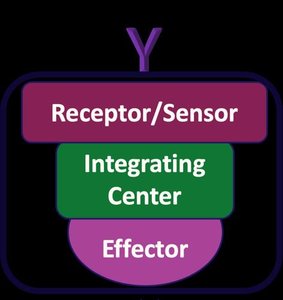
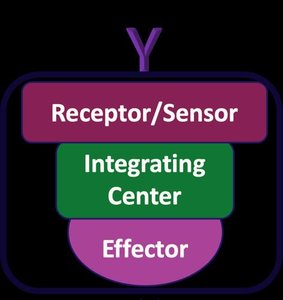
Homeostatic regulation involves sensors, integrating centers, and effectors. Negative feedback inhibits the original response once homeostasis is restored.
Sensors: Monitor regulated variables.
Integrating centers: Process information and determine responses.
Effectors: Execute actions to restore homeostasis.
Negative feedback: Prevents overshoot or undershoot of setpoint.
Application: Homeostasis of Body Temperature
Core body temperature is maintained around 37°C. On a cold day, heat loss triggers vasoconstriction and shivering. Thermoreceptors activate neurons in the CNS, which stimulate effectors to restore temperature.
Setpoint: 37°C
Stimulus: Decrease in body temperature
Effectors: Skeletal muscles (shivering), blood vessels (vasoconstriction)
Flow Down Gradients
Gradient Flow in Physiology
Flow, or flux, is the movement of materials or energies due to pressure or force differentials (gradients). This principle governs the transport of fluids, molecules, and even electrical currents.
Force/pressure: Push or pull causing movement or maintaining position.
Multiple forces: Can act simultaneously, influencing movement based on their sum.
Resistance: Barriers or friction opposing flow.
Gradients, Resistance, and Flow
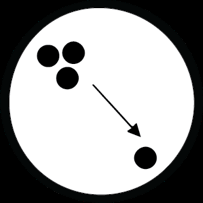
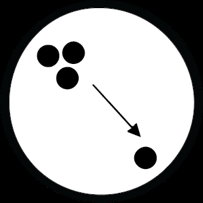
Objects flow from high to low pressure, concentration, or force unless resistance is sufficient to prevent movement. Physiological systems often adjust resistance to control flow.
Concentration gradients: Substances move from order to disorder, following the second law of thermodynamics.
Open channels: Reduce resistance, allowing flow.
Flow rate: Quantity passing a landmark per unit time.
Flow velocity: Distance traveled per unit time.
Application: Gradient Flow and the Heart
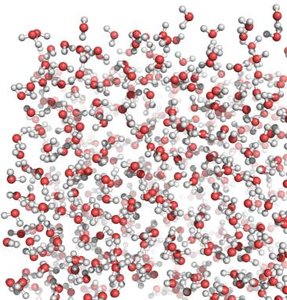
Blood flow in the heart is governed by pressure gradients and resistance. When ventricular force is low and valves are closed, blood does not flow. When force is high and valves are open, blood flows from ventricle to aorta.
Closed valves: Blood is stationary due to resistance.
Open valves: Pressure gradient favors forward flow.
Magnitude of pressure: Direction of flow indicates higher pressure in ventricle than aorta during contraction.
Additional info: These foundational concepts are directly relevant to ANP college courses, including cell structure, membrane transport, metabolism, endocrine signaling, nervous system function, cardiovascular physiology, and homeostasis.
