Back
Core Principles of Anatomy & Physiology: Organization, Homeostasis, and Fluid Balance
Study Guide - Smart Notes
 Tailored notes based on your materials, expanded with key definitions, examples, and context.
Introduction to Anatomy & Physiology
Levels of Structural Organization
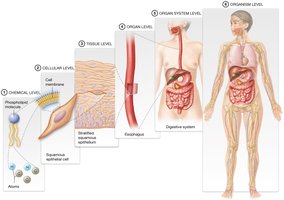
The human body is organized into a hierarchy of structural levels, each building upon the previous one to form a functional organism. Understanding these levels is fundamental to the study of anatomy and physiology.
Chemical Level: Atoms combine to form molecules, which are the building blocks of cells.
Cellular Level: Molecules combine to form cells, the basic units of life.
Tissue Level: Similar cells group together to form tissues, such as epithelial and connective tissues.
Organ Level: Different tissues combine to form organs, each with specific functions (e.g., esophagus).
Organ System Level: Organs work together as organ systems (e.g., digestive system) to perform complex functions.
Organism Level: All organ systems function together to maintain the life of the organism.
Fluid and Electrolyte Balance, Acid-Base Balance
Distribution of Water in the Body
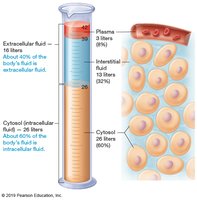
Water is the most abundant component of the human body and is distributed between intracellular and extracellular compartments. Proper fluid balance is essential for physiological processes.
Intracellular Fluid (ICF): Fluid within cells, making up about 60% of total body water (approximately 26 liters).
Extracellular Fluid (ECF): Fluid outside cells, comprising about 40% of total body water (approximately 16 liters). ECF is further divided into:
Plasma: The liquid component of blood (3 liters, 8% of total body water).
Interstitial Fluid: Fluid between cells (13 liters, 32% of total body water).
Solute Composition of Body Fluids
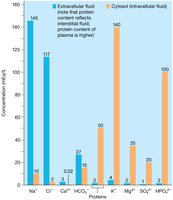
The composition of solutes differs between the extracellular fluid and the cytosol (intracellular fluid). This difference is crucial for cell function and is maintained by selective permeability of cell membranes and active transport mechanisms.
Extracellular Fluid: High in sodium (Na+), chloride (Cl-), and bicarbonate (HCO3-).
Intracellular Fluid (Cytosol): High in potassium (K+), magnesium (Mg2+), sulfate (SO42-), and hydrogen phosphate (HPO42-).
Proteins: Higher concentration in cytosol compared to interstitial fluid; plasma has more proteins than interstitial fluid.
Fluid Movements Between Compartments
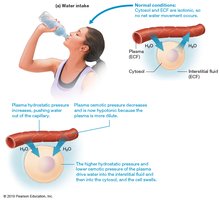
Water moves between body fluid compartments (plasma, interstitial fluid, and cytosol) primarily by osmosis, driven by differences in solute concentration and hydrostatic pressure. This movement is essential for maintaining homeostasis.
Osmosis: Water moves from areas of lower solute concentration to higher solute concentration.
Hydrostatic Pressure: The force exerted by a fluid against a wall, influencing water movement out of capillaries.
Osmotic Pressure: The force that pulls water into a solution due to solute concentration.
Homeostasis and Feedback Mechanisms
Homeostasis: Maintaining Internal Balance
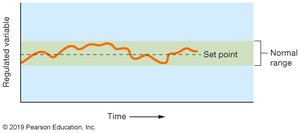
Homeostasis is the maintenance of a stable internal environment within physiological limits. The body uses feedback mechanisms to regulate variables such as temperature, pH, and fluid balance.
Set Point: The ideal value for a physiological variable (e.g., body temperature).
Normal Range: The range of values around the set point that is considered healthy.
Regulated Variable: Any parameter that is controlled by homeostatic mechanisms (e.g., blood glucose, temperature).
Negative Feedback Mechanisms
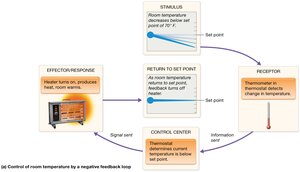
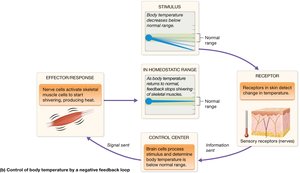
Negative feedback is the primary mechanism for maintaining homeostasis. It works by reversing a change in a controlled condition, bringing the variable back toward its set point.
Stimulus: A change in the environment that disrupts homeostasis.
Receptor: Detects the change and sends information to the control center.
Control Center: Processes the information and sends commands to effectors.
Effector: Produces a response that reverses the initial change.
Example: Regulation of room temperature by a thermostat and regulation of body temperature by shivering.
Positive Feedback Mechanisms
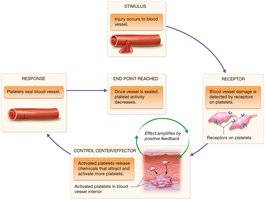
Positive feedback amplifies a change in a controlled condition, moving the variable further from its set point. This mechanism is less common but is important in processes such as blood clotting and childbirth.
Stimulus: Initiates a process that is reinforced by the response.
Amplification: The response increases the effect of the stimulus until an endpoint is reached.
Example: Blood clotting, where activated platelets release chemicals that attract more platelets until the vessel is sealed.
Cell Chemistry & Cell Components
Tonicity: Effects of Solutions on Cell Volume
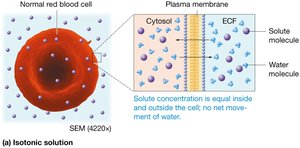
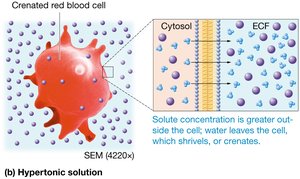
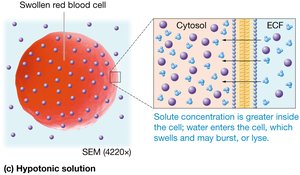
Tonicity describes how a solution affects cell volume due to osmosis. It is determined by the concentration of non-penetrating solutes in the solution relative to the cell cytosol.
Isotonic Solution: Solute concentration is equal inside and outside the cell; no net movement of water.
Hypertonic Solution: Higher solute concentration outside the cell; water leaves the cell, causing it to shrink (crenate).
Hypotonic Solution: Lower solute concentration outside the cell; water enters the cell, causing it to swell and possibly burst (lyse).
Energy & Cell Processes
Relationship Between Structure and Function
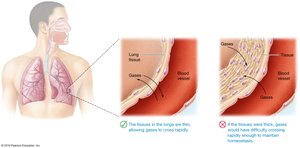
The structure of a biological component determines its function. For example, the thin walls of lung tissue allow for efficient gas exchange, while thicker walls would impede this process.
Structure-Function Principle: The anatomy of a structure is closely related to its physiological role.
Gradients in Physiology
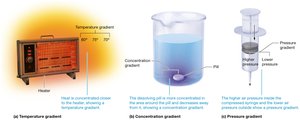
Gradients are differences in concentration, pressure, or temperature between two regions. They drive many physiological processes, such as diffusion and osmosis.
Temperature Gradient: Heat moves from warmer to cooler areas.
Concentration Gradient: Solutes move from areas of higher to lower concentration.
Pressure Gradient: Fluids move from areas of higher to lower pressure.
Core Principles of Anatomy & Physiology
Summary Table of Core Principles
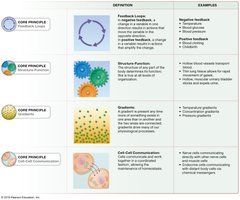
The following table summarizes the core principles that underlie the study of anatomy and physiology, including feedback loops, structure-function relationships, gradients, and cell-cell communication.
Core Principle | Definition | Examples |
|---|---|---|
Feedback Loops | Negative feedback reverses a change; positive feedback amplifies a change. | Negative: Temperature regulation, blood pressure Positive: Blood clotting, childbirth |
Structure-Function | Structure of a part of the body determines its function. | Hollow organ stores material; thin lung tissue allows gas exchange |
Gradients | Any time more of something exists in one area than another, a gradient exists. | Temperature, concentration, pressure gradients |
Cell-Cell Communication | Cells communicate via chemical messengers or electrical signals. | Nerve cells communicate with muscle cells; endocrine signaling |