 Back
Digestive System Accessory Organs, Absorption, and Metabolism: Study Notes
Study Guide - Smart Notes
 Tailored notes based on your materials, expanded with key definitions, examples, and context.
Accessory Organs in Digestion
Main Accessory Organs
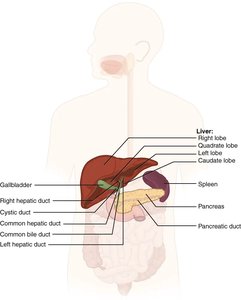
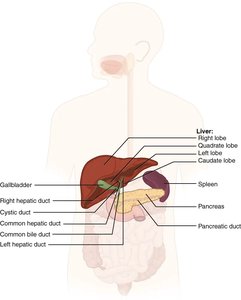
The liver, gallbladder, and pancreas are the primary accessory organs that aid in digestion. These organs secrete substances essential for the breakdown and absorption of nutrients in the digestive tract.
Liver: Produces bile, which is crucial for fat digestion.
Gallbladder: Stores and concentrates bile, releasing it into the small intestine during meals.
Pancreas: Secretes enzyme-rich pancreatic juice that digests carbohydrates, proteins, and fats.
Bile and Emulsification of Lipids
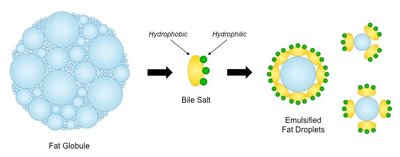
Bile is a mixture of water, bile salts, pigments, and phospholipids produced by the liver. Its main function is to emulsify dietary fats, breaking large fat globules into smaller droplets, increasing the surface area for digestive enzymes to act.
Bile salts and phospholipids are amphipathic, meaning they have both hydrophobic and hydrophilic regions, allowing them to interact with both fats and water.
This emulsification prevents fat droplets from reassembling and facilitates efficient fat digestion.
Pancreatic Juice and Its Functions
The pancreas produces over 1 liter of enzyme-rich juice daily. This juice contains:
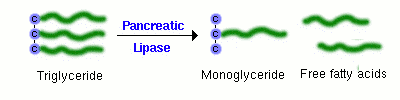
Pancreatic lipase: Breaks down triglycerides into fatty acids and monoglycerides.
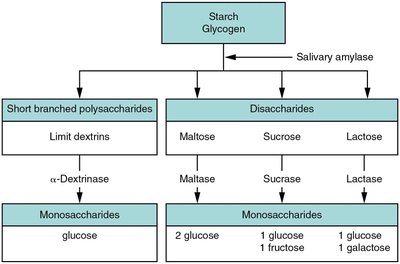
Pancreatic amylase: Digests carbohydrates and starches.
Proteases (e.g., trypsin, chymotrypsin): Digest proteins into smaller peptides and amino acids.
Sodium bicarbonate: Buffers acidic chyme entering the small intestine from the stomach, creating an optimal pH for enzyme activity.
Chemical Digestion and Absorption
Enzymatic Breakdown of Nutrients
Large food molecules are broken down into absorbable subunits by enzymes through hydrolysis. Different enzymes act at various locations in the digestive tract:
Mouth: Salivary amylase, lingual lipase
Stomach: Pepsin, gastric lipase
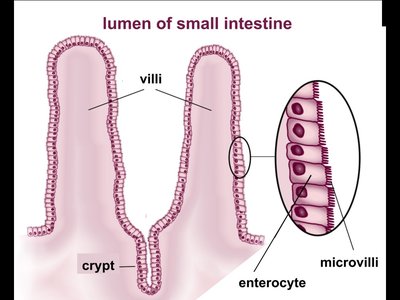
Small intestine (brush border): Lactase, peptidases, maltase, sucrase
Pancreas: Pancreatic amylase, lipase, proteases, nucleases
Carbohydrate Digestion and Absorption
Carbohydrates are digested into monosaccharides (glucose, galactose, fructose) for absorption. The process involves several enzymes and transport mechanisms:
Glucose and galactose: Absorbed via secondary active transport (co-transport with sodium ions) into epithelial cells, then by facilitated diffusion into capillaries.
Fructose: Absorbed by facilitated diffusion alone.
Protein Digestion and Absorption
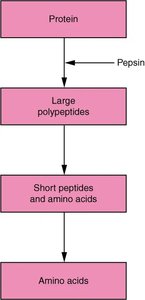
Proteins are broken down into amino acids and small peptides. Amino acids are absorbed mainly by active transport, while small peptides are further digested into amino acids before entering the bloodstream.
Lipid Digestion and Absorption
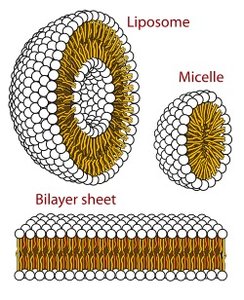
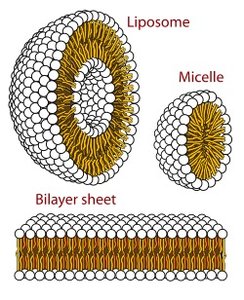
Lipid digestion primarily occurs in the small intestine, where pancreatic lipase breaks down triglycerides into monoglycerides and free fatty acids. Bile salts and lecithin form micelles, which transport lipids to the intestinal epithelium for absorption.
Micelles: Spherical structures formed by amphipathic lipids, enclosing fatty acids, cholesterol, and fat-soluble vitamins.
Lipids exit micelles and are absorbed by simple diffusion.
Inside epithelial cells, fatty acids are reassembled into triglycerides, combined with proteins to form chylomicrons, and released into lymphatic capillaries (lacteals).
Nucleic Acid Digestion
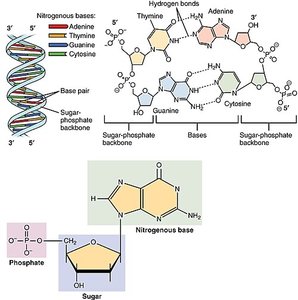
Nucleic acids (DNA/RNA) are digested by pancreatic nucleases into nucleotides, which are further broken down into pentose sugars, phosphates, and nitrogenous bases by brush border enzymes.
Mechanisms of Absorption
Absorption of nutrients into epithelial cells occurs via several mechanisms:
Active transport
Passive diffusion
Facilitated diffusion
Co-transport
Endocytosis
Metabolism Overview
Catabolism and Anabolism
Metabolism is the sum of all chemical reactions in the body, divided into:
Catabolism: Breakdown of complex molecules into simpler ones, releasing energy (e.g., glycolysis, beta-oxidation, proteolysis, lipolysis).
Anabolism: Synthesis of complex molecules from simpler ones, requiring energy (e.g., gluconeogenesis, lipogenesis, protein synthesis).
ATP (adenosine triphosphate) is the main energy currency, with energy released when its third phosphate group is removed:
Hormonal Regulation of Metabolism
Catabolic hormones: Cortisol (stimulates gluconeogenesis), glucagon (stimulates glycogen breakdown).
Anabolic hormones: Growth hormone (stimulates tissue growth), insulin (promotes glucose uptake and storage).
Carbohydrate Metabolism
Cellular Respiration
Glucose is the primary fuel for ATP production. Cellular respiration includes:
Glycolysis: Occurs in the cytoplasm, breaks glucose into 2 pyruvate molecules, produces 2 ATP and 2 NADH (anaerobic).
Krebs Cycle (Citric Acid Cycle): Occurs in mitochondria, converts pyruvate to acetyl-CoA, produces ATP, NADH, and FADH2.
Oxidative Phosphorylation (Electron Transport Chain): Occurs in the inner mitochondrial membrane, uses NADH and FADH2 to generate a proton gradient, producing the majority of ATP. Oxygen is the final electron acceptor, forming water.
If oxygen is unavailable, pyruvate undergoes fermentation to form lactic acid (anaerobic respiration).
Gluconeogenesis
When glucose is scarce, the liver synthesizes glucose from non-carbohydrate sources (lactate, pyruvate, glycerol, certain amino acids) to maintain blood glucose levels.
Lipid Metabolism
Lipolysis and Beta-Oxidation
Triglycerides are broken down into fatty acids and glycerol (lipolysis). Fatty acids undergo beta-oxidation to form acetyl-CoA, which enters the Krebs cycle for ATP production.
Lipogenesis
When glucose is abundant, excess acetyl-CoA is converted into fatty acids (lipogenesis) and stored as triglycerides in adipocytes.
Protein Metabolism
Proteolysis and Amino Acid Utilization
Proteins are broken down into amino acids (proteolysis). Amino acids are used for new protein synthesis or, during starvation, as substrates for glycolysis or the Krebs cycle.
Urea Cycle
Deamination of amino acids produces toxic ammonia, which is converted to urea in the liver and excreted by the kidneys.
Nutrition and Diet
Dietary Guidelines
A balanced diet provides essential vitamins (organic compounds for biochemical reactions) and minerals (inorganic elements like calcium and phosphorus). The USDA's MyPlate offers updated recommendations for daily food intake.
Practice Questions
What are the 3 main accessory organs in digestion and what is their function?
What is bile and which organ produces it? What is the function of bile?
What are the enzymes found in pancreatic juice?
Why does pancreatic juice also have sodium bicarbonate?
What subunits do carbohydrates get broken down into?
What is a micelle?
What is a catabolic reaction vs an anabolic reaction? Categorize the following as either catabolic or anabolic: Glycolysis, beta-oxidation, gluconeogenesis, proteolysis, lipolysis, lipogenesis.
Walk through the process of aerobic cellular respiration (glycolysis, the Krebs cycle, oxidative phosphorylation). Know the order in which they occur.
Which molecule is the initial substrate that kicks off the Krebs cycle?
Which step of aerobic cellular respiration generates the most ATP?
Which molecule acts as the final electron acceptor in the electron transport chain?
