 Back
BackDigestive System: Structure, Function, and Pathology - Med Term CH 5
Study Guide - Smart Notes
 Tailored notes based on your materials, expanded with key definitions, examples, and context.
Digestive System Overview
Main Functions of the Digestive System
The digestive system, also known as the gastrointestinal (GI) system, is responsible for processing food and extracting nutrients necessary for the body's functioning. Its four primary functions are:
Ingestion: Intake of food into the mouth.
Digestion: Mechanical and chemical breakdown of food into absorbable molecules.
Absorption: Transfer of digested nutrients into the bloodstream via the small intestine.
Elimination: Removal of indigestible substances and waste from the body through the anus.
Anatomy of the Digestive System
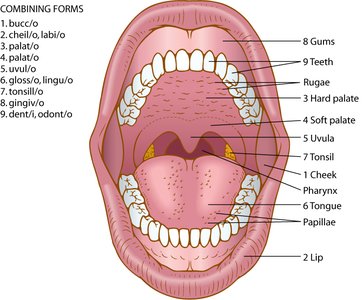
Oral Cavity
The oral cavity is the entry point for food and contains several important structures for the initial stages of digestion.
Cheeks, Lips, Hard and Soft Palate: Form the boundaries of the mouth.
Rugae: Ridges on the hard palate aiding in food manipulation.
Uvula: Soft tissue hanging from the middle of the soft palate.
Tongue and Papillae: The tongue aids in taste and movement of food; papillae are small projections containing taste buds.
Tonsils: Lymphatic tissue involved in immune defense.
Gums and Teeth: Teeth are essential for mastication (chewing); gums support the teeth.
Pharynx: The throat, a passageway for food and air.
Anatomy of a Tooth
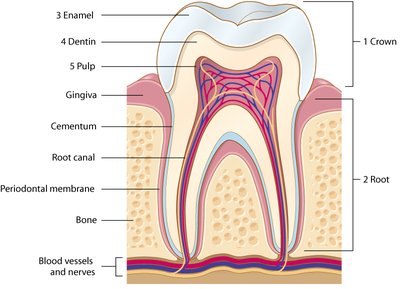
Teeth are specialized structures for mechanical digestion.
Crown: Visible part above the gum line.
Root: Embedded in the jawbone.
Enamel: Hard, outermost layer protecting the tooth.
Dentin: Main substance of the tooth beneath the enamel.
Pulp: Soft tissue containing nerves and blood vessels.
Gingiva: Gums surrounding the teeth.
Cementum: Covers the root and helps anchor the tooth.
Root canal: Passage for nerves and blood vessels.
Periodontal membrane: Supports the tooth in the socket.
Deglutition (Swallowing)
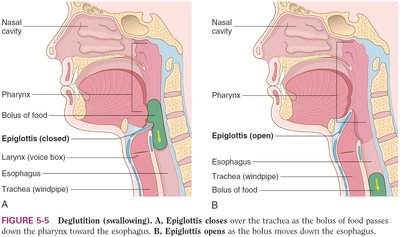
Swallowing is a complex process involving the movement of food from the mouth to the esophagus.
Pharynx: Directs food from the mouth to the esophagus.
Epiglottis: Closes over the trachea during swallowing to prevent aspiration.
Esophagus: Tube connecting the throat to the stomach.
Stomach Anatomy
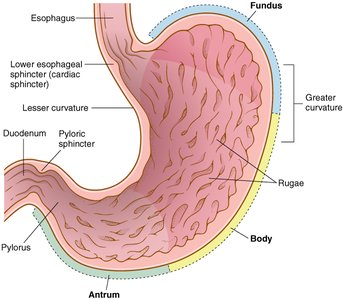
The stomach is a muscular organ that continues the process of digestion.
Lower esophageal sphincter (LES): Controls entry of food into the stomach.
Fundus, Body, Antrum, Pylorus: Regions of the stomach.
Rugae: Folds in the stomach lining that allow expansion.
Pyloric sphincter: Regulates passage of food into the duodenum.
Greater and Lesser Curvature: External borders of the stomach.
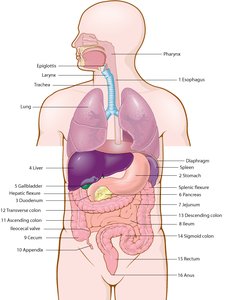
Digestive Tract: Major Organs
The digestive tract is a continuous tube extending from the mouth to the anus, including accessory organs.
Esophagus, Stomach, Duodenum, Jejunum, Ileum: Sequential segments of the GI tract.
Liver, Gallbladder, Pancreas: Accessory organs producing bile and digestive enzymes.
Cecum, Appendix, Colon (ascending, transverse, descending, sigmoid), Rectum, Anus: Components of the large intestine.
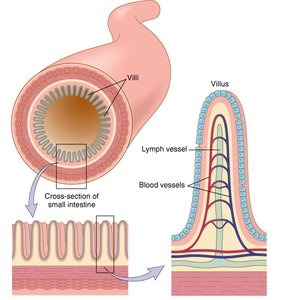
Small Intestine: Villi
The small intestine is specialized for nutrient absorption.
Villi: Microscopic finger-like projections increasing surface area for absorption.
Blood vessels and lymph vessels: Transport absorbed nutrients.
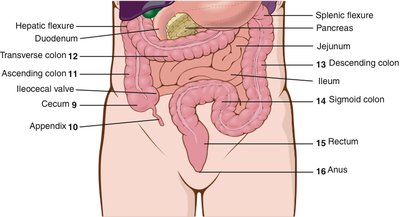
Large Intestine Anatomy
The large intestine absorbs water and forms feces.
Cecum, Appendix, Colon (ascending, transverse, descending, sigmoid), Rectum, Anus: Sequential segments for waste processing and elimination.
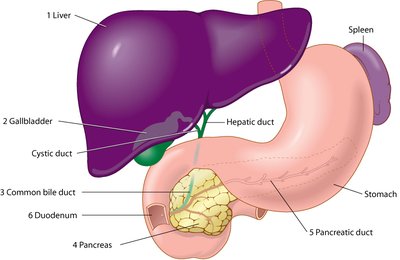
Liver, Gallbladder, and Pancreas
These organs play crucial roles in digestion and metabolism.
Liver: Produces bile, regulates blood glucose, manufactures blood proteins, releases bilirubin, and detoxifies blood.
Gallbladder: Stores and concentrates bile.
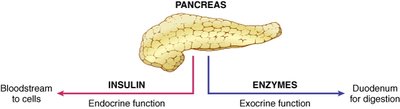
Pancreas: Produces digestive enzymes and hormones (insulin).
Common bile duct, Pancreatic duct, Duodenum: Pathways for bile and enzymes to enter the small intestine.
Pancreas Functions
Endocrine function: Secretes insulin into the bloodstream.
Exocrine function: Releases digestive enzymes into the duodenum.
Food Pathway Through the GI Tract
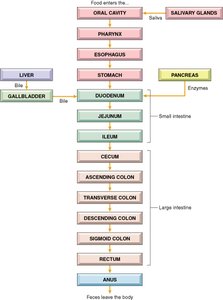
Food travels through the digestive system in a specific sequence, with each organ contributing to digestion and absorption.
Oral cavity → Pharynx → Esophagus → Stomach → Small intestine (duodenum, jejunum, ileum) → Large intestine (cecum, colon, rectum) → Anus
Key Terminology and Combining Forms
Important Terms
Absorption: Passage of nutrients into the bloodstream.
Amino acids: Building blocks of proteins.
Amylase: Enzyme for starch digestion.
Bile: Digestive fluid produced by the liver.
Bilirubin: Pigment released in bile.
Defecation: Elimination of feces.
Deglutition: Swallowing.
Digestion: Breakdown of food.
Duodenum: First part of the small intestine.
Enzyme: Protein that speeds up chemical reactions.
Esophagus: Tube from throat to stomach.
Gallbladder: Stores bile.
Glucose: Simple sugar.
Glycogen: Storage form of glucose.
Insulin: Hormone regulating blood sugar.
Jejunum: Second part of the small intestine.
Lipase: Enzyme for fat digestion.
Liver: Organ with multiple metabolic functions.
Mastication: Chewing.
Pancreas: Produces insulin and digestive enzymes.
Peristalsis: Rhythmic contractions moving food.
Pyloric sphincter: Controls passage from stomach to duodenum.
Rectum: Final section of the large intestine.
Rugae: Folds in stomach and hard palate.
Saliva: Digestive fluid from salivary glands.
Sigmoid colon: S-shaped segment before rectum.
Stomach: Muscular organ for digestion.
Triglycerides: Fat molecules.
Uvula: Soft tissue in the mouth.
Villi: Projections in the small intestine for absorption.
Combining Forms for Organs and Substances
an/o: anus
append/o, appendic/o: appendix
bucc/o: cheek
cec/o: cecum
celi/o: abdomen
cheil/o, labi/o: lip
cholecyst/o: gallbladder
choledoch/o: common bile duct
col/o, colon/o: colon
dent/i, odont/o: tooth
duoden/o: duodenum
enter/o: intestines
esophag/o: esophagus
faci/o: face
gastr/o: stomach
gingiv/o: gums
gloss/o, lingu/o: tongue
hepat/o: liver
ile/o: ileum
jejun/o: jejunum
labi/o: lip
lapar/o: abdomen
mandibul/o: mandible
or/o, stomat/o: mouth
palat/o: palate
pancreat/o: pancreas
peritone/o: peritoneum
pharyng/o: throat
proct/o: anus and rectum
pylor/o: pyloric sphincter
rect/o: rectum
sialaden/o: salivary gland
sigmoid/o: sigmoid colon
uvul/o: uvula
Combining Forms for Substances
amyl/o: starch
bil/i, chol/e: bile
bilirubin/o: bilirubin
chlorhydr/o: hydrochloric acid
gluc/o, glyc/o: sugar
glycogen/o: glycogen
lip/o, steat/o: fat
lith/o: stone
prote/o: protein
py/o: pus
sial/o: saliva
Suffixes
-ase: enzyme
-chezia: defecation
-iasis: abnormal condition
-prandial: meal
Pathology of the Digestive System
Common Signs and Symptoms
Anorexia: Lack of appetite.
Ascites: Accumulation of fluid in the abdomen.
Borborygmi: Rumbling noises from gas or fluid movement.
Constipation: Difficulty passing stools.
Diarrhea: Frequent passage of loose stools.
Dysphagia: Difficulty swallowing.
Eructation: Expulsion of gas from the stomach (belching).
Flatus: Gas expelled through the anus.
Hematochezia: Passage of fresh blood from the rectum.
Jaundice: Yellowing of skin and eyes due to high bilirubin.
Melena: Black, tarry stools with digested blood.
Nausea: Sensation of needing to vomit.
Steatorrhea: Fat in the feces.
Pathologic Conditions: Oral Cavity and Teeth
Aphthous stomatitis: Mouth inflammation with ulcers.
Dental caries: Tooth decay.
Herpetic stomatitis: Mouth inflammation from herpes virus.
Oral leukoplakia: White patches in the mouth.
Periodontal disease: Inflammation and degeneration of gums and supporting bone.
Pathologic Conditions: Upper GI Tract
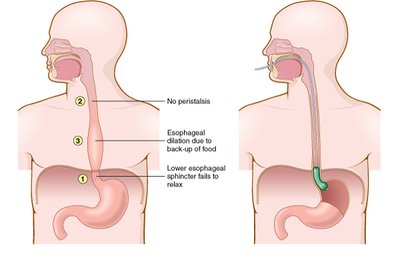
Achalasia: Failure of LES to relax, causing swallowing difficulty.
Esophageal cancer: Malignant tumor of the esophagus.
Gastric carcinoma: Malignant tumor of the stomach.
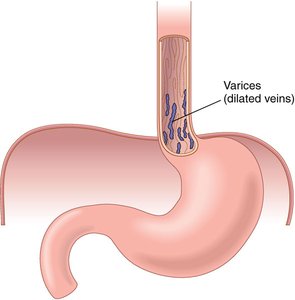
Esophageal varices: Swollen veins at the lower esophagus.
Gastroesophageal reflux disease (GERD): Return of stomach contents to the mouth.
Peptic ulcer: Open sore in the stomach or duodenum.
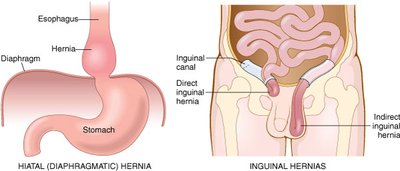
Hernia: Protrusion of an organ through muscle.
Pathologic Conditions: Lower GI Tract
Anal fistula: Abnormal passage near the anus.
Colonic polyposis: Polyps in the colon.
Colorectal cancer: Cancer of the colon or rectum.
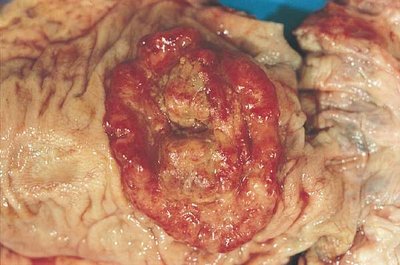
Crohn disease: Chronic inflammation of the intestinal tract.
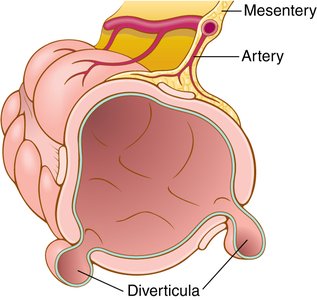
Diverticulosis: Outpouchings in the intestinal wall.
Dysentery: Painful, inflamed intestines.
Hemorrhoids: Swollen veins in the rectal region.
Ileus: Failure of peristalsis causing obstruction.
Inflammatory bowel disease (IBD): Inflammation of colon and small intestine.
Intussusception: Telescoping of intestines.
Irritable bowel syndrome (IBS): GI symptoms associated with stress.
Ulcerative colitis: Chronic inflammation with ulcers in the colon.
Volvulus: Twisting of the intestines.
Pathologic Conditions: Liver, Gallbladder, and Pancreas
Cirrhosis: Chronic degenerative liver disease.
Hepatocellular carcinoma (HCC): Liver cancer.
Pancreatic cancer: Malignant tumor of the pancreas.
Pancreatitis: Inflammation of the pancreas.
Viral hepatitis: Liver inflammation caused by viruses.
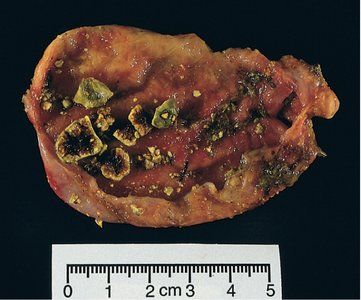
Cholelithiasis: Gallstones in the gallbladder.
Anastomoses
Types of Anastomoses
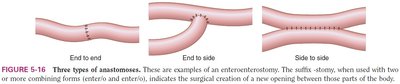
Anastomosis refers to the surgical connection between two structures.
End-to-end: Direct connection of two ends.
End-to-side: Connection of the end of one structure to the side of another.
Side-to-side: Connection of the sides of two structures.
Summary Table: Major Organs and Functions
Organ | Main Function |
|---|---|
Oral cavity | Ingestion, mechanical digestion |
Pharynx | Swallowing |
Esophagus | Transport food to stomach |
Stomach | Chemical and mechanical digestion |
Small intestine | Absorption of nutrients |
Large intestine | Water absorption, feces formation |
Liver | Bile production, metabolism |
Gallbladder | Bile storage |
Pancreas | Enzyme and hormone production |
Additional info:
Digestive enzymes are essential for breaking down complex nutrients into absorbable forms.
Pathologic conditions often present with characteristic signs and symptoms, aiding diagnosis.
Combining forms and suffixes are used in medical terminology to describe anatomical structures and disease processes.
