 Back
Lecture 12: Embryology and Prenatal Development
Study Guide - Smart Notes
 Tailored notes based on your materials, expanded with key definitions, examples, and context.
Embryology and Prenatal Development
Introduction to Embryology
Embryology is the study of the development of an organism from fertilization to birth. Human prenatal development is divided into three main periods: pre-embryonic, embryonic, and fetal development. Each stage is characterized by specific developmental events that lay the foundation for the formation of tissues, organs, and organ systems.
Major Stages of Gestation
Overview of Gestation
Gestation is the period of prenatal development, typically lasting about 38–40 weeks in humans.
It is divided into three trimesters, each approximately three months long.
Each trimester is marked by distinct developmental milestones and physiological changes.
Trimesters of Gestation
First Trimester: Involves pre-embryonic through early fetal development. All major organ systems begin to form. This is the most critical and vulnerable period, with only about 40% of conceptions surviving to the end of the first trimester.
Second Trimester: Characterized by the development and maturation of organs and organ systems. The body shape and proportions change significantly.
Third Trimester: Marked by rapid fetal growth, accumulation of adipose tissue, and the final maturation of organ systems. The fetus becomes capable of independent life.
Fertilization
The Process of Fertilization
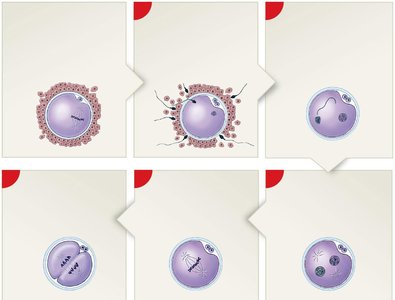
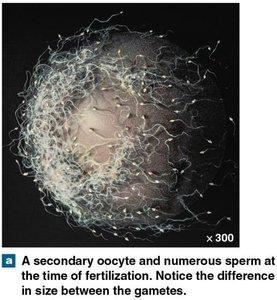
Fertilization is the fusion of two haploid gametes (sperm and oocyte), each containing 23 chromosomes, to form a diploid zygote with 46 chromosomes. This process initiates the development of a new individual.
Sperm: Delivers paternal chromosomes; highly motile and streamlined.
Oocyte: Provides cytoplasmic contents and nutrients to support early development.
Key Steps in Fertilization
Ovulation releases a secondary oocyte surrounded by the corona radiata.
Acrosomal enzymes from sperm digest the corona radiata, allowing one sperm to fuse with the oocyte membrane.
Oocyte activation triggers completion of meiosis II, forming the female pronucleus and a second polar body.
The male and female pronuclei fuse (amphimixis), restoring the diploid chromosome number.
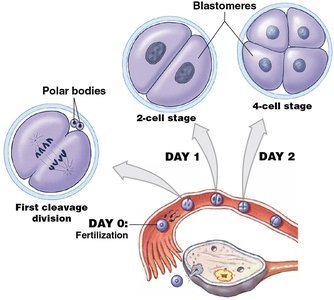
The first cleavage division produces two blastomeres, beginning embryonic development.
Pre-Embryonic Development
Cleavage and Blastocyst Formation
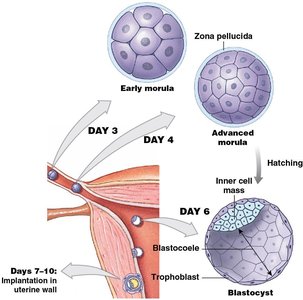
Cleavage is a series of rapid mitotic divisions that transform the zygote into a multicellular structure called a blastocyst. This process occurs as the embryo travels down the uterine tube toward the uterus.
Day 0: Fertilization occurs.
Day 1–2: Cleavage produces 2-cell and 4-cell stages (blastomeres).
Day 3–4: Morula forms—a solid ball of cells.
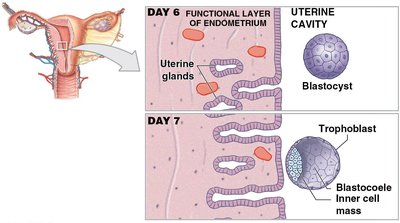
Day 5–6: Blastocyst forms, consisting of an inner cell mass, trophoblast, and blastocoele.
Implantation
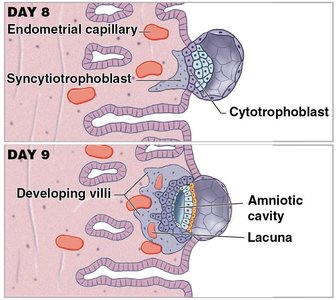
Implantation is the process by which the blastocyst attaches to and invades the endometrial lining of the uterus, typically occurring 7–10 days after fertilization. This event is essential for establishing maternal-fetal exchange.
The trophoblast differentiates into two layers: cytotrophoblast (inner) and syncytiotrophoblast (outer).
Syncytiotrophoblast secretes enzymes (e.g., hyaluronidase) to facilitate invasion into the endometrium.
Embryonic Development
Gastrulation and Germ Layer Formation
Gastrulation is a critical process during early embryogenesis in which the three primary germ layers are established through cell migration. These layers give rise to all tissues and organs of the body.
Ectoderm: Forms the nervous system, skin, and related structures.
Mesoderm: Forms muscles, bones, cardiovascular system, and connective tissues.
Endoderm: Forms the lining of the digestive and respiratory tracts, and associated organs.
Placentation and Embryogenesis
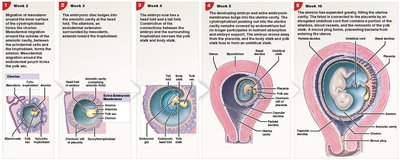
Placentation involves the development of the placenta, which facilitates nutrient, gas, and waste exchange between maternal and fetal blood. Embryogenesis establishes the basic body plan and organ systems.
Body stalk: Connects embryo to chorion; contains allantois and blood vessels.
Yolk stalk: Connects embryo to yolk sac.
Umbilical cord: Contains allantois, placental blood vessels, and yolk stalk; connects fetus to placenta.
Placental circulation: Blood flows from fetus to placenta via umbilical arteries and returns via a single umbilical vein.
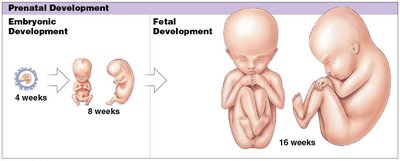
Prenatal Development: Second and Third Trimesters
Second Trimester
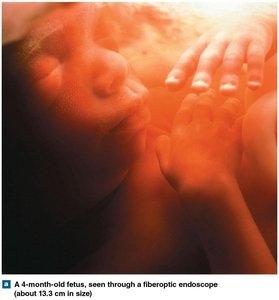
Fetus grows rapidly, outpacing placental growth.
Amnion and chorion fuse to form the amniochorionic membrane.
Organ systems continue to develop and mature.
Third Trimester
Most organ systems become functional and capable of supporting life outside the womb.
Fetal growth rate slows, but significant weight is gained due to adipose tissue deposition.
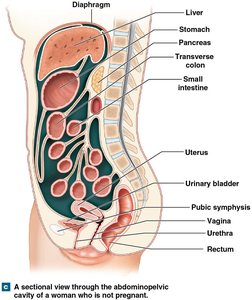
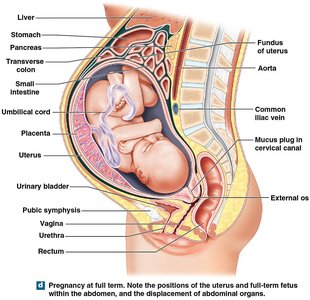
The enlarged uterus displaces many maternal abdominal organs.
Maternal Adaptations During Pregnancy
Maternal Organ Support
The developing fetus is entirely dependent on maternal organ systems for nutrition, gas exchange, and waste removal. Pregnancy induces significant physiological adaptations in the mother to support fetal development.
Increased respiratory rate and tidal volume
Increased blood volume (by nearly 50%)
Increased nutrient intake (10–30%)
Increased glomerular filtration rate (by 50%)
Enlargement of the uterus and mammary glands
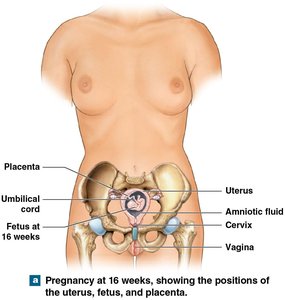
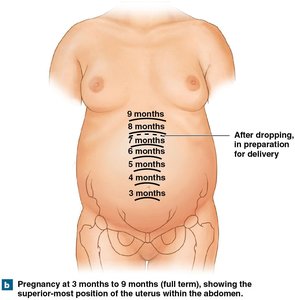
Growth of the Uterus and Fetus
The uterus expands significantly to accommodate the growing fetus.
By 16 weeks, the uterus is palpable above the pubic symphysis; by full term, it reaches the level of the xiphoid process.
The positions of abdominal organs are altered as the uterus enlarges.
Summary Table: Key Events in Human Prenatal Development
Stage | Time Frame | Key Events |
|---|---|---|
Pre-embryonic | First 2 weeks | Fertilization, cleavage, blastocyst formation, implantation |
Embryonic | Weeks 3–8 | Gastrulation, organogenesis, placentation |
Fetal | Week 9 to birth | Growth, maturation of organ systems, adipose deposition |
Key Terms and Definitions
Fertilization: Fusion of male and female gametes to form a zygote.
Cleavage: Series of rapid mitotic divisions following fertilization.
Blastocyst: Hollow ball of cells with an inner cell mass, trophoblast, and blastocoele.
Implantation: Attachment and invasion of the blastocyst into the uterine lining.
Gastrulation: Formation of three germ layers in the embryo.
Placentation: Development of the placenta for maternal-fetal exchange.
Embryogenesis: Formation of the embryo and establishment of organ systems.
