Back
BackEndocrine and Digestive Systems: ANP College Study Guide
Study Guide - Smart Notes
 Tailored notes based on your materials, expanded with key definitions, examples, and context.
Introduction to the Endocrine System
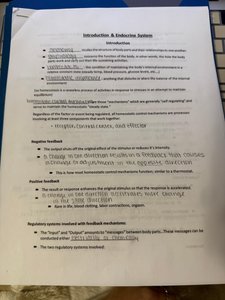
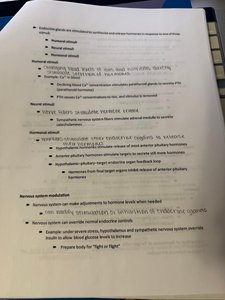
Overview of Regulatory Systems
The human body uses two main regulatory systems to maintain homeostasis: the nervous system and the endocrine system. These systems communicate via 'input' and 'output' messages to coordinate bodily functions.
Nervous System: Uses electrical impulses for rapid, short-term responses.
Endocrine System: Uses hormones for slower, long-term regulation.
Regulatory Feedback Mechanisms
Negative Feedback: A change in one direction results in a response that causes a change in the opposite direction, stabilizing physiological functions. Example: Regulation of blood glucose levels by insulin.
Positive Feedback: A change in one direction causes further change in the same direction, amplifying the response. Example: Oxytocin release during childbirth.
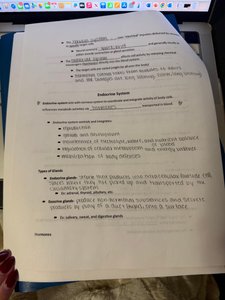
Endocrine System Structure and Function
Endocrine vs. Exocrine Glands
Endocrine Glands: Release hormones directly into the bloodstream.
Exocrine Glands: Release products via ducts to the exterior or into body cavities.
Major Endocrine Organs
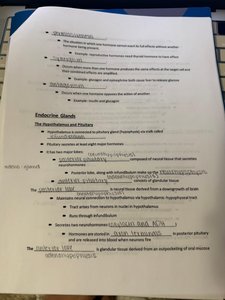
Pituitary Gland
Thyroid Gland
Parathyroid Glands
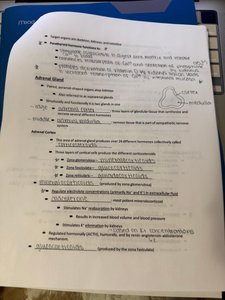
Adrenal Glands
Pancreas
Gonads (Ovaries and Testes)
Pineal Gland
Thymus
Hormones: Types and Actions
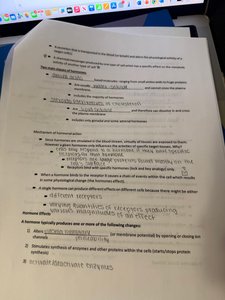
Types of Hormones
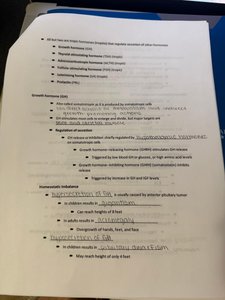
Amino Acid-Based Hormones: Include proteins, peptides, and amines.
Steroid Hormones: Derived from cholesterol; include sex hormones and adrenal cortex hormones.
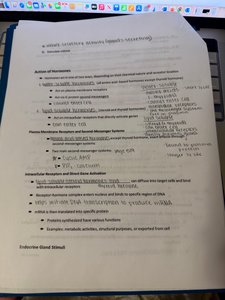
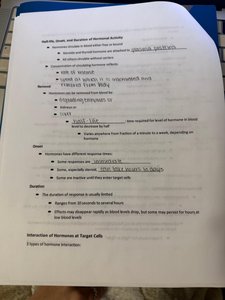
Mechanisms of Hormone Action
Hormones act by binding to specific receptors on target cells, causing changes such as:
Altering membrane permeability
Stimulating synthesis of proteins or enzymes
Activating or deactivating enzymes
Inducing secretory activity
Stimulating mitosis
Endocrine Glands and Their Hormones
Pituitary Gland
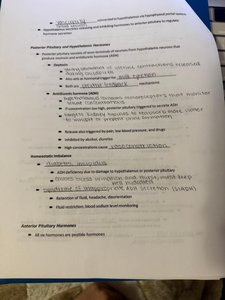
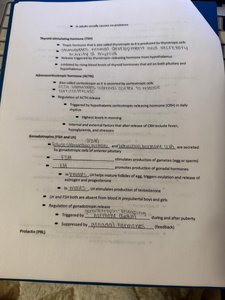
Anterior Pituitary: Produces hormones such as growth hormone (GH), prolactin, ACTH, TSH, FSH, and LH.
Posterior Pituitary: Stores and releases oxytocin and antidiuretic hormone (ADH).
Thyroid Gland
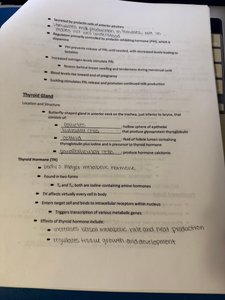
Produces thyroid hormones (T3 and T4) that regulate metabolism.
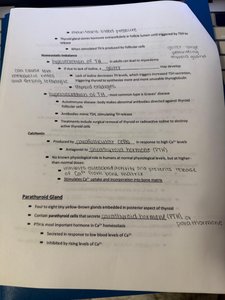
Produces calcitonin, which lowers blood calcium levels.
Parathyroid Glands
Produce parathyroid hormone (PTH), which increases blood calcium levels.
Adrenal Glands
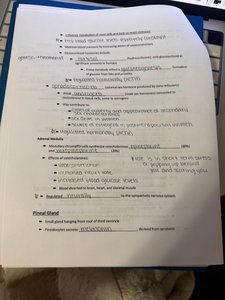
Adrenal Cortex: Produces corticosteroids (mineralocorticoids, glucocorticoids, and gonadocorticoids).
Adrenal Medulla: Produces epinephrine and norepinephrine for the 'fight or flight' response.
Pancreas
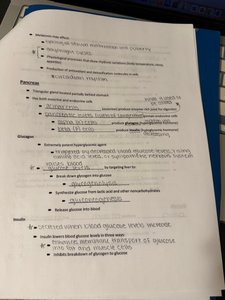
Produces insulin (lowers blood glucose) and glucagon (raises blood glucose).
Gonads
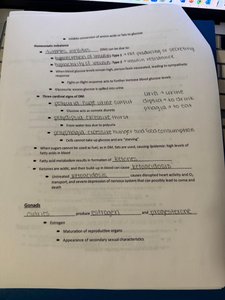
Ovaries: Produce estrogen and progesterone.
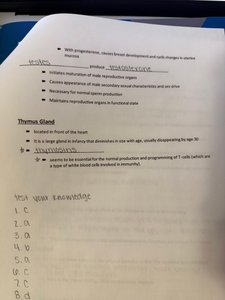
Testes: Produce testosterone.
Pineal Gland
Produces melatonin, which regulates sleep-wake cycles.
Thymus
Produces thymosin, important for T-cell development in the immune system.
Digestive System Overview
Functions of the Digestive System
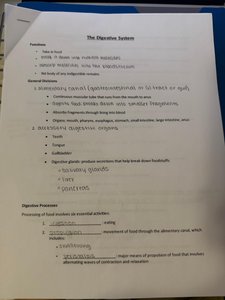
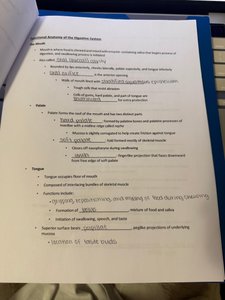
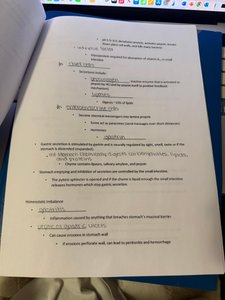
The digestive system is responsible for breaking down food, absorbing nutrients, and eliminating waste.
Ingestion: Taking in food.
Digestion: Mechanical and chemical breakdown of food.
Absorption: Uptake of nutrients into the blood.
Defecation: Elimination of indigestible substances.
Digestive Tract Anatomy
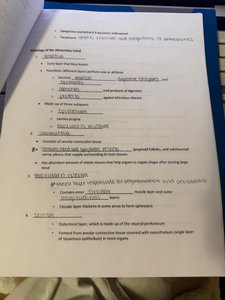
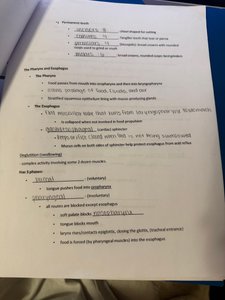
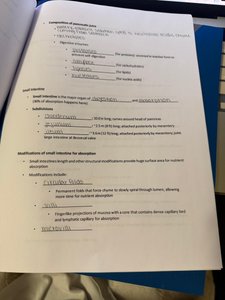
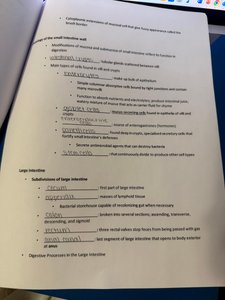
Alimentary Canal: Mouth, pharynx, esophagus, stomach, small intestine, large intestine, anus.
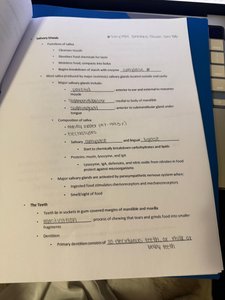
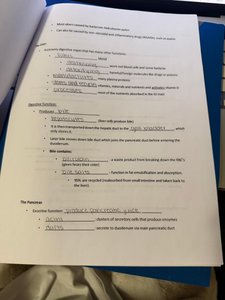
Accessory Organs: Salivary glands, liver, pancreas.
Digestive Processes
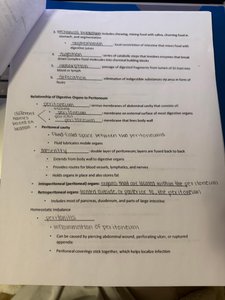
Propulsion: Movement of food through the tract via peristalsis.
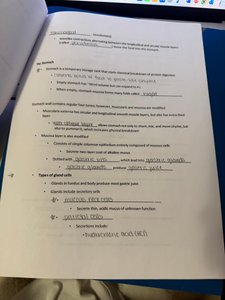
Mechanical Digestion: Chewing, mixing, and churning food.
Chemical Digestion: Enzymatic breakdown of food.
Absorption: Passage of nutrients into blood or lymph.
Defecation: Elimination of waste.
Metabolism and Energy Balance
Metabolic Pathways
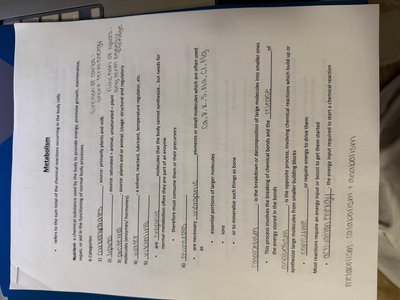
Metabolism refers to all chemical reactions in the body, including catabolism (breakdown) and anabolism (synthesis).
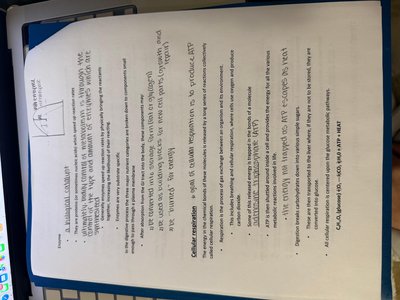
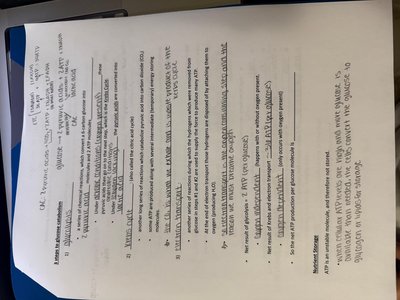
Cellular Respiration: Process by which cells produce ATP from glucose.
Glycolysis: First step in glucose metabolism, occurs in the cytoplasm.
Krebs Cycle: Occurs in mitochondria, produces ATP, NADH, and FADH2.
Electron Transport Chain: Final step, produces most ATP.
Equation for Cellular Respiration:
Summary Table: Major Endocrine Glands and Their Hormones
Gland | Hormone(s) | Main Function |
|---|---|---|
Pituitary | GH, TSH, ACTH, FSH, LH, PRL, ADH, Oxytocin | Growth, metabolism, reproduction, water balance |
Thyroid | T3, T4, Calcitonin | Metabolism, calcium regulation |
Parathyroid | PTH | Calcium regulation |
Adrenal | Cortisol, Aldosterone, Epinephrine, Norepinephrine | Stress response, metabolism, water balance |
Pancreas | Insulin, Glucagon | Blood glucose regulation |
Gonads | Estrogen, Progesterone, Testosterone | Reproduction, sexual characteristics |
Pineal | Melatonin | Sleep-wake cycle |
Thymus | Thymosin | Immune function |
Relevant Images