 Back
Endocrine System and Hormone Mechanisms: Structured Study Notes
Study Guide - Smart Notes
 Tailored notes based on your materials, expanded with key definitions, examples, and context.
Endocrine System Overview
Introduction to the Endocrine System
The endocrine system is the body's second major controlling system, operating via hormones that are released into the bloodstream. It works alongside the nervous system to regulate physiological processes and maintain homeostasis.
Endocrine glands include the pituitary, thyroid, parathyroid, adrenal, and pineal glands.
Pancreas and gonads produce both hormones and exocrine products.
Hormones are classified as amino acid-based or steroid hormones.
Hormone Types and Mechanisms
Amino Acid-Based Hormones: cAMP Second Messenger System
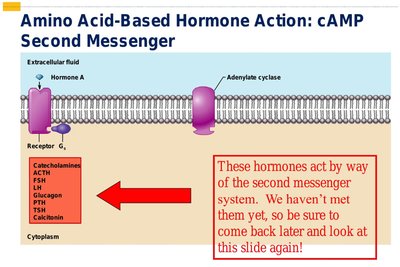
Amino acid-based hormones, such as catecholamines, ACTH, FSH, LH, glucagon, PTH, TSH, and calcitonin, act through the second messenger system, specifically cAMP. These hormones cannot enter the cell directly and instead bind to cell surface receptors, triggering intracellular signaling cascades.
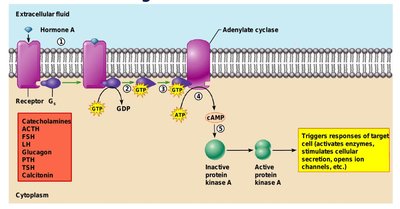
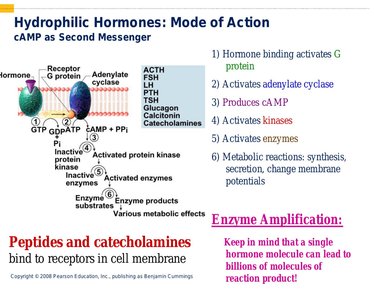
Step 1: Hormone binds to receptor on cell membrane.
Step 2: G protein is activated (GDP replaced by GTP).
Step 3: G protein activates adenylate cyclase.
Step 4: Adenylate cyclase converts ATP to cAMP.
Step 5: cAMP activates protein kinases, leading to cellular responses.
Enzyme amplification: A single hormone molecule can lead to billions of molecules of reaction product.
Steroid Hormones: Direct Gene Activation
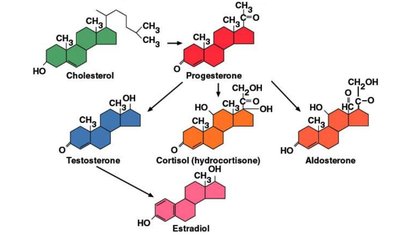
Steroid hormones are synthesized from cholesterol and differ in their functional groups. They are hydrophobic and can pass through the cell membrane to bind to intracellular receptors, directly influencing gene transcription and protein synthesis.
Examples: Testosterone, estradiol, progesterone, cortisol, aldosterone.
Mechanism: Steroid hormones enter the cell, bind to nuclear receptors, and prompt DNA transcription to produce mRNA, which is then translated into proteins.
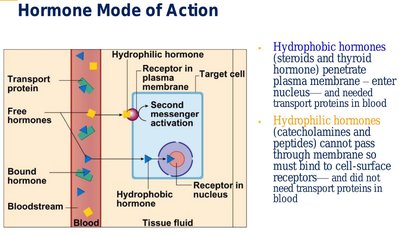
Hormone Mode of Action: Hydrophobic vs. Hydrophilic Hormones
Hormones act on target cells via two main mechanisms depending on their solubility:
Hydrophobic hormones (steroids and thyroid hormones) penetrate the plasma membrane and bind to intracellular receptors.
Hydrophilic hormones (catecholamines and peptides) bind to cell-surface receptors and activate second messenger systems.
Control of Hormone Release
Types of Stimuli for Hormone Release
Hormones are released in response to three main types of stimuli:
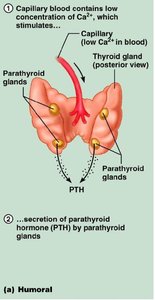
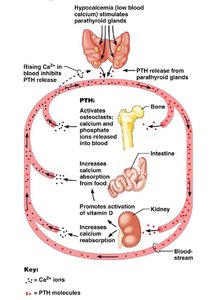
Humoral stimuli: Changes in blood levels of ions and nutrients trigger hormone release (e.g., low Ca2+ stimulates PTH release).
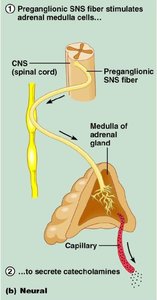
Neural stimuli: Nerve fibers stimulate hormone release (e.g., sympathetic nervous system stimulates adrenal medulla to secrete catecholamines).
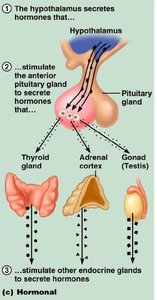
Hormonal stimuli: Hormones from one endocrine organ stimulate another organ to release its hormones (e.g., hypothalamic hormones stimulate anterior pituitary).
Feedback Mechanisms
Hormone release is regulated by feedback mechanisms:
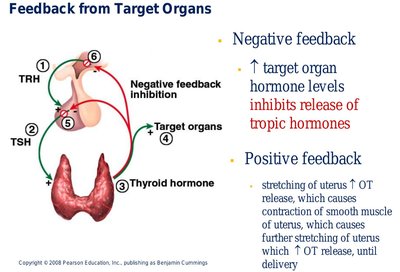
Negative feedback: Increased hormone levels inhibit further hormone release (e.g., thyroid hormone inhibits TRH and TSH release).
Positive feedback: Hormone release is amplified until a specific outcome is achieved (e.g., oxytocin during childbirth).
Major Endocrine Organs
Pituitary Gland (Hypophysis)
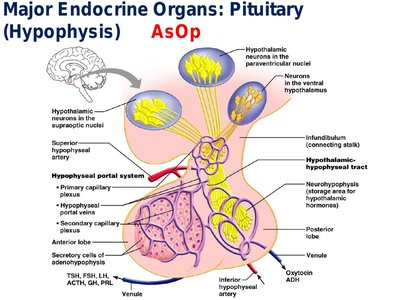
The pituitary gland is a two-lobed structure located at the base of the brain. It consists of the anterior lobe (adenohypophysis) and posterior lobe (neurohypophysis), each with distinct functions and hormone production.
Anterior lobe: Synthesizes and secretes hormones such as GH, TSH, ACTH, FSH, LH, and PRL.
Posterior lobe: Stores and releases hormones produced by the hypothalamus (ADH and oxytocin).
Growth Hormone (GH) Mechanism
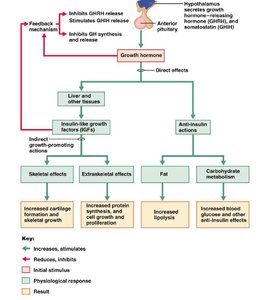
Growth hormone stimulates growth and metabolic functions. Its effects are mediated both directly and indirectly via insulin-like growth factors (IGFs).
Direct effects: Promotes lipolysis and inhibits glucose uptake.
Indirect effects: Stimulates liver to produce IGFs, which promote growth of bone and skeletal muscle.
Thyroid and Parathyroid Glands
Thyroid Gland Anatomy
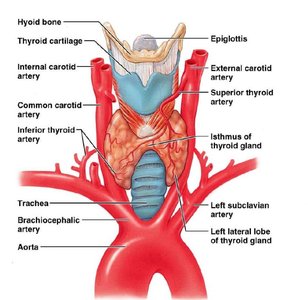
The thyroid gland is located in the anterior neck, consisting of two lobes connected by an isthmus. It produces thyroid hormones (T3 and T4) and calcitonin.
Thyroid Hormone Synthesis and Effects
Thyroid hormones regulate metabolism, growth, and development. Their synthesis involves iodination of thyroglobulin and subsequent release of T3 and T4.
Effects: Increase metabolic rate, heat production, and influence tissue growth.
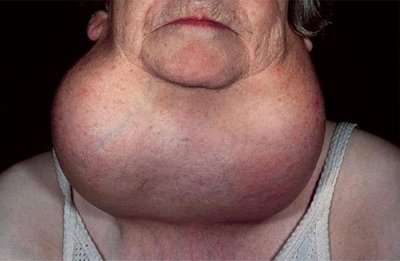
Disorders: Insufficient iodine leads to endemic goiter.
Parathyroid Gland and Parathyroid Hormone (PTH)
The parathyroid glands regulate calcium balance via PTH. Low blood calcium stimulates PTH release, which increases blood calcium by acting on bone, kidneys, and intestines.
Adrenal Glands
Adrenal Cortex Structure and Function
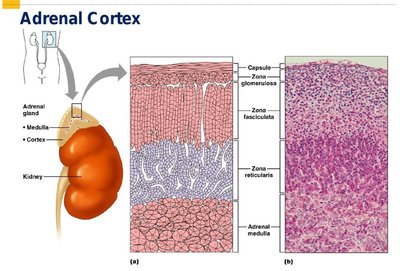
The adrenal cortex is divided into three zones, each producing different steroid hormones:
Zona glomerulosa: Mineralocorticoids (aldosterone) regulate electrolyte balance.
Zona fasciculata: Glucocorticoids (cortisol) help resist stress and regulate metabolism.
Zona reticularis: Gonadocorticoids (androgens) contribute to sex hormone production.
Adrenal Medulla and Stress Response
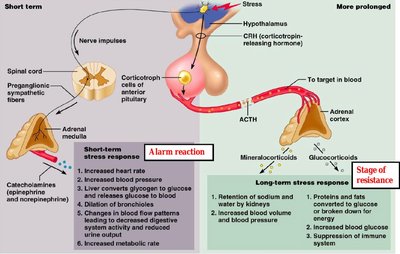
The adrenal medulla secretes catecholamines (epinephrine and norepinephrine) in response to stress, increasing heart rate, blood pressure, and blood glucose.
Short-term response: Alarm reaction via catecholamines.
Long-term response: Stage of resistance via glucocorticoids.
Pancreas and Blood Glucose Regulation
Pancreatic Hormones: Insulin and Glucagon
The pancreas regulates blood glucose via insulin (lowers glucose) and glucagon (raises glucose). These hormones act antagonistically to maintain homeostasis.
Insulin: Promotes glucose uptake and storage.
Glucagon: Stimulates glycogen breakdown and glucose release.
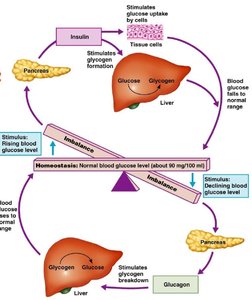
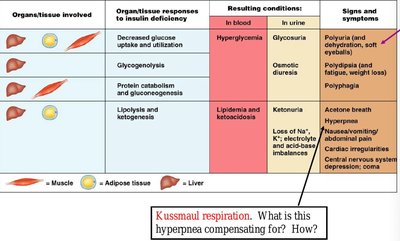
Diabetes Mellitus: Effects and Symptoms
Diabetes mellitus results from insufficient insulin production or action, leading to hyperglycemia and characteristic symptoms such as polyuria, polydipsia, and polyphagia.
Type 1: Hyposecretion of insulin.
Type 2: Insulin resistance.
Other Endocrine Structures
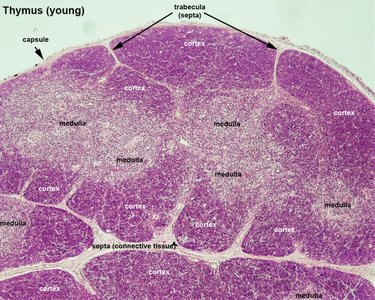
Thymus
The thymus is essential for T lymphocyte development and immune response. It is large in infants and children and shrinks in adulthood.
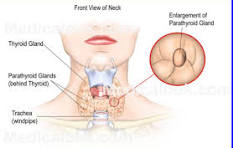
Parathyroid Gland Location
The parathyroid glands are located on the posterior aspect of the thyroid gland and are responsible for calcium regulation.
Summary Table: Hormone Mechanisms
Hormone Type | Mechanism | Examples |
|---|---|---|
Amino Acid-Based | Second messenger (cAMP) | ACTH, FSH, LH, TSH, Glucagon, PTH, Calcitonin |
Steroid | Direct gene activation | Cortisol, Aldosterone, Testosterone, Estradiol, Progesterone |
Additional info: These notes expand on brief points with academic context, definitions, and relevant examples for comprehensive exam preparation.
