 Back
BackEndocrine System: Hormones, Mechanisms, and Pathologies
Study Guide - Smart Notes
 Tailored notes based on your materials, expanded with key definitions, examples, and context.
Introduction to the Endocrine System
Overview of Endocrine Function
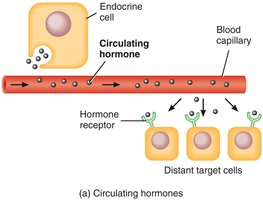
The endocrine system is a major regulatory system of the body, coordinating and integrating cellular activity via the release of hormones. Hormones are chemical messengers secreted by endocrine glands into the bloodstream, where they travel to distant target cells to elicit specific physiological responses.
Hormones regulate metabolism, growth, development, tissue function, and homeostasis.
Endocrine glands include the pituitary, thyroid, parathyroid, adrenal glands, and pancreas.
Hormones: Types and Mechanisms
Hormone Classification
Hormones are classified by their chemical structure and solubility, which determines their mechanism of action:
Peptide/Protein Hormones: Composed of amino acids, water-soluble, and bind to cell surface receptors (e.g., insulin).
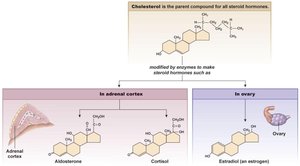
Steroid Hormones: Derived from cholesterol, lipid-soluble, and bind to intracellular receptors (e.g., cortisol, estrogen).
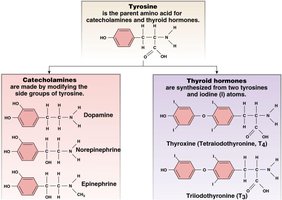
Amine Hormones: Derived from amino acids (tyrosine or tryptophan), include catecholamines (epinephrine) and thyroid hormones.
Hormone Transport and Action
Hormones can act in several ways depending on their solubility:
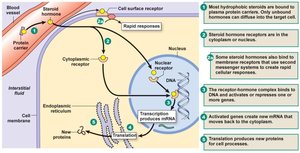
Lipid-soluble hormones (e.g., steroids, thyroid hormones) diffuse through cell membranes and bind to intracellular receptors, affecting gene expression and protein synthesis. Their effects are slower but longer-lasting.
Water-soluble hormones (e.g., peptides, catecholamines) bind to surface receptors, activating second messenger systems for rapid cellular responses.
Hormone Synthesis and Secretion
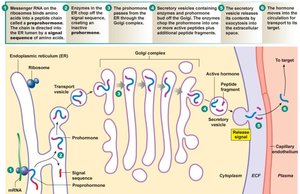
Peptide hormones are synthesized as inactive precursors (preprohormones), processed in the endoplasmic reticulum and Golgi apparatus, and stored in secretory vesicles until release.
Hormone Delivery: Circulating vs. Local
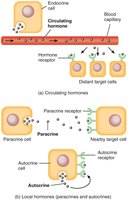
Hormones can act on distant targets (endocrine), nearby cells (paracrine), or the same cell that secreted them (autocrine).
Endocrine Glands and Hormone Control
Hypothalamus and Pituitary Gland
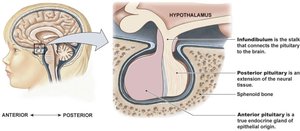
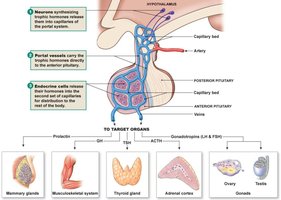
The hypothalamus and pituitary gland form the central axis of endocrine control. The hypothalamus produces releasing and inhibiting hormones that regulate the anterior pituitary, which in turn secretes trophic hormones affecting other endocrine glands.
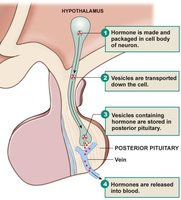
Posterior pituitary: Releases hormones made in the hypothalamus (e.g., ADH, oxytocin).
Anterior pituitary: Synthesizes and releases hormones in response to hypothalamic signals via the hypophyseal portal system.
Hormone Interactions
Types of Hormone Interactions
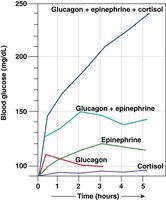
Multiple hormones can affect the same target cell, leading to different types of interactions:
Synergism: Combined effect is greater than the sum of individual effects (e.g., glucagon, epinephrine, and cortisol on blood glucose).
Permissiveness: One hormone is required for another to exert its full effect.
Antagonism: One hormone opposes the action of another (e.g., insulin vs. glucagon).
Endocrine Pathologies
Types of Pathologies
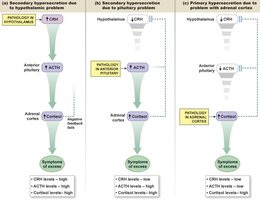
Endocrine disorders can result from hormone excess (hypersecretion), deficiency (hyposecretion), or abnormal target cell responsiveness (receptor or signal transduction defects).
Primary pathology: Problem in the last endocrine gland in a pathway (e.g., adrenal cortex).
Secondary pathology: Problem in the pituitary or hypothalamus affecting downstream glands.
Hormone Evolution
Evolutionary Conservation
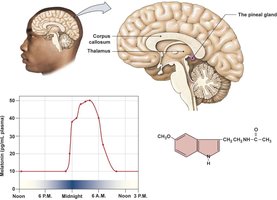
Hormone function is highly conserved across species. For example, melatonin from the pineal gland regulates circadian rhythms in both humans and nonhuman animals.
Summary Table: Hormone Types and Features
Hormone Type | Solubility | Receptor Location | Examples |
|---|---|---|---|
Peptide/Protein | Water-soluble | Cell surface | Insulin, ADH |
Steroid | Lipid-soluble | Intracellular | Cortisol, Estrogen |
Amine | Water- or lipid-soluble | Surface or intracellular | Epinephrine, Thyroxine |
Additional info: This guide covers the foundational concepts of endocrine signaling, hormone classification, mechanisms of action, and common pathologies, providing a comprehensive overview for ANP college students.
