 Back
BackEssential Study Guide: Human Body Orientation, Chemistry, Cells, and Tissues
Study Guide - Smart Notes
 Tailored notes based on your materials, expanded with key definitions, examples, and context.
Chapter 1: The Human Body – An Orientation
Definition and Subtypes of Anatomy
Anatomy is the study of the structure of body parts and their relationships to one another. It is divided into several subtypes:
Gross (macroscopic) anatomy: Study of large body structures visible to the naked eye.
Regional anatomy: All structures in a particular region of the body.
Systemic anatomy: Body structure studied system by system.
Surface anatomy: Study of internal structures as they relate to the overlying skin.
Microscopic anatomy: Structures too small to be seen with the naked eye (e.g., cytology, histology).
Developmental anatomy: Structural changes throughout the lifespan (e.g., embryology).
Specialized anatomy: Pathological and radiographic anatomy for medical applications.
Definition and Subtypes of Physiology
Physiology is the study of the function of the body and how body parts work and carry out life-sustaining activities. Subtypes include:
Renal physiology: Kidney function.
Neurophysiology: Nervous system function.
Cardiovascular physiology: Heart and blood vessel function.
Complementarity of Structure and Function
The principle of complementarity states that function always reflects structure; what a structure can do depends on its specific form. For example, the sharp edges of incisors make them ideal for cutting food.
Levels of Structural Organization
Chemical: Atoms and molecules (e.g., water, proteins).
Cellular: Cells are the smallest living units (e.g., epithelial cells).
Tissue: Groups of similar cells (e.g., muscle tissue).
Organ: Two or more tissue types (e.g., heart, lungs).
Organ system: Organs working together (e.g., digestive system).
Organismal: The human body as a whole.
Necessary Life Functions
Maintaining boundaries: Separation between internal and external environments (e.g., skin, cell membrane).
Movement: Muscular system activity, including contractility.
Responsiveness: Ability to sense and respond to stimuli.
Digestion: Breakdown of food for absorption.
Metabolism: All chemical reactions in the body (anabolism and catabolism).
Excretion: Removal of wastes.
Reproduction: Cellular and organismal reproduction.
Growth: Increase in size and number of cells.
Survival Needs
Nutrients: Carbohydrates, lipids, proteins for energy and cell building.
Oxygen: Required for energy production.
Water: Most abundant chemical in the body.
Normal body temperature: Needed for metabolic reactions.
Appropriate atmospheric pressure: Required for breathing and gas exchange.
Organ Systems Overview
Integumentary: Skin, protection, vitamin D synthesis.
Skeletal: Bones, support, hematopoiesis.
Muscular: Movement, posture, heat production.
Nervous: Fast-acting control, brain, spinal cord.
Endocrine: Hormone secretion, regulation of processes.
Cardiovascular: Heart, blood vessels, transport of substances.
Lymphatic/Immune: Immunity, fluid return.
Respiratory: Gas exchange.
Digestive: Breakdown and absorption of food.
Urinary: Waste elimination, water/electrolyte balance.
Reproductive: Production of offspring.
Homeostasis and Feedback Systems
Homeostasis is the body's ability to maintain a stable internal environment. It is regulated by feedback systems:
Negative feedback: Most common; reverses the original stimulus (e.g., temperature regulation).
Positive feedback: Enhances the original stimulus (e.g., labor contractions, blood clotting).
Main components: stimulus, receptor, control center, effector.
Anatomical Position and Terminology
The anatomical position is standing erect, feet flat, arms at sides, palms forward. Directional terms (e.g., superior, inferior, medial, lateral, proximal, distal, superficial, deep) are used to describe locations of body parts.
Body Planes and Sections
Sagittal (midsagittal/parasagittal): Divides body into right and left parts.
Frontal (coronal): Divides body into anterior and posterior parts.
Transverse (cross-section): Divides body into superior and inferior parts.
Oblique: Diagonal cuts.
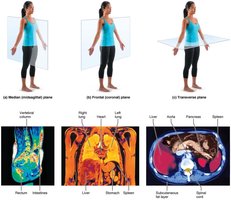
Body Cavities and Membranes
Dorsal cavity: Cranial (brain) and vertebral (spinal cord).
Ventral cavity: Thoracic (pleural, pericardial, mediastinum) and abdominopelvic (abdominal, pelvic).
Serous membranes: Double-layered membranes (parietal and visceral) that reduce friction (e.g., pericardium, pleura, peritoneum).
Abdominopelvic Regions and Quadrants
The abdominopelvic cavity is divided into nine regions and four quadrants for anatomical reference.
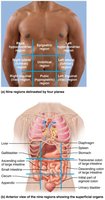
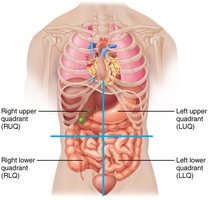
Chapter 2: Chemistry Comes Alive
Basic Concepts of Matter and Energy
Matter: Anything that occupies space and has mass.
Energy: Capacity to do work; exists as potential (stored) or kinetic (active).
Chemical, electrical, mechanical, and radiant energy are important in physiology.
Elements and Atoms
Elements: Unique substances that cannot be broken down by chemical means (e.g., C, H, O, N make up 96% of the body).
Atoms: Smallest units of elements, composed of protons, neutrons, and electrons.
Atomic number: Number of protons.
Atomic mass: Protons + neutrons.
Isotopes: Atoms with different numbers of neutrons.
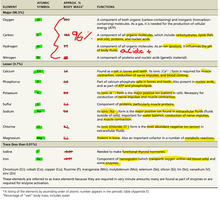
Mixtures and Chemical Bonds
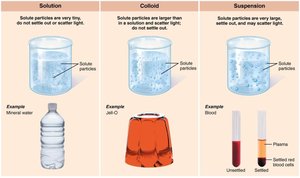
Mixtures: Physical combinations of substances (solutions, colloids, suspensions).
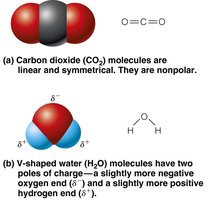
Chemical bonds: Ionic (transfer of electrons), covalent (sharing electrons), hydrogen bonds (weak attractions).
Polar vs. nonpolar covalent bonds: Unequal vs. equal sharing of electrons.
Types of Chemical Reactions
Synthesis (dehydration): Building larger molecules from smaller ones.
Decomposition (hydrolysis): Breaking down molecules.
Exchange (displacement): Both synthesis and decomposition.
Exergonic: Release energy; Endergonic: Absorb energy.
Enzymes
Enzymes are proteins that act as biological catalysts, lowering activation energy and increasing reaction rates.
They are reusable and specific to substrates, usually ending in -ase.
Water and pH
Water: Most abundant inorganic compound; high heat capacity, solvent properties, reactivity, and cushioning.
pH scale: 0–14; blood pH is 7.35–7.45.
Acids: Donate H+ (e.g., HCl); Bases: Accept H+ (e.g., NaOH).
Buffers: Resist changes in pH (important in blood, lungs, kidneys).
Organic Compounds
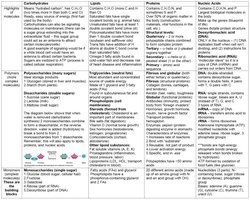
Carbohydrates: Monosaccharides (glucose), disaccharides (sucrose), polysaccharides (glycogen).
Lipids: Triglycerides, phospholipids, steroids (cholesterol).
Proteins: Amino acids, enzymes, structural and functional proteins.
Nucleic acids: DNA (genetic blueprint), RNA (protein synthesis), ATP (energy currency).
Chapter 3: Cells – The Living Units
Basic Cell Structure
Plasma membrane: Phospholipid bilayer with proteins, cholesterol, and glycoproteins; selectively permeable.
Cytoplasm: Cytosol (fluid) and organelles.
Nucleus: Control center containing DNA.
Membrane Transport
Passive transport: No ATP; includes simple diffusion, facilitated diffusion, osmosis, filtration.
Active transport: Requires ATP; includes primary/secondary active transport, vesicular transport (endocytosis, exocytosis).
Cell Junctions
Tight junctions: Impermeable, found in GI tract.
Desmosomes: Anchoring, found in skin and heart muscle.
Gap junctions: Communication, found in cardiac muscle.
Organelles and Their Functions
Mitochondria: ATP production, contains DNA/RNA.
Ribosomes: Protein synthesis.
Endoplasmic reticulum: Rough (protein synthesis), smooth (lipid synthesis, detoxification).
Golgi apparatus: Modifies, sorts, packages proteins/lipids.
Peroxisomes: Detoxification.
Lysosomes: Digestion, recycling.
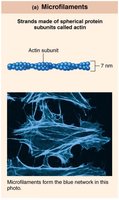
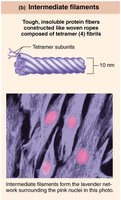
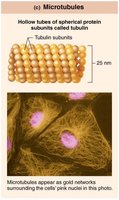
Cytoskeleton: Structure, movement (microfilaments, intermediate filaments, microtubules).
Cell Cycle and Mitosis
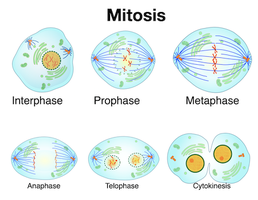
Interphase: Growth, DNA replication.
Mitosis: Prophase, metaphase, anaphase, telophase, cytokinesis.
Protein Synthesis
Transcription: DNA to mRNA in nucleus.
Translation: mRNA to protein at ribosome.
mRNA: Messenger, template for protein.
tRNA: Transfers amino acids, matches codons with anticodons.
Chapter 4: Tissue – The Living Fabric
Types of Tissues
Epithelial: Covers surfaces, lines cavities, forms glands.
Connective: Supports, protects, binds tissues.
Muscle: Movement, contractile.
Nervous: Transmits electrical signals.
Epithelial Tissue
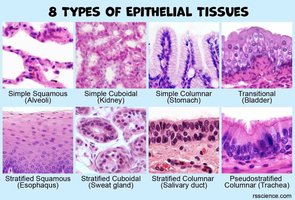
Characteristics: Tightly packed, avascular, innervated, high regeneration, polarity (apical/basal), supported by connective tissue.
Types: Simple (one layer), stratified (multiple layers), squamous, cuboidal, columnar, pseudostratified, transitional.
Connective Tissue
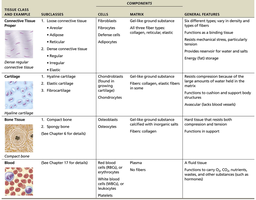
Main components: Ground substance, fibers (collagen, elastic, reticular), cells (fibroblasts, chondroblasts, osteoblasts, hematopoietic stem cells).
Types: Loose (areolar, adipose, reticular), dense (regular, irregular, elastic), cartilage (hyaline, elastic, fibrocartilage), bone, blood.
Muscle and Nervous Tissue
Muscle: Skeletal (striated, voluntary), cardiac (striated, involuntary), smooth (non-striated, involuntary).
Nervous: Brain, spinal cord, nerves; neurons (dendrites, cell body, axon).
