 Back
Exam 1 Review: Introduction to Anatomy, Physiology, Chemistry of Life, Cells, and Histology
Study Guide - Smart Notes
 Tailored notes based on your materials, expanded with key definitions, examples, and context.
Body Directions, Planes, and Anatomical Terms
Anatomical Position and Terminology
The anatomical position is a standardized posture used to describe locations and directions on the human body. Understanding anatomical terms is essential for accurately describing body parts and their relationships.
Anatomical Position: Standing upright, facing forward, arms at sides, palms facing forward.
Directional Terms: Proximal (closer to point of attachment), Distal (farther from point of attachment), Lateral (away from midline), Medial (toward midline), Superior (above), Inferior (below), Anterior (front), Posterior (back).
Body Planes: Frontal (coronal) divides body into anterior and posterior, Sagittal divides into left and right, Transverse divides into superior and inferior.
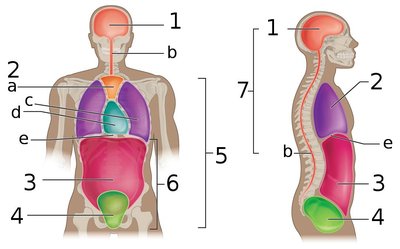
Structural Organization of Organ Systems
The human body is organized into hierarchical levels, from atoms to organ systems.
Levels: Chemical → Cellular → Tissue → Organ → Organ System → Organism
Organ Systems: Examples include the cardiovascular, respiratory, digestive, nervous, and musculoskeletal systems.
Homeostasis and Feedback Systems
Homeostasis is the maintenance of a stable internal environment. Feedback systems regulate physiological processes.
Negative Feedback: Counteracts changes (e.g., temperature regulation).
Positive Feedback: Amplifies changes (e.g., blood clotting).
Components: Receptor, control center, effector.
Systems of the Human Body and Functions
Each organ system has specific functions vital for survival.
Examples: Respiratory (gas exchange), Digestive (nutrient absorption), Nervous (control and communication).
The Chemistry of Life
Metabolism: Catabolic and Anabolic Reactions
Metabolism encompasses all chemical reactions in the body.
Catabolic: Breakdown of molecules, releases energy.
Anabolic: Synthesis of molecules, requires energy.
Redox Reactions: Involve transfer of electrons; oxidation (loss), reduction (gain).
Types of Chemical Bonds
Chemical bonds hold atoms together.
Ionic Bonds: Transfer of electrons.
Covalent Bonds: Sharing of electrons.
Hydrogen Bonds: Weak attraction between molecules.
Enzyme Functions in Reactions
Enzymes are biological catalysts that speed up reactions.
Lower Activation Energy: Allow reactions to occur faster.
Specificity: Each enzyme acts on a specific substrate.
Chemical Reaction Rate Limiting Factors
Several factors affect the rate of chemical reactions.
Temperature, pH, Concentration of reactants, Presence of catalysts.
Types of Body Energy
The body uses various forms of energy.
Chemical Energy: Stored in bonds (e.g., ATP).
Electrical Energy: Movement of charged particles.
Mechanical Energy: Movement of body parts.
Thermal Energy: Heat.
pH, Acids, and Bases
pH measures hydrogen ion concentration.
Acids: Release H+ ions, pH < 7.
Bases: Accept H+ ions, pH > 7.
Neutral: pH = 7.
Formula:
The Cell
Cell Cycle and Mitotic Phases
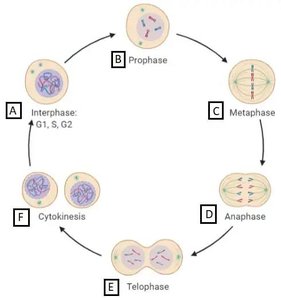
The cell cycle describes the sequence of events in cell division.
Interphase: G1 (growth), S (DNA synthesis), G2 (preparation).
Mitosis: Prophase, Metaphase, Anaphase, Telophase.
Cytokinesis: Division of cytoplasm.
DNA, Chromosome, Chromatin, Chromatid
DNA is the genetic material organized into chromosomes.
Chromatin: DNA + proteins, loose form.
Chromosome: Condensed chromatin during cell division.
Chromatid: One half of a duplicated chromosome.
RNA and ATP
RNA: Ribonucleic acid, involved in protein synthesis.
ATP: Adenosine triphosphate, main energy carrier.
ATP Hydrolysis:
Genes and Protein Synthesis Phases
Genes code for proteins via transcription and translation.
Transcription: DNA → mRNA.
Translation: mRNA → Protein.
Genetic Code: Codons (three-base sequences) specify amino acids.
Cell Organelles and Functions
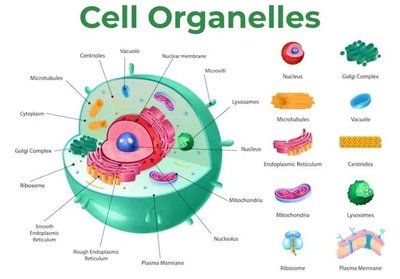
Organelles are specialized structures within cells.
Nucleus: Contains DNA.
Mitochondria: Powerhouse, ATP production.
Ribosomes: Protein synthesis.
Endoplasmic Reticulum: Protein and lipid synthesis.
Golgi Apparatus: Modifies and packages proteins.
Lysosomes: Digestion of cellular waste.
The Plasma Membrane
Composition of the Plasma Membrane
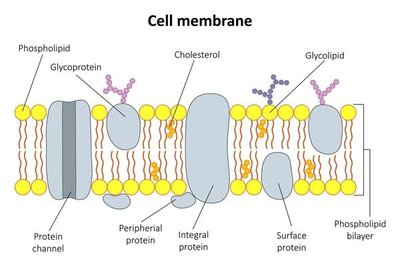
The plasma membrane is a selectively permeable barrier.
Phospholipid Bilayer: Hydrophilic heads, hydrophobic tails.
Proteins: Integral, peripheral, channels, receptors.
Carbohydrates: Glycoproteins, glycolipids for cell recognition.
Cholesterol: Maintains fluidity.
Types of Body Solutions and Tonicity
Solutions are classified by their solute concentration relative to cells.
Isotonic: Equal solute concentration.
Hypertonic: Higher solute concentration outside cell.
Hypotonic: Lower solute concentration outside cell.
Transport and Concentration Gradients
Substances move across membranes via passive or active transport.
Passive Transport: No energy required (diffusion, osmosis).
Active Transport: Requires energy (ATP).
Concentration Gradient: Difference in concentration across a membrane.
Diffusion and Osmosis
Diffusion: Movement of molecules from high to low concentration.
Osmosis: Diffusion of water across a membrane.
Cell Shapes
Cells vary in shape depending on their function.
Examples: Squamous (flat), cuboidal (cube-shaped), columnar (tall).
Histology: Tissues and Membranes
Four Types of Tissues and Locations
The body is composed of four basic tissue types.
Epithelial: Covers surfaces, lines cavities.
Connective: Supports, binds, protects.
Muscle: Movement.
Nervous: Communication.
Glands: Types and Functions
Glands are specialized epithelial cells.
Exocrine: Secrete products into ducts (e.g., sweat, salivary).
Endocrine: Secrete hormones into blood.
Body Membranes: True and Membrane-like
Membranes line body cavities and surfaces.
True Membranes: Mucous, serous, cutaneous.
Membrane-like: Synovial membranes (joints).
Table: Four Types of Tissues and Their Locations
Type | Location | Function |
|---|---|---|
Epithelial | Skin, lining of GI tract | Protection, absorption |
Connective | Bone, blood, cartilage | Support, transport |
Muscle | Skeletal muscles, heart | Movement |
Nervous | Brain, nerves | Communication |
Table: Types of Chemical Bonds
Bond Type | Description | Example |
|---|---|---|
Ionic | Transfer of electrons | NaCl |
Covalent | Sharing of electrons | H2O |
Hydrogen | Weak attraction | Between water molecules |
Table: Types of Body Solutions
Type | Solute Concentration | Effect on Cell |
|---|---|---|
Isotonic | Equal | No change |
Hypertonic | Higher outside | Cell shrinks |
Hypotonic | Lower outside | Cell swells |
Table: Cell Cycle Phases
Phase | Description |
|---|---|
Interphase | Growth and DNA replication |
Prophase | Chromosomes condense |
Metaphase | Chromosomes align |
Anaphase | Chromatids separate |
Telophase | Nuclear envelope reforms |
Cytokinesis | Division of cytoplasm |
