 Back
Fluid and Electrolyte Balance: Essential Concepts for ANP Students
Study Guide - Smart Notes
 Tailored notes based on your materials, expanded with key definitions, examples, and context.
Fluid and Electrolyte Balance
Overview of Fluid and Electrolyte Balance
Fluid and electrolyte balance is a critical aspect of human physiology, ensuring that water and dissolved substances are properly distributed and regulated within the body. This balance is essential for maintaining cellular function, nerve transmission, and overall homeostasis.
Electrolytes: Substances that dissociate into charged ions when dissolved in water (e.g., sodium, potassium, chloride).
Solutes: Any dissolved substances in a fluid, including electrolytes, proteins, and glucose.
Osmoregulation: The control of fluid balance and composition in the body.
Osmosis: The movement of water through a selectively permeable membrane from an area of high concentration to an area of low concentration.
Water and solutes are distributed into two main compartments: intracellular (inside cells) and extracellular (outside cells). The movement of water between these compartments is regulated by the movement of electrolytes and occurs via osmosis.
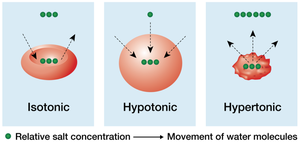
Key Point: Water is never transported actively; it always moves passively from areas of high to low concentration.
Homeostasis: Cells maintain water volume by controlling electrolyte movement to keep the total number of dissolved particles balanced inside and outside the cell.
Water’s Importance to Vitality
Water is indispensable for life and serves several vital functions in the human body:
Transportation vehicle: Transports nutrients, gases, and waste products.
Medium for chemical reactions: Facilitates enzymatic and metabolic reactions.
Lubricant/shock absorber: Cushions joints and organs, and lubricates tissues.
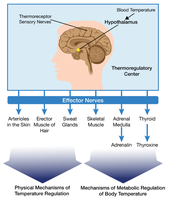
Temperature regulator: Helps maintain stable body temperature through heat storage and dissipation.
Water is known as the “universal solvent” because it dissolves more substances than any other liquid, making it essential for biochemical processes.
Regulation of Water Balance
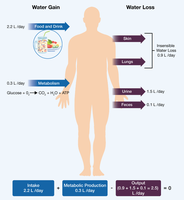
The body must balance daily water input and output to maintain homeostasis. The average adult requires approximately 2.7 liters (females) to 3.7 liters (males) of water per day from all sources (fluids and foods).
Water Input: Includes fluids, water in foods, and metabolic water production.
Water Output: Occurs through urine, feces, sweat, and exhalation.
The thirst mechanism is triggered by decreased fluid volume or increased sodium concentration, detected by receptor proteins. The hypothalamus coordinates the sensation of thirst, prompting fluid intake.
Insensible water loss: Losses not consciously perceived (e.g., through skin and lungs).
Sensible water loss: Losses that are consciously perceived (e.g., urine, feces).
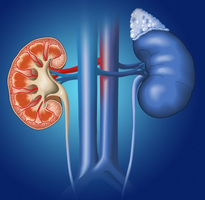
The kidneys, hypothalamus, and adrenal glands communicate to regulate water output, primarily by adjusting urine volume and composition. Key hormones involved include antidiuretic hormone (ADH) and aldosterone.
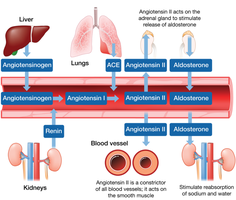
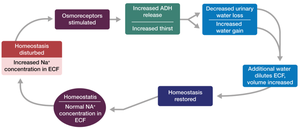
Electrolytes Important for Fluid Balance
Electrolytes such as sodium, potassium, and chloride are essential for maintaining fluid balance and proper physiological function.
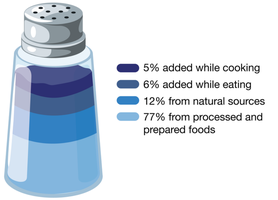
Sodium (Na+): Main regulator of extracellular fluid volume, nerve impulse transmission, and nutrient absorption. Most dietary sodium comes from processed foods.
Potassium (K+): Most abundant cation inside cells; crucial for nerve impulses, muscle contraction, and acid-base balance.
Chloride (Cl-): Maintains charge neutrality, aids in fluid secretion, and helps regulate acid-base balance.
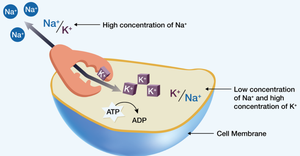
The sodium-potassium pump is a primary mechanism for maintaining water and electrolyte balance across cell membranes. It uses ATP to exchange sodium and potassium ions, preserving the proper concentration gradients.
Consequences of Deficiency or Excess
Imbalances in fluid and electrolytes can lead to significant health issues:
Dehydration: Water loss without adequate replacement, leading to symptoms such as thirst, dizziness, and low blood pressure. Chronic dehydration increases the risk for kidney and heart disease.
Water Intoxication/Hyponatremia: Excessive water intake dilutes blood sodium, potentially causing nausea, confusion, and in severe cases, coma or death.
Heat Stroke: Life-threatening condition due to failure of thermoregulation, often associated with dehydration.
Hypertension: High blood pressure, often linked to excessive sodium intake, is a major risk factor for cardiovascular disease.
The DASH diet (Dietary Approaches to Stop Hypertension) emphasizes fruits, vegetables, low-fat dairy, whole grains, and reduced sodium intake to lower blood pressure and improve cardiovascular health.
Beverage Consumption and Health
Beverages are a major source of fluid intake, but their nutritional value varies. Water is the healthiest choice, while sugar-sweetened beverages contribute to excess calorie intake and potential health problems. Reading beverage labels is important for making healthy choices.
Key Point: Beverages do not provide satiety; they quench thirst but do not make you feel full.
Low- and zero-sugar beverages are preferable for maintaining health.
Alcoholic and Caffeinated Beverages
Alcohol and caffeine are widely consumed psychoactive substances with significant effects on health.
Alcohol: In moderation, may reduce risk of heart disease; in excess, causes dehydration, nutrient deficiencies, and liver disease (e.g., fatty liver, hepatitis, cirrhosis).
Caffeine: Increases alertness and delays fatigue; excessive intake can cause anxiety, shakiness, and insomnia. Moderate coffee consumption may reduce the risk of type 2 diabetes and Parkinson’s disease.
Summary Table: Key Electrolytes and Their Functions
Electrolyte | Main Functions | Deficiency Symptoms | Major Dietary Sources |
|---|---|---|---|
Sodium (Na+) | Fluid balance, nerve transmission, muscle contraction | Nausea, muscle cramps, confusion, dizziness | Processed foods, table salt |
Potassium (K+) | Fluid balance, nerve impulses, muscle contraction, acid-base balance | Muscle weakness, cramps, respiratory distress | Fruits, vegetables, whole grains, meats, fish |
Chloride (Cl-) | Fluid balance, acid-base balance, fluid secretion | Rare; may be associated with metabolic alkalosis | Table salt, tomatoes, lettuce, olives, seafood |
