 Back
Fluid, Electrolyte, and Acid-Base Balance: Body Fluid Compartments and Homeostasis
Study Guide - Smart Notes
 Tailored notes based on your materials, expanded with key definitions, examples, and context.
Fluid & Electrolyte Balance
Introduction to Body Fluid Balance
Fluid and electrolyte balance is essential for maintaining homeostasis in the human body. Water is the most abundant compound in the body, and its distribution and regulation are critical for physiological processes. Electrolytes, which dissociate into ions in solution, play a key role in fluid distribution, nerve conduction, and muscle function.
Body Fluid Volumes and Compartments
Distribution of Body Fluids
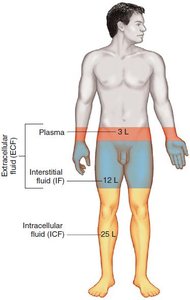
The human body contains several fluid compartments, each with distinct volumes and functions. The average total body water in a healthy, non-obese 70-kg male is about 40 liters, distributed as follows:
Plasma: 3 L
Interstitial Fluid (IF): 12 L
Intracellular Fluid (ICF): 25 L
Variation in Total Body Water
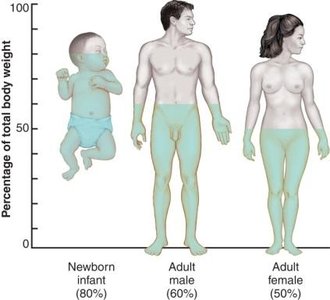
Total body water varies with age, gender, and body composition:
Newborn infants: ~80% of body weight is water
Adult males: ~60% of body weight is water
Adult females: ~50% of body weight is water (due to higher fat content)
Volumes of Body Fluid Compartments
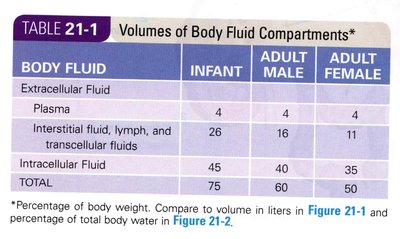
The following table summarizes the percentage of body weight represented by each fluid compartment in infants, adult males, and adult females:
BODY FLUID | INFANT | ADULT MALE | ADULT FEMALE |
|---|---|---|---|
Plasma | 4 | 4 | 4 |
Interstitial fluid, lymph, and transcellular fluids | 26 | 16 | 11 |
Intracellular Fluid | 45 | 40 | 35 |
TOTAL | 75 | 60 | 50 |
Body Fluid Compartments: ECF and ICF
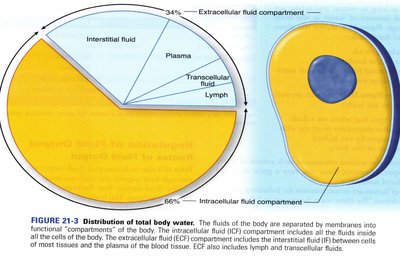
Body fluids are divided into two main compartments:
Extracellular Fluid (ECF): Includes plasma, interstitial fluid, lymph, and transcellular fluids. It serves as the internal environment, transporting substances to and from cells.
Intracellular Fluid (ICF): The largest compartment, located inside cells, facilitating intracellular chemical reactions.
Fluid Intake and Output
Sources of Fluid Intake and Output
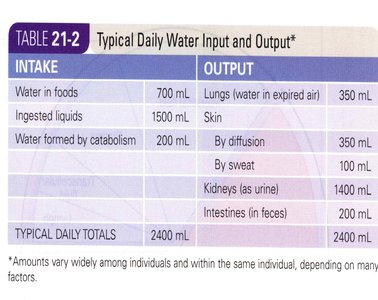
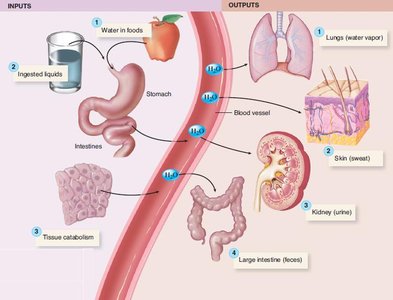
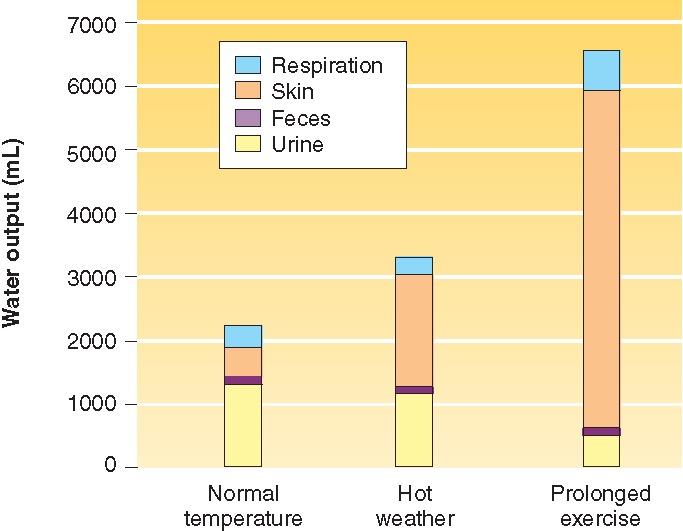
Fluid intake and output must be balanced to maintain homeostasis. Sources of intake include ingested liquids, water in food, and metabolic water. Output occurs via the lungs, skin, kidneys, and intestines.
INTAKE | OUTPUT |
|---|---|
Water in foods: 700 mL | Lungs (expired air): 350 mL |
Ingested liquids: 1500 mL | Skin (diffusion): 350 mL |
Water formed by catabolism: 200 mL | Skin (sweat): 100 mL |
Kidneys (urine): 1400 mL | |
Intestines (feces): 200 mL | |
TOTAL: 2400 mL | TOTAL: 2400 mL |
Regulation of Fluid Output
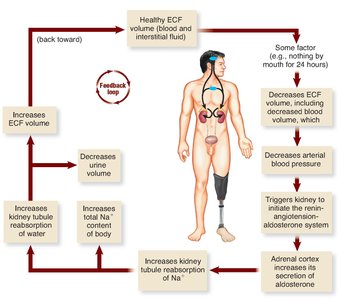
Fluid output is primarily regulated by the kidneys, which adjust urine volume in response to fluid intake. Hormones such as antidiuretic hormone (ADH) and aldosterone increase reabsorption of sodium and water, reducing urine output and increasing ECF volume. Atrial natriuretic hormone (ANH) increases urine volume by promoting sodium and water loss.
Regulation of Fluid Intake
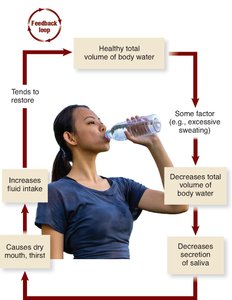
Thirst is regulated by sensory receptors that detect changes in ECF volume and concentration, sending signals to the hypothalamus. This triggers the sensation of thirst and increases fluid intake to restore balance.
Fluid Imbalances
Dehydration
Dehydration occurs when fluid output exceeds intake, leading to a decrease in total body fluid volume. Interstitial fluid volume decreases first, followed by ICF and plasma if not corrected. Symptoms include dry skin, decreased skin turgor, and, in severe cases, confusion and coma.
Overhydration
Overhydration results from excessive fluid intake or impaired excretion, causing an increase in total body fluid volume. This can burden the heart and lead to water intoxication, a potentially life-threatening condition due to electrolyte imbalance.
Electrolyte Balance
Electrolytes and Nonelectrolytes
Electrolytes are compounds that dissociate into ions in water, conducting electricity (e.g., sodium chloride). Nonelectrolytes do not dissociate in water (e.g., glucose). Electrolyte balance is crucial for nerve conduction, muscle contraction, and fluid distribution.
Major Ions in Body Fluids
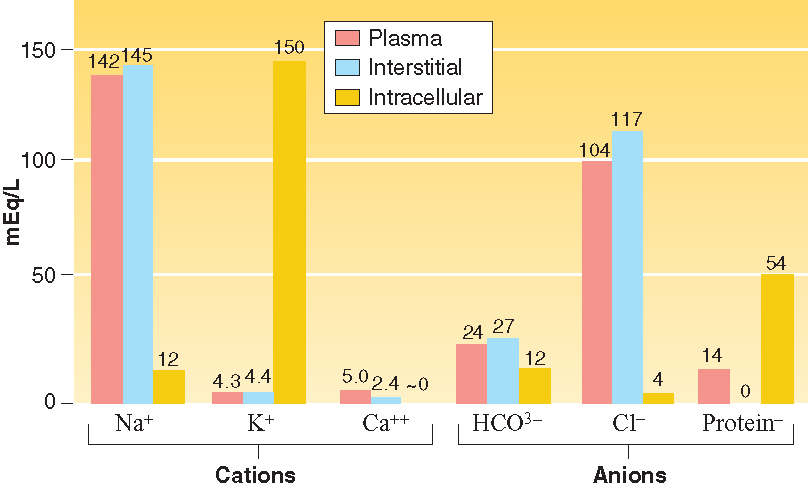
Cations: Positively charged ions (e.g., sodium Na+, potassium K+, calcium Ca2+)
Anions: Negatively charged ions (e.g., chloride Cl−, bicarbonate HCO3−, proteins)
Electrolyte Imbalances
Imbalances in electrolyte concentrations can disrupt cellular function and cause clinical symptoms:
Electrolyte | Imbalance | Blood Concentration | Possible Outcomes |
|---|---|---|---|
Sodium (Na+) | Hypernatremia | >145 mEq/L | Headache, confusion, seizures |
Sodium (Na+) | Hyponatremia | <136 mEq/L | Confusion, seizures, coma |
Potassium (K+) | Hyperkalemia | >5.1 mEq/L | Muscle weakness, paralysis, cardiac arrest |
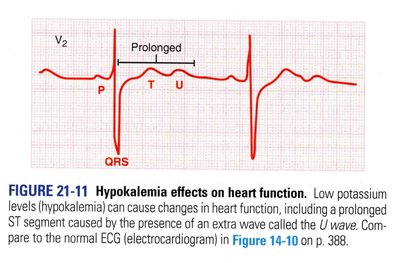
Potassium (K+) | Hypokalemia | <3.5 mEq/L | Cardiac arrhythmias, muscle weakness |
Calcium (Ca2+) | Hypercalcemia | >10.5 mg/dL | Fatigue, muscle weakness, cardiac problems |
Calcium (Ca2+) | Hypocalcemia | <8.4 mg/dL | Muscle cramps, twitching, cardiac arrhythmias |
Clinical Application: Edema
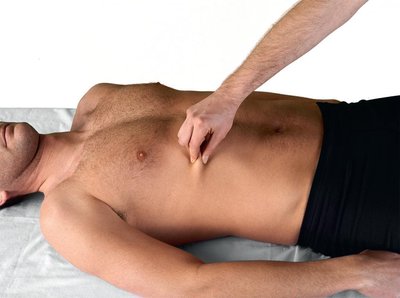
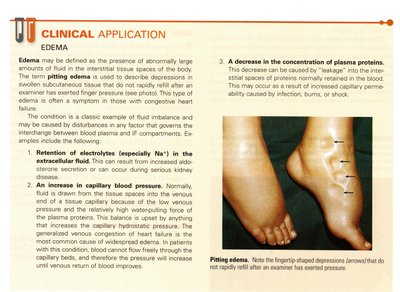
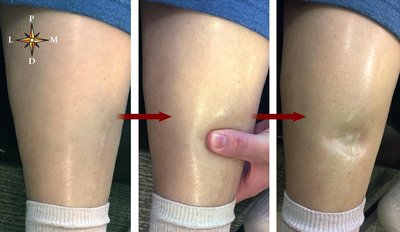
Edema is the accumulation of excess interstitial fluid, often due to electrolyte imbalances, increased capillary blood pressure, or decreased plasma protein concentration. Pitting edema is identified when depressions in the skin persist after pressure is applied.
Review Questions
What are electrolytes and what is electrolyte balance?
What are the two main fluid compartments of the body?
What is meant by the term fluid balance?
What is the largest volume of body fluid?
Which does the body primarily adjust, fluid intake or fluid output?
What are the chief ways that fluid leaves the body?
How does the body maintain fluid balance?
Name the hormones that regulate urine volume.
Describe the mechanism that regulates fluid intake.
What is the difference between an electrolyte and a nonelectrolyte?
What are some of the major roles of ions in the body?
Identify the functions of electrolytes in the body.
What are the causes of hypernatremia? Hyponatremia?
Hypokalemia may cause what conditions?
Why is calcium a significant mineral in our body?
