 Back
Fluid, Electrolyte, and Acid–Base Balance (Chapter 27) – Study Notes
Study Guide - Smart Notes
 Tailored notes based on your materials, expanded with key definitions, examples, and context.
Fluid, Electrolyte, and Acid–Base Balance
Introduction
This chapter explores the regulation of body fluids, electrolytes, and acid–base balance, which are essential for maintaining homeostasis. Understanding these processes is critical for interpreting physiological responses and clinical conditions related to fluid and electrolyte disturbances.
Fluid Balance
Definition and Importance
Fluid balance refers to the equilibrium between water gained and lost by the body.
Water is gained through absorption in the digestive tract and metabolic reactions, and lost via urine, feces, perspiration, and respiration.
Maintaining fluid balance is vital for cellular operations and overall physiological stability.
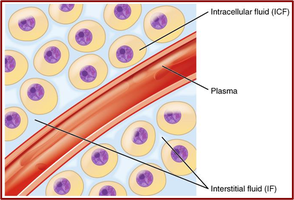
Fluid Compartments
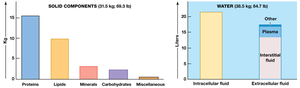
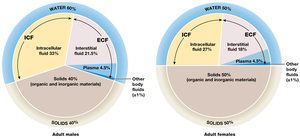
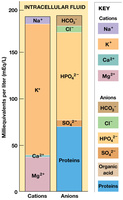
Intracellular fluid (ICF): Fluid within cells (cytosol); contains about two-thirds of total body water.
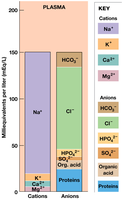
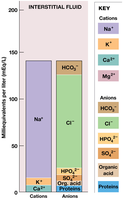
Extracellular fluid (ECF): Fluid outside cells, including interstitial fluid, plasma, lymph, cerebrospinal fluid, synovial fluid, serous fluids, and others.
Water content: ~60% of adult male body weight, ~50% of adult female body weight (due to differences in muscle and adipose tissue).
Water Movement and Regulation
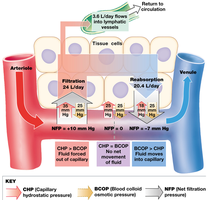
Water moves freely between plasma and interstitial fluid, driven by hydrostatic and osmotic pressures.
Capillary filtration and lymphatic transport maintain ECF water distribution.
Edema is the accumulation of excess interstitial fluid; lymphedema results from lymphatic blockage.
Electrolyte Balance
Definition and Key Electrolytes
Electrolyte balance is the equilibrium between electrolytes gained and lost.
Electrolytes are ions released from inorganic compounds that conduct electricity in solution.
Major ICF ions: potassium (K+), magnesium (Mg2+), phosphate (PO43−), and proteins.
Major ECF ions: sodium (Na+), chloride (Cl−), calcium (Ca2+), and bicarbonate (HCO3−).
Hormonal Regulation
Antidiuretic hormone (ADH): Increases water reabsorption in kidneys, reducing urine output and stimulating thirst.
Aldosterone: Promotes Na+ reabsorption and K+ excretion in kidneys; water follows Na+.
Natriuretic peptides (ANP, BNP): Released by the heart in response to increased blood volume; promote fluid loss and inhibit ADH and aldosterone.
Sodium and Potassium Balance
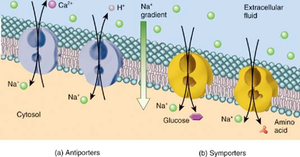
Sodium (Na+): Most abundant ECF cation; imbalances can cause hyponatremia (low Na+) or hypernatremia (high Na+).
Potassium (K+): Most abundant ICF cation; imbalances can cause hypokalemia (low K+) or hyperkalemia (high K+).
Regulation involves renal ion pumps and exchange mechanisms.
Calcium, Magnesium, Phosphate, and Chloride Balance
Calcium (Ca2+): Essential for muscle, nerve function, blood clotting; regulated by PTH, calcitriol, and calcitonin.
Magnesium (Mg2+): Cofactor for enzymes, mainly in ICF and skeleton.
Phosphate (PO43−): Important for ATP, nucleic acids, and enzyme activation.
Chloride (Cl−): Main ECF anion, absorbed with Na+ in the digestive tract and kidneys.
Acid–Base Balance
pH and Its Importance
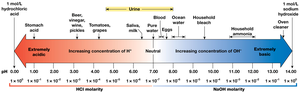
pH measures the acidity or alkalinity of a solution; normal ECF (blood) pH is 7.35–7.45.
Acidosis: Blood pH below 7.35; Alkalosis: Blood pH above 7.45.
Acid–base imbalances affect all body systems, especially nervous and cardiovascular systems.
Buffer Systems
Buffers are compounds that stabilize pH by binding or releasing H+ ions.
Major buffer systems: phosphate buffer (important in ICF and urine), protein buffer (amino acids accept/release H+), and carbonic acid–bicarbonate buffer (main ECF buffer).
Carbon Dioxide and pH Regulation
CO2 combines with water to form carbonic acid, which dissociates into H+ and HCO3−:
Respiratory and renal mechanisms coordinate with buffer systems to maintain pH.
Respiratory and Renal Compensation
Respiratory compensation: Adjusts breathing rate to regulate CO2 and thus pH.
Renal compensation: Adjusts secretion/reabsorption of H+ and HCO3− in kidneys.
Disorders of Acid–Base Balance
Types and Responses
Respiratory acidosis: Low pH due to high CO2 (hypoventilation); compensated by increased respiration and renal H+ excretion.
Respiratory alkalosis: High pH due to low CO2 (hyperventilation); compensated by decreased respiration and renal HCO3− excretion.
Metabolic acidosis: Low pH from increased metabolic acids or HCO3− loss; compensated by increased respiration and renal H+ excretion.
Metabolic alkalosis: High pH from HCO3− gain or acid loss; compensated by decreased respiration and renal HCO3− excretion.
Summary Table: Water Gains and Losses
Source | Water Gain (mL/day) | Water Loss (mL/day) |
|---|---|---|
Drinking | 1200 | - |
Eating | 1000 | - |
Metabolic generation | 300 | - |
Urination | - | 1200 |
Feces | - | 150 |
Evaporation (lungs) | - | 400 |
Perspiration (sweat) | - | 750 |
Additional info: Values are approximate and may vary with activity, environment, and health status.
