 Back
BackFoundations of Cellular and Organ Physiology: Principles, Biomolecules, and Homeostasis
Study Guide - Smart Notes
 Tailored notes based on your materials, expanded with key definitions, examples, and context.
Introduction to Physiology
Definition and Scope
Physiology is the biological study of the functions of living organisms and their parts. It is a holistic and integrative science, examining how chemical and physical processes operate across levels of biological organization—from atoms to whole organisms. - Key Point: Physiology integrates concepts from chemistry, molecular biology, cell biology, and ecology. - Emergent Properties: Complex systems exhibit characteristics not found in their individual components.
Levels of Biological Organization
Living systems are organized hierarchically, with each level building upon the previous. - Atoms → Molecules → Cells → Tissues → Organs → Organ Systems → Organisms - Example: The circulatory system is composed of organs, tissues, and cells working together to transport substances. 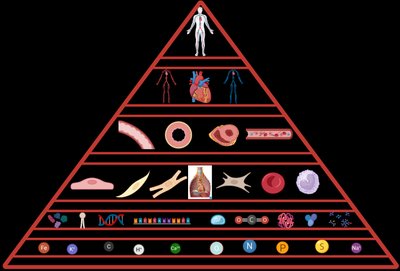
Classification of Life
Five Kingdoms and Three Domains
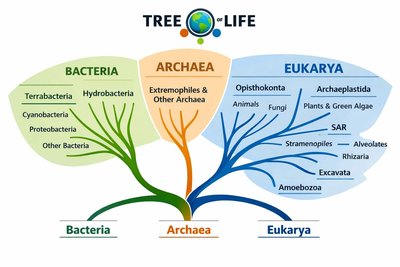
Life is classified into five kingdoms: Monera, Protista, Fungi, Plantae, and Animalia. Modern classification also recognizes three domains: Bacteria, Archaea, and Eukarya. - Bacteria: Prokaryotes with peptidoglycan cell walls, diverse metabolism. - Archaea: Prokaryotes distinct from bacteria, often extremophiles, unique membrane lipids. - Eukarya: Organisms with membrane-bound nuclei and organelles. 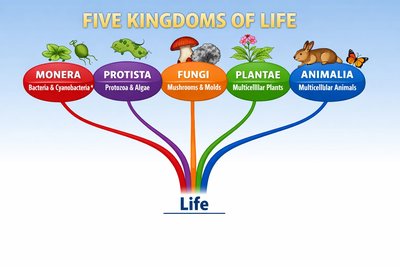
Animal Classification
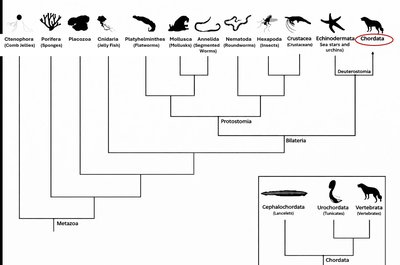
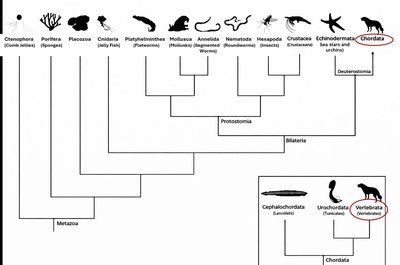
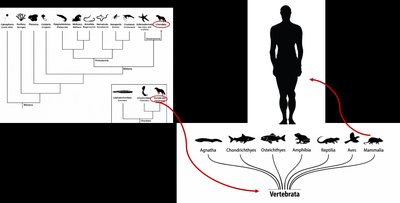
Multicellular animals (metazoans) are further classified into phyla, including Chordata and Vertebrata. - Chordata: Animals with a notochord, dorsal nerve cord, and pharyngeal slits. - Vertebrata: Subgroup of Chordata with a vertebral column. 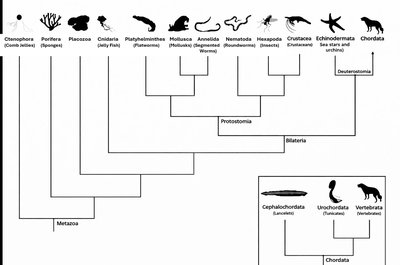
Properties of Living Organisms
Universal Traits
All living organisms share fundamental properties: - Complex structure (cellular organization) - Energy transformation (acquire, store, use energy) - Sensing and response to environments - Homeostasis (internal control systems with feedback) - Information storage and transmission - Growth, reproduction, and death - Emergent properties - Adaptation and evolution 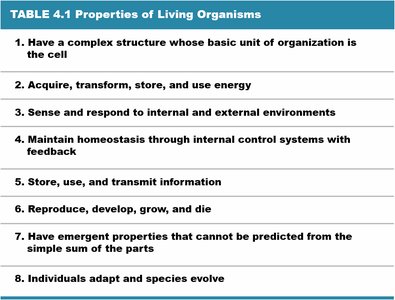
Cell Chemistry & Biomolecules
Carbon-Based Life
Organic molecules, which contain carbon, are the foundation of life. Carbon's versatility allows for complex, stable molecules such as proteins, nucleic acids, carbohydrates, and lipids. - Key Point: Carbon forms single, double, and triple bonds, enabling diverse molecular structures.
Major Biomolecule Groups
- Carbohydrates: Energy storage and structural components. - Lipids: Energy storage, membrane structure. - Proteins: Catalysts (enzymes), structural, signaling. - Nucleotides: Information storage (DNA, RNA), energy transfer (ATP).
Monosaccharides
Simple sugars are the building blocks of carbohydrates. - Pentoses: Ribose, deoxyribose (backbone of RNA/DNA) - Hexoses: Glucose, fructose, galactose 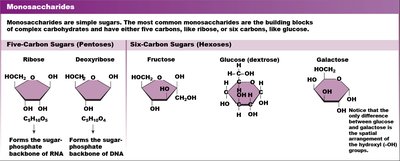
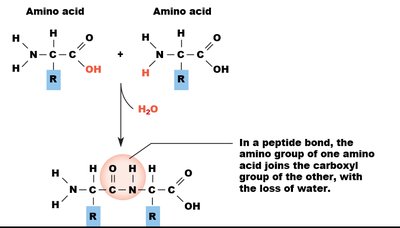
Amino Acids
Amino acids have a carboxyl group, amino group, hydrogen, and variable "R" group. Peptide bonds join amino acids, forming proteins. 
Fatty Acids
Long chains of carbon and hydrogen with a carboxyl group at one end. - Example: Palmitic acid (saturated fatty acid) 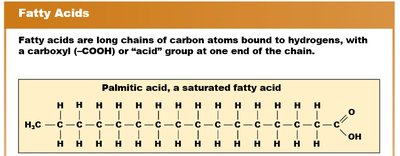
Origin of Biomolecules
The Miller-Urey experiment demonstrated that basic building blocks of life can form under prebiotic conditions. 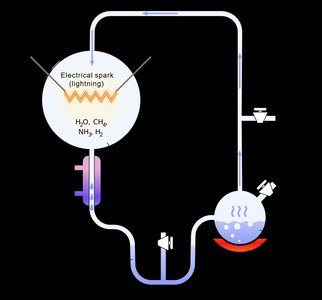
Water and Compartmentation
Water as the Universal Solvent
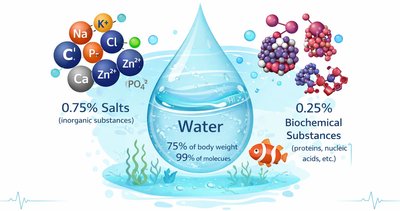
Water comprises 99% of all molecules in the body, essential for biochemical reactions and molecular transport. 
Compartmentation
All life is compartmentalized, with bounded spaces separating internal chemistry from the external environment. - Controlled environments for efficient reactions - Specialization of compartments for distinct functions - Concentration gradients drive energy conversion and regulation
Homeostasis
Concept and Mechanisms
Homeostasis is the process of maintaining internal conditions within tolerable ranges. It relies on feedback mechanisms to adjust physiological parameters. - Key Point: Homeostasis is not equilibrium, but dynamic steady-state disequilibrium. - Critical variables: Environmental factors, vital substances, cell communication, energy, mass balance, feedback 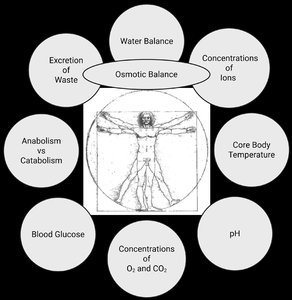
Feedback Mechanisms
- Negative Feedback: Counteracts deviations from set-point (e.g., temperature regulation) - Positive Feedback: Amplifies changes (e.g., childbirth, blood clotting)
Energy & Cell Processes
Forms of Energy
Energy is the capacity to do work, existing as potential (stored) or kinetic (active). - Chemical work: Making/breaking bonds - Transport work: Moving substances, creating gradients - Mechanical work: Movement, contraction
ATP Production
ATP is the principal energy currency of cells, produced via aerobic (with oxygen) and anaerobic (without oxygen) respiration. - Aerobic: Yields more ATP, occurs in mitochondria - Anaerobic: Yields less ATP, occurs in cytoplasm
Metabolism
Metabolism encompasses all chemical reactions in an organism. - Catabolism: Energy-releasing breakdown - Anabolism: Energy-utilizing synthesis - Metabolic Rate: Sum of all energy-requiring reactions, measured as O2 consumption
Thermoregulation
Thermal Budget and Heat Transfer
Organisms maintain thermal balance through conduction, convection, evaporation, and radiation. - Conduction: Heat transfer via physical contact - Convection: Heat transfer via movement of air/water - Evaporation: Heat loss via water vaporization - Radiation: Heat transfer via electromagnetic waves
Thermoregulatory Strategies
- Ectothermy: Use external heat, variable body temperature, low energy requirements - Endothermy: Generate internal heat, constant body temperature, high energy requirements
Adaptations for Thermoregulation
- Behavioral: Seeking heat, burrowing, basking - Physiological: Shivering, fat thermogenesis, insulation, counter-current exchange
Comparative Physiology
Unique Insights
Comparative physiology examines how different organisms solve fundamental physiological problems, such as temperature regulation and water/ion balance.
Summary Table: Properties of Living Organisms
Property | Description |
|---|---|
Cellular Organization | Basic unit is the cell |
Energy Transformation | Acquire, store, use energy |
Sensing & Response | Internal/external environments |
Homeostasis | Internal control systems with feedback |
Information Storage | Store, use, transmit information |
Growth & Reproduction | Reproduce, develop, grow, die |
Emergent Properties | Cannot be predicted from parts |
Adaptation & Evolution | Individuals adapt, species evolve |
Key Equations in Physiology
Ohm’s Law
Boyle’s Law
Ideal Gas Law
Law of Mass Balance
Newton’s Law of Universal Gravitation
Conclusion
These foundational principles provide a framework for understanding cellular and organ physiology, emphasizing the importance of homeostasis, energy transformation, compartmentation, and adaptation across all living systems. Additional info: Academic context was added to clarify fragmented points and ensure completeness.
