 Back
BackGeneral Sensation Pathways: From Skin to Brain
Study Guide - Smart Notes
 Tailored notes based on your materials, expanded with key definitions, examples, and context.
Organization of the Nervous System
Central and Peripheral Nervous System
The nervous system is divided into the Central Nervous System (CNS) and the Peripheral Nervous System (PNS). The CNS consists of the brain and spinal cord, serving as integrative and control centers. The PNS includes cranial and spinal nerves, acting as communication lines between the CNS and the rest of the body.
Sensory (afferent) division: Conducts impulses from receptors to the CNS.
Motor (efferent) division: Conducts impulses from the CNS to effectors (muscles and glands).
Somatic nervous system: Voluntary control of skeletal muscles.
Autonomic nervous system (ANS): Involuntary control of cardiac muscle, smooth muscle, and glands. Includes sympathetic (mobilizes body systems during activity) and parasympathetic (conserves energy, promotes housekeeping functions during rest) divisions.
Somatic Sensory Division
The somatic sensory division is responsible for transmitting general sensations such as touch from the skin, skeletal muscles, and joints to the CNS.
Functional Areas of the Cerebral Cortex
Sensory Areas
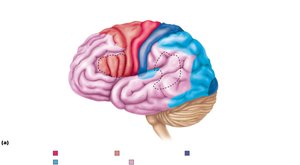
The cerebral cortex contains specialized areas for processing sensory information. These areas are located in the parietal, insular, temporal, and occipital lobes. The main sensory areas include:
Primary somatosensory cortex: Receives sensory input from the body.
Somatosensory association cortex: Integrates and interprets sensory information.
Visual areas: Process visual information.
Auditory areas: Process sound.
Olfactory cortex: Processes smell.
Gustatory cortex: Processes taste.
Visceral sensory area: Processes internal organ sensations.
Vestibular cortex: Processes balance.
Somatotopy: Body Maps in the Cortex
Somatosensory and Motor Maps
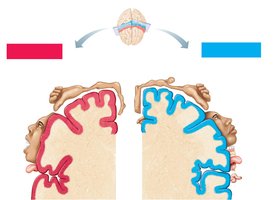
The primary somatosensory cortex (postcentral gyrus) and primary motor cortex (precentral gyrus) are organized as maps of the body, known as somatotopy. Each region of the cortex corresponds to a specific part of the body, with larger areas dedicated to regions requiring finer control or sensitivity.
Somatosensory map: Represents sensation from various body parts.
Motor map: Represents voluntary movement control.
Regions such as the hands, face, and lips occupy larger portions due to their high sensitivity and motor control.
Ascending Sensory Pathways
Neuronal Order and Pathways
Sensory information travels from the body to the brain via ascending pathways composed of three main neurons:
First Order Neuron: Receives input from sensory receptors and transmits it to the spinal cord or medulla.
Second Order Neuron: Located in the dorsal horn of the spinal cord or medullary nuclei; transmits information to the thalamus or cerebellum.
Third Order Neuron: Located in the thalamus; transmits information to the primary somatosensory cortex.
Major Ascending Pathways
Medial Lemniscal Pathway: Includes the cuneatus fasciculus and gracilis fasciculus; transmits discriminative touch and vibration to the somatosensory cortex.
Spinothalamic Pathway: Transmits pain, temperature, crude touch, and pressure to the somatosensory cortex.
Spinocerebellar Tracts: Transmit proprioceptive information to the cerebellum for muscle coordination.
Cuneatus Fasciculus: Discriminative Touch from Upper Body
Pathway Steps
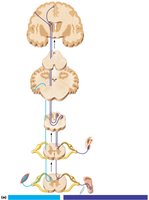
The cuneatus fasciculus is a major pathway for discriminative touch from the upper body. The pathway involves:
Sensory Receptor: Receives signal from the skin, skeletal muscle, or joints.
First Order Neuron: Transmits signal from the receptor to the cuneatus nuclei in the brainstem.
Second Order Neuron: Relays signal from the cuneatus nuclei to the thalamus.
Third Order Neuron: Sends signal from the thalamus to the primary somatosensory cortex.
Primary Somatosensory Cortex: Processes the sensory information.
Synaptic Transmission
At each stage, the signal is passed via a synapse to the next neuron in the pathway, ensuring accurate transmission and processing of sensory information.
Summary Table: Ascending Pathways
Pathway | Type of Sensation | Destination |
|---|---|---|
Medial Lemniscal (Cuneatus & Gracilis Fasciculi) | Discriminative touch, vibration | Somatosensory cortex |
Spinothalamic | Pain, temperature, crude touch, pressure | Somatosensory cortex |
Spinocerebellar | Proprioception | Cerebellum |
Key Terms and Concepts
Somatosensory cortex: Area of the brain responsible for processing sensory information from the body.
Somatotopy: Mapping of body regions onto specific areas of the cortex.
Ascending pathway: Neural route carrying sensory information from the body to the brain.
Synapse: Junction where a neuron passes its signal to another neuron.
Relevant Equations
While the pathways are anatomical, the following general formula represents the flow of information:
$\text{Sensory Receptor} \rightarrow \text{First Order Neuron} \rightarrow \text{Second Order Neuron} \rightarrow \text{Third Order Neuron} \rightarrow \text{Somatosensory Cortex}$
Example: Touching the skin activates a sensory receptor, which sends a signal via the first order neuron to the spinal cord, then through the second and third order neurons to the somatosensory cortex for conscious perception.
