 Back
BackGenetics and Genetic Disease: Mechanisms, Inheritance, and Clinical Implications
Study Guide - Smart Notes
 Tailored notes based on your materials, expanded with key definitions, examples, and context.
Genetics and Human Disease
Introduction to Genetics
Genetics is the scientific study of inheritance, focusing on how traits and diseases are passed from one generation to the next. Gregor Mendel, a 19th-century monk, established that independent units called genes are responsible for the inheritance of biological traits. Genetic diseases can arise from inherited traits, spontaneous mutations, or inherited risk factors.
Inherited Disease Traits: Some diseases, such as hemophilia, are directly inherited.
Mutations: Diseases like progeria can result from mutations occurring after fertilization.
Risk Factors: Inheriting certain traits (e.g., pale skin) can increase disease risk (e.g., skin cancer).
Mechanisms of Gene Function
Gene Structure and Activity
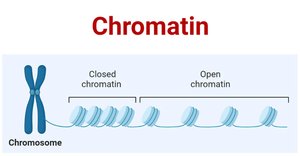
Genes are segments of DNA that carry the genetic code, dictating the production of enzymes and other molecules essential for cellular structure and function. Genes are active in the chromatin (strand) form and inactive when DNA is in the compact chromosome form.
The Human Genome
Genome Organization
The Human Genome Project mapped all human genes, revealing approximately 20,000–25,000 genes and large amounts of noncoding DNA, often termed "junk DNA." Less than 2% of DNA codes for proteins. Some noncoding DNA, such as pseudogenes, may play roles in disease.
Genomics and Proteomics
Definitions and Applications
Genomics: The analysis of the entire genome sequence.
Proteomics: The study of all proteins encoded by the genome (the proteome).
Expression of Genomic Information
Chromosome Structure and Gene Mapping
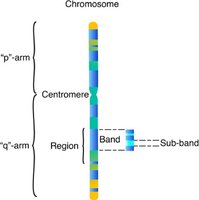
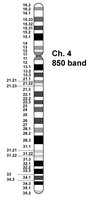
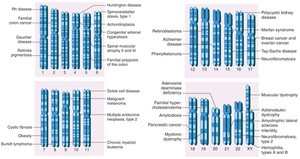
Genomic information is expressed through ideograms, which are schematic representations of chromosomes showing the centromere, p-arm (short arm), and q-arm (long arm). Genes are often represented by their nucleotide sequences (a, c, g, t).
Distribution of Chromosomes to Offspring
Meiosis and Genetic Diversity
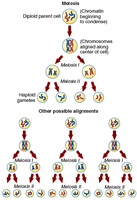
Meiotic cell division produces gametes with 23 chromosomes each. At conception, two gametes fuse to form a zygote with 46 chromosomes, restoring the complete human genome.
Chromosomes
Autosomes and Sex Chromosomes
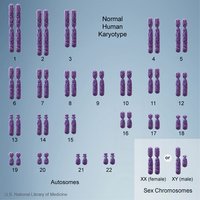
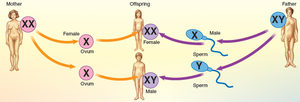
Humans have 22 pairs of autosomes and one pair of sex chromosomes (XX for females, XY for males). Autosomes are homologous pairs, while sex chromosomes determine biological sex.
Genetic Variation
Mechanisms Increasing Variation
Independent Assortment: Genes separate independently during gamete formation.
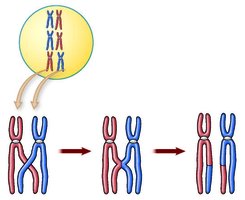
Crossing-Over: Homologous chromosomes exchange genetic material, increasing diversity.
Gene-Linkage: Groups of genes may be inherited together if they are close on a chromosome.
Hereditary Traits
Alleles, Dominance, and Codominance
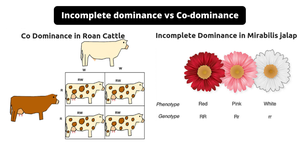
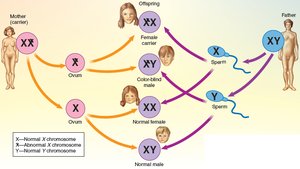
Alleles are different forms of the same gene. Dominant alleles mask the effects of recessive alleles. A genetic carrier has a recessive gene masked by a dominant gene. Codominance occurs when two dominant alleles are both expressed equally.
Inheritance of Albinism
Autosomal Recessive Inheritance
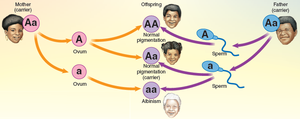
Albinism is inherited as an autosomal recessive trait. Both parents must be carriers for a child to express the condition.
Sex-Linked Traits
X-Linked and Y-Linked Inheritance
Sex-linked traits are associated with genes on the sex chromosomes. Most are X-linked, affecting traits such as red-green color vision, hemophilia, and male pattern baldness. Males (XY) are more likely to express X-linked recessive traits because they have only one X chromosome.
Genetic Mutations
Causes and Effects
A mutation is a change in the genetic code, which can cause disease. Mutations may occur spontaneously or be induced by mutagens such as chemicals, radiation, or viruses. Mutations can affect a single gene, a chromosome segment, or an entire chromosome.
Mechanisms of Genetic Disease
Single-Gene and Multi-Gene Disorders
Single-Gene Diseases: Caused by mutations in one gene (e.g., cystic fibrosis, Tay-Sachs disease, PKU).
Polygenic Conditions: Involve dysfunction in multiple genes, leading to variable expression and severity.
Epigenetics: Environmental factors can modify gene expression without altering the DNA sequence, explaining some inherited traits not directly linked to gene mutations.
Examples of Single-Gene Conditions
Autosomal Recessive Disorders
Cystic Fibrosis: Excessive mucus and sweat production, leading to respiratory and digestive issues.
Tay-Sachs Disease: Lipid accumulation in brain tissue, causing neurological decline and early death.
Phenylketonuria (PKU): Accumulation of phenylalanine, potentially causing brain injury and death.
Epigenetic Conditions
DNA Methylation and Disease
Some diseases, such as certain cancers and Fragile X syndrome, are associated with abnormal DNA methylation, which alters gene activity without changing the DNA sequence.
Chromosomal Diseases
Nondisjunction and Chromosomal Abnormalities
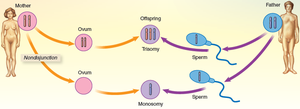
Chromosomal diseases result from chromosome breakage or nondisjunction (failure of chromosomes to separate during gamete formation). This can lead to:
Trisomy: An extra chromosome (three instead of two).
Monosomy: A missing chromosome (one instead of two).
Examples of Chromosomal Conditions
Common Syndromes
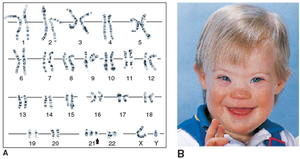
Down Syndrome: Trisomy 21, causing intellectual disability and structural defects.
Klinefelter Syndrome: XXY males, with long legs, breast development, and sterility.
Turner Syndrome: XO females, with short stature, webbed neck, and sterility.
Genetic Counseling
Tools and Techniques
Genetic counseling helps families understand genetic risks and inheritance patterns. Key tools include:
Pedigree: A chart showing genetic relationships across generations (squares = males, circles = females, shaded = affected, partially shaded = carriers).
Punnett Square: A grid predicting the probability of inheriting specific traits.
Karyotype: A photographic arrangement of chromosomes used to detect abnormalities such as trisomies and monosomies.
Amniocentesis and Chorionic Villus Sampling: Techniques for collecting fetal or embryonic cells to analyze genetic health.
Treating Genetic Diseases
Current and Emerging Therapies
Symptomatic Treatment: Most current therapies focus on managing symptoms rather than curing the disease.
Gene Therapy: Experimental approaches to correct genetic defects by introducing functional genes.
Gene Replacement Therapy: Adding new, functional genes to cells to compensate for defective ones.
Gene Augmentation Therapy: Introducing normal genes to boost production of needed proteins.
RNA Interference (RNAi): Silencing disease-causing genes at the RNA level.
Examples include gene therapy for severe combined immune deficiency (SCID), Leber congenital amaurosis (LCA), and cystic fibrosis (CF).
