 Back
BackGlial Cells and Diseases Affecting the Myelin Sheath
Study Guide - Smart Notes
 Tailored notes based on your materials, expanded with key definitions, examples, and context.
Q1. Based on your understanding of this cell’s function, diseases such as multiple sclerosis, that damage the myelin sheath of neurons, likely affect which of the cells in the figure?
Background
Topic: Neuroglia (Glial Cells) of the Central Nervous System (CNS)
This question tests your knowledge of the different types of glial cells in the CNS and their roles, especially in relation to diseases that affect the myelin sheath, such as multiple sclerosis.
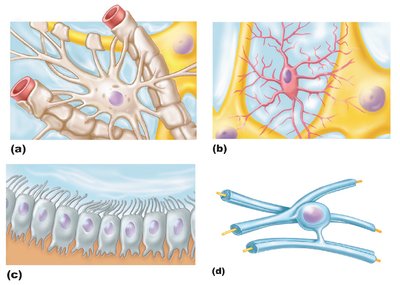
Key Terms and Concepts:
Myelin Sheath: A fatty layer that wraps around axons of neurons, speeding up electrical impulses.
Oligodendrocytes: Glial cells in the CNS responsible for forming and maintaining the myelin sheath.
Astrocytes: Supportive glial cells involved in nutrient exchange and maintaining the blood-brain barrier.
Microglial Cells: Immune defense cells in the CNS that act as macrophages.
Ependymal Cells: Line the ventricles of the brain and help circulate cerebrospinal fluid.
Multiple Sclerosis (MS): An autoimmune disease where the immune system attacks the myelin sheath in the CNS.
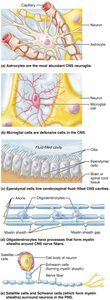
Step-by-Step Guidance
Review the main function of the myelin sheath: it insulates axons and increases the speed of nerve impulse conduction in the CNS.
Recall which glial cell type is responsible for producing and maintaining the myelin sheath in the CNS. (Hint: This is different from the cell type in the peripheral nervous system.)
Examine the figure and match each labeled cell (a, b, c, d) to its description and function. Use the labeled diagram for reference.
Identify which cell type would be most affected in diseases like multiple sclerosis, where the myelin sheath is damaged.
Try solving on your own before revealing the answer!
