 Back
Gross Anatomy of the Muscular System: Structure, Naming, and Major Muscle Groups
Study Guide - Smart Notes
 Tailored notes based on your materials, expanded with key definitions, examples, and context.
Gross Anatomy of the Muscular System
Introduction to the Muscular System
The muscular system is composed of specialized tissues that enable movement, maintain posture, and support bodily functions. Skeletal muscles, in particular, are responsible for voluntary movements and are attached to bones via tendons.
Types of Muscles by Function
Muscles are classified based on their function and structure. The three main types are skeletal, cardiac, and smooth muscles. This section focuses on skeletal muscles, which are under voluntary control and are responsible for body movements.
Naming Skeletal Muscles
Principles of Muscle Naming
Skeletal muscles are named according to several criteria that describe their characteristics or location. Understanding these conventions helps in identifying and learning the muscles of the body.
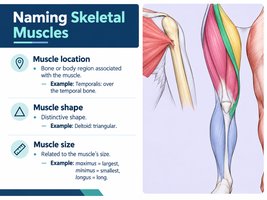
Muscle Location: Indicates the bone or body region with which the muscle is associated. Example: Temporalis (over the temporal bone).
Muscle Shape: Refers to the distinctive shape of the muscle. Example: Deltoid (deltoid = triangle).
Muscle Size: Describes the relative size of the muscle. Example: Maximus (largest), Minimus (smallest), Longus (long).
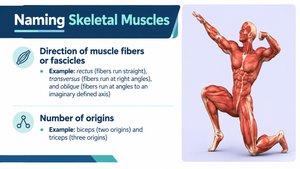
Direction of Muscle Fibers or Fascicles: Describes the orientation of muscle fibers. Examples: Rectus (fibers run straight), Transversus (fibers run at right angles), Oblique (fibers run at angles to an imaginary defined axis).
Number of Origins: Indicates the number of tendons of origin. Examples: Biceps (two origins), Triceps (three origins).
Major Muscle Groups and Their Functions
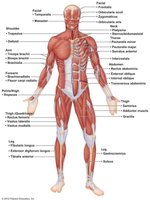
Facial Muscles
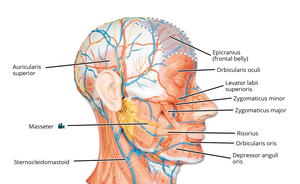
Facial muscles are responsible for facial expressions, mastication (chewing), and movements of the head and neck. They are unique because many insert into the skin rather than bones.
Examples: Orbicularis oculi (closes eyelids), Zygomaticus major (smiling), Masseter (chewing).
Muscles of the Trunk
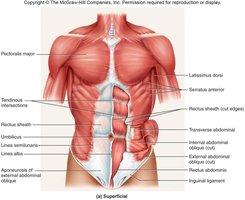
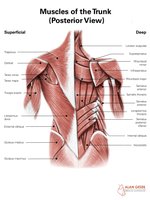
The trunk muscles include those of the thorax, abdomen, and back. They play key roles in respiration, posture, and movement of the vertebral column.
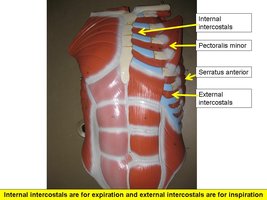
Pectoralis major/minor: Move the shoulder and arm.
Intercostal muscles: Aid in breathing (internal for expiration, external for inspiration).
Rectus abdominis: Flexes the vertebral column and compresses abdominal contents.
Latissimus dorsi: Extends, adducts, and rotates the arm.
Upper Limb Muscles
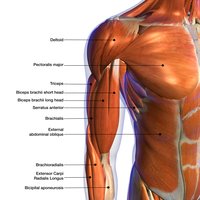
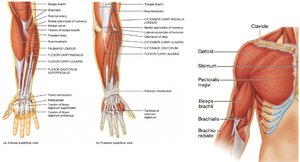
Muscles of the upper limb are responsible for movements of the shoulder, arm, forearm, and hand. They are divided into groups based on their location and function.
Deltoid: Abducts the arm.
Biceps brachii: Flexes the elbow and supinates the forearm.
Triceps brachii: Extends the elbow.
Brachialis: Flexes the elbow.

Muscles of the Hip and Lower Limb
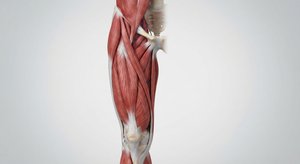
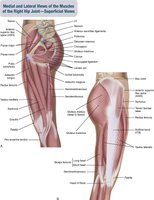
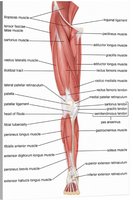
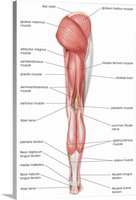
These muscles are essential for locomotion, posture, and balance. They include muscles that move the thigh, leg, and foot.
Gluteus maximus: Extends and laterally rotates the thigh.
Quadriceps femoris: Extends the knee.
Hamstrings: Flex the knee and extend the hip.
Gastrocnemius: Plantar flexes the foot.
Summary Table: Muscle Naming Criteria
Criterion | Description | Example |
|---|---|---|
Location | Bone or region associated | Temporalis (temporal bone) |
Shape | Distinctive geometric form | Deltoid (triangle) |
Size | Relative size | Maximus (largest), Minimus (smallest) |
Direction of Fibers | Orientation of muscle fibers | Rectus (straight), Oblique (angled) |
Number of Origins | Number of tendons of origin | Biceps (two), Triceps (three) |
Key Terms and Definitions
Origin: The fixed attachment point of a muscle.
Insertion: The movable attachment point of a muscle.
Fascicle: A bundle of muscle fibers.
Prime mover (agonist): Main muscle responsible for a movement.
Antagonist: Muscle that opposes the action of the prime mover.
Synergist: Muscle that assists the prime mover.
Fixator: Muscle that stabilizes the origin of the prime mover.
Additional info:
Muscle actions are often described in terms of the movement they produce at a joint (e.g., flexion, extension, abduction, adduction).
Understanding muscle anatomy is essential for fields such as medicine, physical therapy, sports science, and biology.
