 Back
BackHomeostasis, Autonomic Nervous System, Endocrine System, and Blood: Foundations for Human Physiology
Study Guide - Smart Notes
 Tailored notes based on your materials, expanded with key definitions, examples, and context.
Homeostasis and Control Systems
Definition and Importance of Homeostasis
Homeostasis is the body's ability to maintain relatively stable internal conditions despite continuous changes in the external environment. This dynamic equilibrium is essential for survival and involves multiple organ systems working together to regulate variables such as temperature, pH, and nutrient levels.
Key Characteristics: Dynamic equilibrium, involves feedback mechanisms, and requires constant monitoring and regulation.
Examples: Regulation of body temperature, blood glucose, and blood pressure.
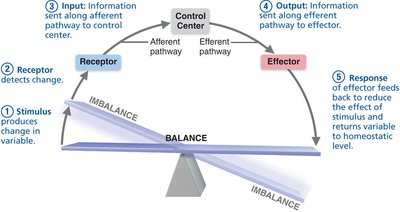
Components of Homeostatic Control Mechanisms
Homeostatic regulation involves three main components:
Receptor: Detects changes in the environment (stimuli).
Control Center: Processes information and determines the appropriate response.
Effector: Carries out the response to restore balance.
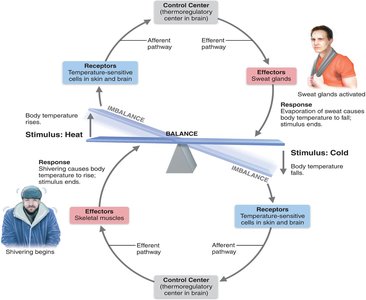
Feedback Mechanisms
Negative Feedback: Most common; reduces or shuts off the original stimulus. Example: Regulation of body temperature and blood glucose.
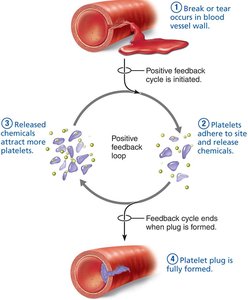
Positive Feedback: Enhances or amplifies the original stimulus. Example: Platelet plug formation during blood clotting.
Homeostatic Imbalance
Disturbances in homeostasis increase the risk of disease and are associated with aging, as control systems become less efficient.

Autonomic Nervous System (ANS)
Organization of the Nervous System
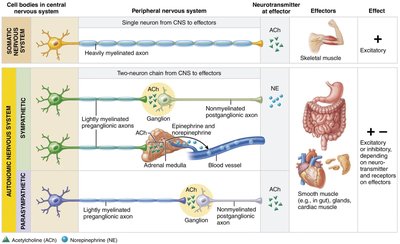
The nervous system is divided into the central nervous system (CNS) and peripheral nervous system (PNS). The PNS includes sensory (afferent) and motor (efferent) divisions. The motor division is further divided into the somatic nervous system (voluntary control of skeletal muscles) and the autonomic nervous system (involuntary control of smooth muscle, cardiac muscle, and glands).
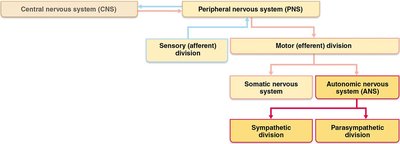
Divisions of the Autonomic Nervous System
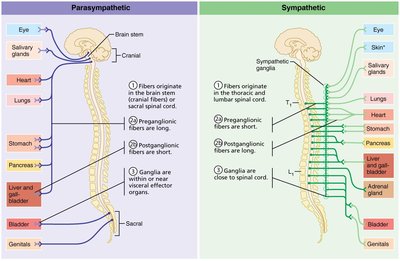
Sympathetic Division: Mobilizes the body during activity (fight-or-flight response). Increases heart rate, dilates airways, and redirects blood flow to muscles.
Parasympathetic Division: Promotes maintenance activities and conserves energy (rest-and-digest response). Decreases heart rate, increases digestive activity.
Neurotransmitters and Receptors
The ANS uses acetylcholine (ACh) and norepinephrine (NE) as neurotransmitters. The effects depend on the type of receptor (cholinergic or adrenergic) present on the target organ.
Control of Autonomic Function
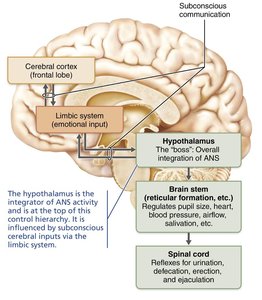
The hypothalamus is the main integration center for ANS activity, with input from the limbic system, brainstem, and spinal cord. Higher brain centers can influence ANS function, allowing for some conscious modulation (e.g., biofeedback).
Endocrine System
Overview and Comparison with Nervous System
The endocrine system works with the nervous system to coordinate and integrate body functions. It uses hormones as chemical messengers, which are released into the bloodstream and act on distant target organs. Endocrine responses are slower but longer-lasting than nervous responses.
Nervous System | Endocrine System |
|---|---|
Rapid, short-duration responses | Slow, long-duration responses |
Neurotransmitters, specific locations | Hormones, diffuse locations |
Short distances | Long distances |
Endocrine vs. Exocrine Glands
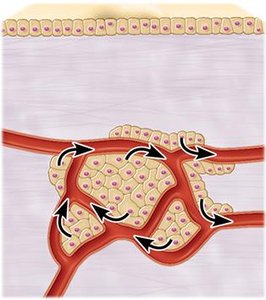
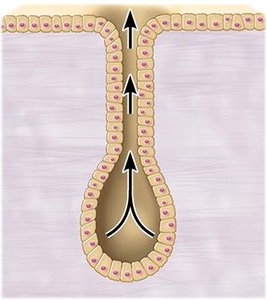
Endocrine glands: Ductless, secrete hormones directly into the blood (e.g., pituitary, thyroid).
Exocrine glands: Have ducts, secrete non-hormonal substances (e.g., sweat, saliva) onto epithelial surfaces.
Hormones: Types and Mechanisms of Action
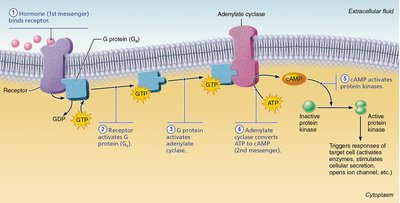
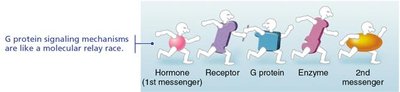
Amino acid-based hormones: Include peptides and proteins; act on plasma membrane receptors via second messengers (e.g., cAMP).
Steroid hormones: Derived from cholesterol; act on intracellular receptors to directly regulate gene expression.
Hormone Regulation and Target Cell Specificity
Hormone effects depend on the presence of specific receptors on target cells.
Regulation occurs via up-regulation (increased receptors) or down-regulation (decreased receptors) in response to hormone levels.
Blood: Composition and Function
Functions of Blood
Blood is a connective tissue with multiple functions:
Transportation: Delivers oxygen, nutrients, hormones; removes wastes and CO2.
Regulation: Maintains pH, temperature, and fluid volume.
Protection: Prevents blood loss (clotting) and infection (immune cells).
Composition of Blood
Plasma: 55% of blood; mostly water, proteins (albumin, globulins, fibrinogen), nutrients, hormones, and waste products.
Formed Elements: Erythrocytes (RBCs), leukocytes (WBCs), and platelets.
Erythrocytes (Red Blood Cells)
Structure: Biconcave, anucleate, filled with hemoglobin for gas transport.
Function: Transport oxygen (via hemoglobin) and some carbon dioxide.
Hemoglobin: Each molecule binds up to four O2 molecules; consists of globin chains and heme groups with iron.
Leukocytes (White Blood Cells)
Function: Defense against pathogens; only complete cells among formed elements.
Types: Granulocytes (neutrophils, eosinophils, basophils) and agranulocytes (lymphocytes, monocytes).
Platelets
Structure: Cell fragments derived from megakaryocytes.
Function: Essential for blood clotting (hemostasis).
Hemostasis
Hemostasis is the process of stopping bleeding and involves three main steps:
Vascular spasm (vasoconstriction)
Platelet plug formation (positive feedback)
Coagulation (formation of fibrin mesh)
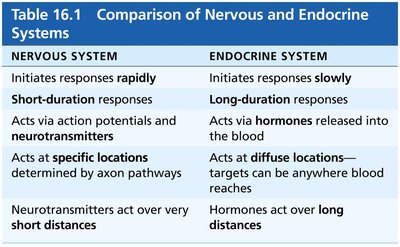
Summary Table: Comparison of Nervous and Endocrine Systems
Nervous System | Endocrine System |
|---|---|
Initiates responses rapidly | Initiates responses slowly |
Short-duration responses | Long-duration responses |
Acts via action potentials and neurotransmitters | Acts via hormones released into the blood |
Acts at specific locations determined by axon pathways | Acts at diffuse locations—targets can be anywhere blood reaches |
Neurotransmitters act over very short distances | Hormones act over long distances |
Additional info: This guide covers foundational concepts from human physiology, including homeostasis, the autonomic nervous system, the endocrine system, and blood. It is suitable for introductory college-level anatomy and physiology courses.
