Back
BackHomeostasis, Feedback Systems, and Types of Bones: Core Concepts in Anatomy & Physiology
Study Guide - Smart Notes
 Tailored notes based on your materials, expanded with key definitions, examples, and context.
Homeostasis
Definition and Importance
Homeostasis is the process by which the body maintains a stable internal environment despite changes in external conditions. This regulation is essential for optimal cell, tissue, and organ function, ensuring physiological parameters such as temperature, pH, and ion concentrations remain within narrow limits. Deviations from homeostasis can result in dysfunction, disease, or death.
Key Parameters Regulated: Oxygen and carbon dioxide tensions, glucose and metabolite concentrations, osmotic pressure, ion concentrations (hydrogen, potassium, calcium, magnesium), and temperature.
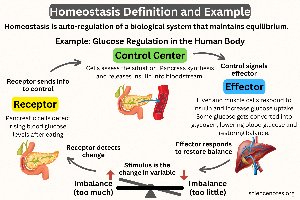
Example: Blood glucose regulation involves hormones such as insulin (lowers glucose) and glucagon (raises glucose) to maintain balance.
Behavioral and Cellular Homeostasis
Behavioral responses, such as seeking food when blood glucose is low, also contribute to homeostasis. At the cellular level, mechanisms buffer intracellular hydrogen ions and extrude excess H+ to regulate pH, which is critical for chemical reactions and protein structure.
Control Systems of the Body
Feedback Systems Overview
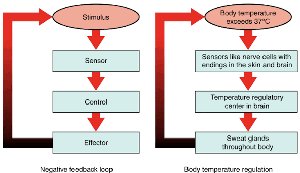
The body uses feedback systems (loops) to self-regulate and maintain homeostasis. These systems involve sensors (receptors), control centers, and effectors, working together to keep physiological variables within a healthy range.
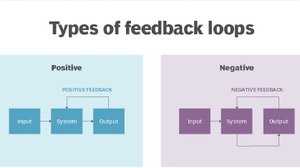
Negative Feedback: Reverses changes to maintain stability (e.g., temperature, blood sugar).
Positive Feedback: Amplifies changes to achieve a specific endpoint (e.g., childbirth, blood clotting).
Components of a Feedback System
Receptor: Monitors changes in a controlled condition and sends input to the control center via the afferent pathway.
Control Center: (Often the brain) Sets the set point, evaluates input, and generates output commands via the efferent pathway.
Effector: Receives output and produces a response to change the controlled condition.
Negative Feedback System (Stabilizer)
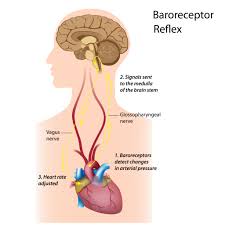
Most physiological systems use negative feedback to resist deviations from the set point. For example, blood pressure regulation involves baroreceptors, the vasomotor center, and effectors such as the heart and blood vessels.
Example: If blood pressure rises, baroreceptors detect the change and signal the brain, which then decreases heart rate and dilates blood vessels to restore normal pressure.
Feed Forward Control System (Regulation)
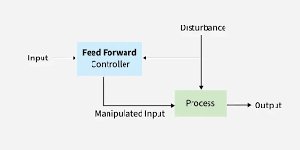
Feed forward control anticipates changes and initiates corrective action before a disturbance affects the controlled variable. This mechanism is important for rapid or expected changes, such as increased heart rate before exercise or salivation at the sight of food.
Example: Neural impulses stimulate salivary glands in anticipation of eating.
Positive Feedback System (Amplifier)
Positive feedback strengthens a change in a controlled variable, leading to an amplified response. This system is less common and typically drives processes to completion, such as childbirth or blood clotting.
Example: During childbirth, stretching of the cervix triggers oxytocin release, which increases uterine contractions, further stretching the cervix until delivery interrupts the cycle.
Types of Bones and Their Functions
Classification of Bones
Bones are classified based on their shapes and functions. Each type supports the body in unique ways, contributing to movement, protection, and structural integrity.
Long Bones
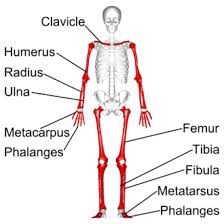
Long bones are longer than they are wide, with a shaft and two ends. They act as levers for movement, support body weight, and contain marrow for blood cell production.
Examples: Femur, humerus, phalanges.
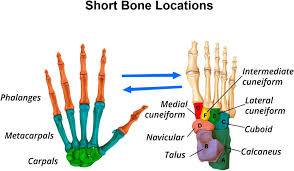
Short Bones
Short bones are cube-shaped and provide stability with limited movement. They are found in areas requiring strength and compactness.
Examples: Carpals (wrist), tarsals (ankle).
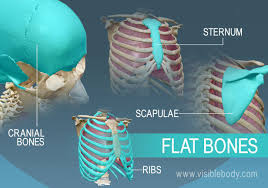
Flat Bones
Flat bones are thin, flattened, and often curved. They protect internal organs and provide large surfaces for muscle attachment.
Examples: Skull bones, sternum, ribs, scapula.
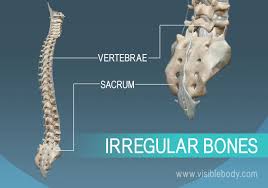
Irregular Bones
Irregular bones have complex shapes that do not fit other categories. They provide protection and support for various body structures.
Examples: Vertebrae, facial bones, hip bones.
Sesamoid Bones
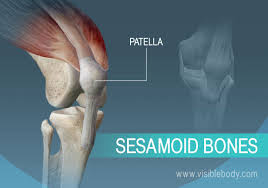
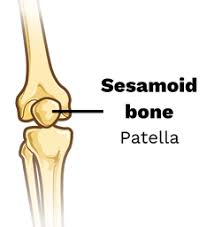
Sesamoid bones are small, round bones embedded in tendons. They protect tendons from excessive wear and act as pulleys to improve muscle leverage.
Example: Patella (kneecap).