 Back
BackHomeostasis: The Foundation of Human Physiology
Study Guide - Smart Notes
 Tailored notes based on your materials, expanded with key definitions, examples, and context.
Homeostasis: The Foundation of Human Physiology
Introduction to Homeostasis
Homeostasis is a fundamental concept in anatomy and physiology, referring to the body's ability to maintain a stable internal environment despite external and internal changes. This balance is essential for the survival and proper functioning of cells, tissues, organs, and ultimately the entire organism.
Definition: Homeostasis is the maintenance of a relatively constant internal environment suitable for cellular activities.
Importance: Disruptions in homeostasis can lead to illness or death, as cells are highly sensitive to changes in their environment.
Examples of regulated factors: Body temperature, blood pressure, pH, concentration of nutrients, water, salts, oxygen, carbon dioxide, and waste products.

The Internal Environment
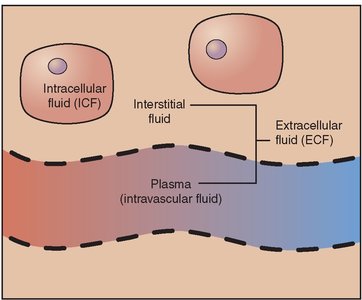
The internal environment of the body is the extracellular fluid (ECF), which surrounds all cells and is composed of interstitial fluid and plasma. The ECF provides the necessary substances and conditions for cellular function.
Components: Interstitial fluid (surrounds cells), plasma (intravascular fluid), and intracellular fluid (ICF, inside cells).
Key regulated parameters:
Concentration of nutrient molecules
Concentration of water, salts, and electrolytes
Concentration of waste products
pH (normally 7.35)
Blood volume (4-6 L) and pressure (120/80 mmHg)
Temperature (37°C)
Osmolarity of body fluids
Why is Homeostasis Important?
Proper cellular function is the foundation for the health of tissues, organs, organ systems, and the entire organism. Any disruption at the cellular level can cascade upward, affecting higher levels of biological organization.
Disruptions: Can be caused by external stimuli (e.g., temperature changes, toxins, pathogens) or internal stimuli (e.g., fluctuations in blood pressure, glucose levels).
Consequences: Loss of homeostasis can result in disease or death.
Homeostatic Mechanisms
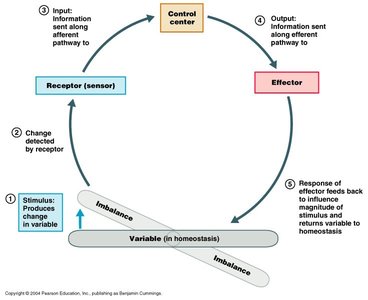
The body uses coordinated activities of various systems to maintain homeostasis. These processes are called homeostatic mechanisms and typically involve three main components:
Receptor (Sensor): Detects changes (stimuli) in the environment.
Control Center (Integration Center): Receives information from the receptor and determines the appropriate response. Usually the central nervous system (CNS) or endocrine organs.
Effector: Carries out the response to restore balance. Effectors are usually muscles or glands.
Feedback Mechanisms
Feedback mechanisms are essential for maintaining homeostasis. They regulate physiological variables by responding to changes and restoring balance. There are two main types:
Negative Feedback: The most common type. The response opposes the initial stimulus, reversing the direction of change. Used for variables that require frequent adjustment (e.g., body temperature, blood glucose).
Positive Feedback: The response amplifies the initial stimulus, intensifying the change. Less common, but important in specific situations (e.g., childbirth, blood clotting).
Example: Negative Feedback in Temperature Regulation
When body temperature drops below normal, receptors detect the change and send information to the brain (control center). The brain activates effectors (e.g., skeletal muscles) to generate heat (shivering), restoring temperature to normal. Once normal temperature is reached, the response stops.
Equation for negative feedback:
Example: Positive Feedback in Childbirth
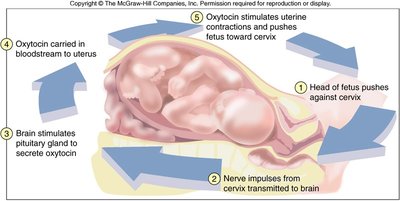
During childbirth, the baby's head pushes against the cervix, sending nerve impulses to the brain. The brain releases oxytocin, which increases uterine contractions, pushing the baby further and causing more oxytocin release. This cycle continues until delivery is complete.
Example: Positive Feedback in Blood Clotting
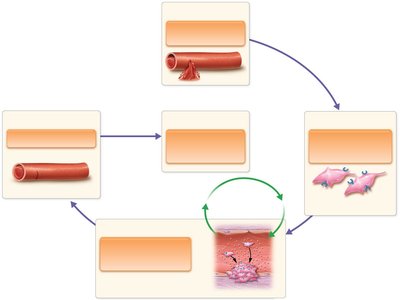
When a blood vessel is injured, platelets adhere to the site and release chemicals that attract more platelets. This cascade continues, amplifying the response, until the vessel is sealed and bleeding stops.
Summary Table: Negative vs. Positive Feedback
Feedback Type | Direction of Response | Common Examples | Purpose |
|---|---|---|---|
Negative Feedback | Opposes initial change | Body temperature, blood glucose, blood pressure | Maintains stability |
Positive Feedback | Amplifies initial change | Childbirth, blood clotting | Drives process to completion |
Key Terms
Homeostasis: Maintenance of a stable internal environment.
Extracellular Fluid (ECF): Fluid outside cells, including interstitial fluid and plasma.
Receptor: Sensor that detects changes in the environment.
Control Center: Processes information and determines response.
Effector: Executes the response to restore balance.
Negative Feedback: Mechanism that reverses a change.
Positive Feedback: Mechanism that amplifies a change.
