 Back
BackHorizontal Gene Transfer in Prokaryotes: Mechanisms and Implications
Study Guide - Smart Notes
 Tailored notes based on your materials, expanded with key definitions, examples, and context.
Horizontal Gene Transfer in Prokaryotes
Introduction to Genetic Recombination
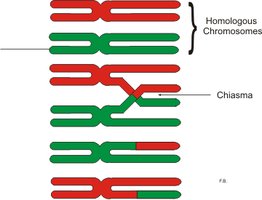
Genetic recombination is a fundamental process in biology where nucleotide sequences are exchanged between two DNA molecules, resulting in new genetic combinations. In eukaryotes, this often occurs during meiosis, forming gametes such as sperm and egg. In prokaryotes, recombination is central to horizontal gene transfer, which allows for the rapid spread of traits like antibiotic resistance.
Homologous recombination: Exchange of similar DNA sequences between chromosomes.
Example: Crossing over during meiosis in eukaryotes.
Vertical vs. Horizontal Gene Transfer
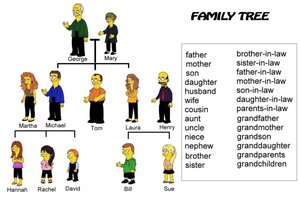
Gene transfer can occur in two main ways: vertical and horizontal. Vertical gene transfer is the traditional inheritance from parent to offspring, while horizontal gene transfer involves the exchange of genetic material between organisms of the same generation, especially in prokaryotes.
Vertical gene transfer: Genes passed from parent to offspring (e.g., family tree inheritance).
Horizontal gene transfer: Genes passed laterally between cells of the same generation, leading to recombinant cells.
Mechanisms of Horizontal Gene Transfer in Prokaryotes
Transformation
Transformation is a process where a recipient prokaryotic cell takes up DNA fragments from its environment, typically released by dead cells. This DNA can be incorporated into the recipient's genome through recombination, sometimes conferring new traits such as antibiotic resistance.
Key steps:
Donor cell dies and releases DNA fragments.
Recipient cell picks up DNA fragments from the environment.
DNA is recombined into the recipient's chromosome.
Example: Spread of antibiotic resistance genes among bacteria.
Conjugation
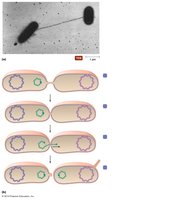
Conjugation is a direct cell-to-cell transfer of genetic material, usually plasmids, via a specialized structure called a pilus. The fertility plasmid (F plasmid) enables the donor cell to form a pilus and transfer plasmid DNA to a recipient cell, which then becomes capable of further conjugation.
Key steps:
Donor cell with F plasmid forms a pilus and attaches to recipient cell.
Pilus draws cells together.
One strand of F plasmid DNA is transferred to recipient.
Both cells synthesize complementary strands, resulting in two F+ cells.
Example: Spread of antibiotic resistance via plasmid transfer.
Transduction
Transduction is the transfer of genetic material from one bacterium to another via bacteriophages (viruses that infect bacteria). During phage assembly, fragments of bacterial DNA may be mistakenly packaged into phage particles, which then inject this DNA into new host cells, where it can be incorporated by recombination.
Key steps:
Phage infects donor cell and degrades host DNA.
New phages assemble, sometimes incorporating host DNA.
Transducing phage injects donor DNA into recipient cell.
Donor DNA is recombined into recipient's chromosome.
Example: Transfer of antibiotic resistance genes via phage-mediated transduction.
Summary Table: Mechanisms of Horizontal Gene Transfer
Mechanism | Process | Key Structure | Example |
|---|---|---|---|
Transformation | Uptake of environmental DNA | None | Antibiotic resistance |
Conjugation | Direct plasmid transfer | Pilus, F plasmid | Antibiotic resistance |
Transduction | Phage-mediated DNA transfer | Bacteriophage | Antibiotic resistance |
Academic Context
Horizontal gene transfer is a major driver of genetic diversity and evolution in prokaryotes. It allows for rapid adaptation to environmental pressures, such as antibiotics, and is a key concern in public health due to the spread of resistance genes.
Formula for recombination frequency:
Additional info: Horizontal gene transfer is unique to prokaryotes and is not a typical mechanism in eukaryotic cells, except in rare cases such as viral integration.
