 Back
BackHuman Physiology: Molecular Interactions, Metabolism, and System Integration
Study Guide - Smart Notes
 Tailored notes based on your materials, expanded with key definitions, examples, and context.
Molecular Interactions
Basic Concepts in Physiology
Physiology is the study of the normal functioning of living organisms and their component parts. It explores how these parts work together to maintain homeostasis and respond to internal and external changes.
Pathology: Disruption of normal function, leading to disease.
Ion: An atom or molecule with an electrical charge due to loss (cation) or gain (anion) of electrons.
Ligand: Any molecule or ion that binds to another molecule, often a protein.
Polar Molecules: Have regions of partial positive and negative charge (e.g., water).
Nonpolar Molecules: Even distribution of electrons, no partial charges (e.g., carbon).
Water and Solutions
Water is the universal solvent, dissolving many substances. Solutions, suspensions, and colloids are types of mixtures found in biological systems.
Hydrophilic: Water-loving substances.
Hydrophobic: Water-fearing substances.
Solution: Homogeneous mixture; solute is evenly distributed in solvent.
Suspension: Heterogeneous mixture; particles separate upon standing.
Colloid: Heterogeneous mixture; particles remain suspended.
Acids, Bases, and Buffers
Acids donate hydrogen ions, bases accept them, and salts are formed from acid-base reactions. The pH scale measures acidity and alkalinity, with buffers helping to resist changes in pH.
Acid: Donates H+ ions.
Base: Accepts H+ ions.
Buffer: Resists pH changes (e.g., bicarbonate system).
Biomolecules
Biomolecules are essential for structure and function in cells. They include carbohydrates, lipids, proteins, and nucleic acids.
Carbohydrates: Most abundant biomolecules; provide energy and structure.
Lipids: Hydrophobic molecules; energy storage, membrane structure, signaling.
Proteins: Chains of amino acids; structural, enzymatic, regulatory roles.
Nucleic Acids: DNA and RNA; store and transmit genetic information.
Protein Structure and Function
Proteins have four levels of structure: primary, secondary, tertiary, and quaternary. Their function depends on their shape and interactions with other molecules.
Fibrous Proteins: Structural, insoluble in water.
Globular Proteins: Functional, soluble in water, act as enzymes and carriers.
Conjugated Proteins: Combined with other biomolecules (e.g., lipoproteins, glycoproteins).
Enzyme Function and Regulation
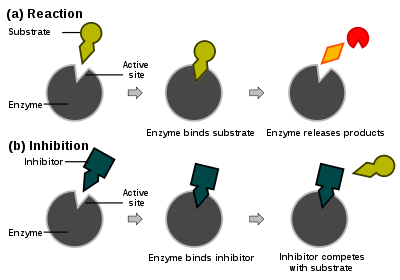
Enzymes are biological catalysts that speed up chemical reactions by lowering activation energy. Their activity is regulated by inhibitors, activators, and environmental factors.
Competitive Inhibitors: Compete with substrate for active site.
Irreversible Inhibitors: Bind permanently to enzyme.
Allosteric Modulators: Bind to sites other than active site, changing enzyme activity.
Covalent Modulators: Modify enzyme activity by covalent attachment.
Protein Denaturation
Denaturation disrupts secondary and tertiary protein structure, often caused by heat, alcohol, acids, bases, or heavy metal salts. The primary structure remains intact, but function is lost.
Energy and Cellular Metabolism
Metabolic Pathways
Metabolism includes anabolic (building) and catabolic (breaking down) reactions. Energy is transferred and stored in molecules like ATP.
Kinetic Energy: Energy of motion.
Potential Energy: Stored energy.
Activation Energy: Initial energy required for a reaction.
ATP Production
Cells produce ATP through aerobic and anaerobic pathways. Aerobic metabolism yields more ATP and occurs in mitochondria, while anaerobic metabolism occurs in the cytoplasm.
Anaerobic Glycolysis: Glucose → Pyruvate + 2 ATP.
Aerobic Respiration: Glucose + O2 → CO2 + H2O + 30-32 ATP.
Gluconeogenesis
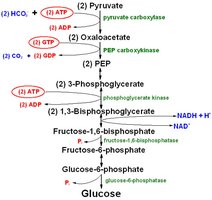
Gluconeogenesis is the synthesis of glucose from non-carbohydrate precursors, such as amino acids and glycerol, especially during fasting or starvation.
Deamination: Removal of amino group from amino acids for entry into metabolic pathways.
Transamination: Transfer of amino group between molecules.
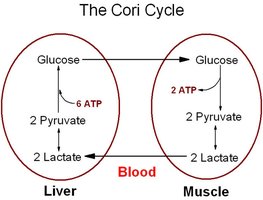
The Cori Cycle
The Cori cycle recycles lactate produced by anaerobic glycolysis in muscles back to glucose in the liver, supporting energy needs during intense activity.
Lactate: Produced in muscle, transported to liver for conversion to glucose.
Energy Cost: The cycle consumes more ATP than it produces, so it cannot be sustained indefinitely.
Lipolysis and Fatty Acid Metabolism
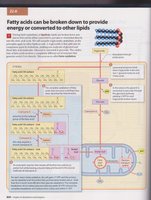
Lipolysis breaks down lipids into fatty acids and glycerol, yielding more energy per unit weight than carbohydrates or proteins. Fatty acids are oxidized for ATP production but cannot be converted to glucose.
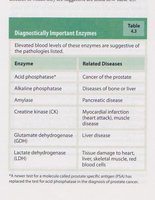
Enzymes in Diagnosis
Elevated levels of specific enzymes in the blood can indicate certain diseases. Enzyme assays are important diagnostic tools in clinical medicine.
Enzyme | Related Diseases |
|---|---|
Acid phosphatase | Cancer of the prostate |
Alkaline phosphatase | Disease of bone or liver |
Amylase | Pancreatic disease |
Creatine kinase (CK) | Myocardial infarction, muscle diseases |
Glutamate dehydrogenase (GDH) | Liver disease |
Lactate dehydrogenase (LDH) | Tissue damage to heart, liver, skeletal muscle, blood cells |
Classification of Enzymatic Reactions
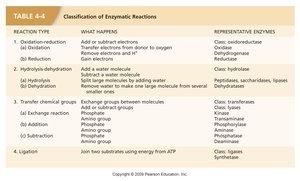
Enzymatic reactions are classified by the type of chemical change they catalyze.
Reaction Type | What Happens | Representative Enzymes |
|---|---|---|
Oxidation-reduction | Add or subtract electrons | Oxidase, reductase, dehydrogenase |
Hydrolysis-dehydration | Add/remove water | Proteases, lipases, synthases |
Transfer chemical groups | Transfer groups between molecules | Kinase, transaminase |
Ligation | Join two substrates using ATP | Synthetase |
System Integration and Homeostasis
Cardiac Output and Regulation
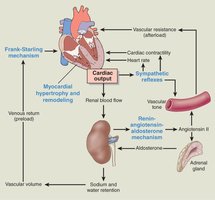
Cardiac output is the volume of blood pumped by the heart per minute. It is regulated by factors such as heart rate, stroke volume, vascular resistance, and hormonal control (e.g., renin-angiotensin-aldosterone system).
Frank-Starling Mechanism: Increased venous return stretches the heart, increasing contractility.
Renin-Angiotensin-Aldosterone Mechanism: Regulates blood pressure and fluid balance.
Hormonal Regulation and Endocrine System
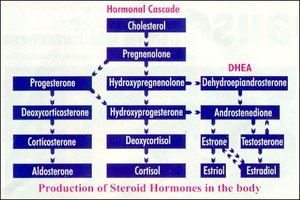
Steroid Hormone Synthesis
Steroid hormones are synthesized from cholesterol through a series of enzymatic steps. They include sex hormones and adrenal cortex hormones.
Immunology and Antibiotics
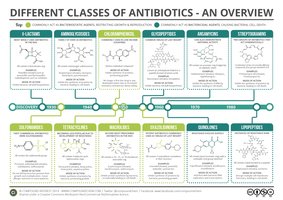
Classes of Antibiotics
Antibiotics are classified based on their chemical structure and mechanism of action. They target different aspects of bacterial physiology, such as cell wall synthesis, protein synthesis, and nucleic acid synthesis.
Summary Table: Key Concepts
Concept | Definition | Example |
|---|---|---|
Homeostasis | Maintenance of stable internal environment | Blood glucose regulation |
Metabolism | Sum of all chemical reactions in the body | ATP production |
Enzyme | Protein catalyst for biochemical reactions | Amylase, kinase |
Hormone | Chemical messenger | Insulin, cortisol |
Antibiotic | Drug that kills or inhibits bacteria | Penicillin, tetracycline |
