 Back
BackImmune System: Innate and Adaptive Defenses
Study Guide - Smart Notes
 Tailored notes based on your materials, expanded with key definitions, examples, and context.
Immune System Overview
Innate and Adaptive Defenses
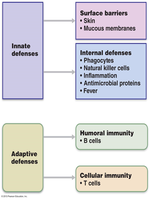
The immune system protects the body from pathogens through two main types of defenses: innate (nonspecific) and adaptive (specific) mechanisms. Innate defenses provide immediate, general protection, while adaptive defenses target specific threats and develop memory for future responses.
Innate defenses: Surface barriers (skin, mucous membranes) and internal defenses (phagocytes, natural killer cells, inflammation, antimicrobial proteins, fever).
Adaptive defenses: Humoral immunity (B cells) and cellular immunity (T cells).
Innate Immune Mechanisms
Surface Barriers
Surface barriers are the body's first line of defense against pathogens. They include the skin and mucous membranes, which physically block entry and secrete antimicrobial substances.
Skin: Acts as a tough, impermeable barrier.
Mucous membranes: Trap pathogens and contain enzymes that destroy microbes.
Internal Defenses
If pathogens breach surface barriers, internal defenses are activated. These include phagocytes, natural killer cells, inflammation, interferons, complement proteins, and fever.
Phagocytes: Cells that engulf and digest pathogens.
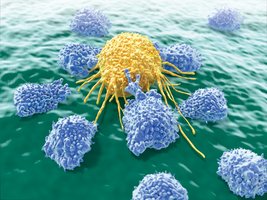
Natural killer (NK) cells: Destroy infected or abnormal cells by releasing cytotoxic substances.
Inflammation: Localized response to injury or infection, characterized by redness, heat, swelling, and pain.
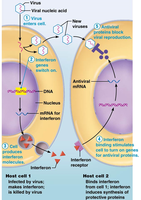
Interferons: Proteins released by virus-infected cells to inhibit viral replication in neighboring cells.
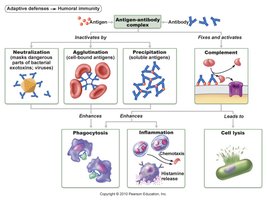
Complement system: Group of proteins that enhance phagocytosis and cell lysis.
Fever: Elevated body temperature that inhibits pathogen growth and enhances immune activity.
Adaptive Immune Mechanisms
Key Players
Adaptive immunity involves three main cell types:
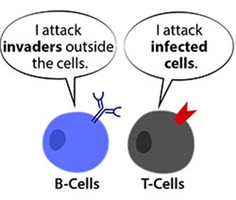
B lymphocytes: Mediate humoral immunity by producing antibodies.
T lymphocytes: Mediate cellular immunity by attacking infected or abnormal cells.
Macrophages: Act as antigen-presenting cells (APCs) to activate T cells.
Lymphocyte Development and Maturation
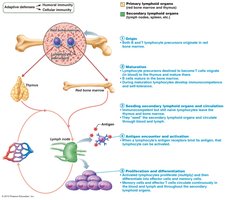
Lymphocytes originate in the red bone marrow. Their fate as B or T cells depends on their maturation site:
B cells: Mature in bone marrow.
T cells: Mature in thymus.
Immunocompetence: Ability to recognize a specific antigen.
Self-tolerance: Ability to avoid attacking the body's own cells.
Antigens and Major Histocompatibility Complex (MHC)
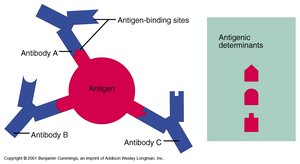
An antigen is any substance capable of triggering an immune response. Antigens have multiple antigenic determinants (epitopes) that antibodies can bind to. The major histocompatibility complex (MHC) is a group of cell surface proteins that mark cells as "self" and present antigens to T cells.
T Cell Education: Positive and Negative Selection
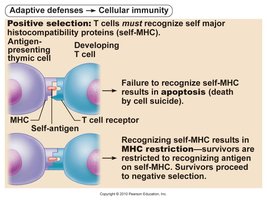
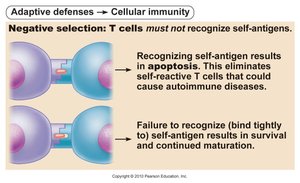
T cells undergo rigorous selection in the thymus to ensure immunocompetence and self-tolerance:
Positive selection: T cells must recognize self-MHC proteins; failure leads to apoptosis.
Negative selection: T cells must not recognize self-antigens; self-reactive cells are eliminated to prevent autoimmunity.
B Cells and Humoral Immune Response
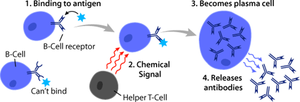
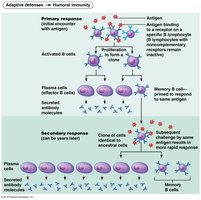
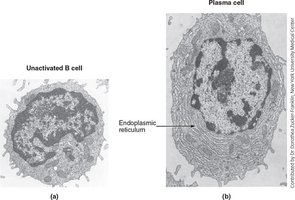
B cells are activated when they encounter their specific antigen, usually in the spleen or lymph node. Activated B cells differentiate into plasma cells, which produce antibodies, and memory cells, which provide long-term immunity.
Plasma cells: Secrete large quantities of antibodies.
Memory cells: Remain in the body for rapid response upon re-exposure to the antigen.
Immunoglobulin (Antibody) Classes
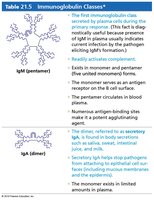
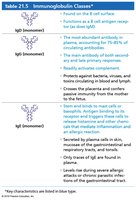
Antibodies are classified into five major classes, each with distinct functions:
Class | Structure | Main Functions |
|---|---|---|
IgM | Pentamer | First antibody secreted during primary response; activates complement. |
IgA | Dimer | Found in body secretions; protects mucosal surfaces. |
IgD | Monomer | Functions as B cell antigen receptor. |
IgG | Monomer | Most abundant; crosses placenta; activates complement. |
IgE | Monomer | Involved in allergic reactions; binds to mast cells and basophils. |
Immunological Memory and Vaccines
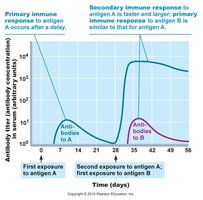
Immunological memory is established by active immunity, which allows for a faster and stronger response upon subsequent exposures to the same antigen. Vaccines stimulate active immunity by exposing the body to harmless forms of pathogens.
Primary response: Occurs after first exposure; slower and less robust.
Secondary response: Occurs after subsequent exposures; faster and more effective.
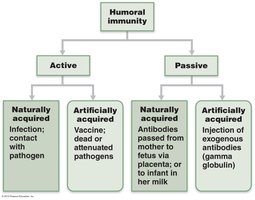
Type | Source | Immunological Memory |
|---|---|---|
Active | Infection or vaccination | Yes |
Passive | Maternal antibodies or injection of antibodies | No |
Cell-Mediated Immune Response (T Cells)
T Cell Subpopulations
There are three main subpopulations of T cells:
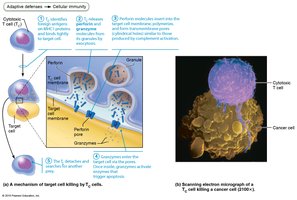
CD8 (Cytotoxic T cells): Attack and kill infected or abnormal cells using perforin.
CD4 (Helper T cells): Stimulate activity of other immune cells; most prevalent T cell type.
Regulatory T cells: Suppress immune response to prevent overactivity.
Role of MHC Proteins in Cellular Immunity
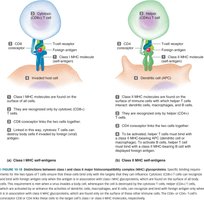
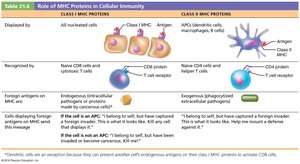
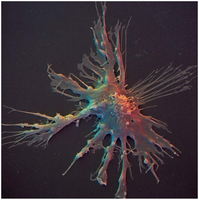
MHC proteins are essential for antigen presentation and T cell activation. Class I MHC proteins are found on all nucleated cells and present endogenous antigens to CD8 T cells. Class II MHC proteins are found on antigen-presenting cells and present exogenous antigens to CD4 T cells.
Class I MHC | Class II MHC |
|---|---|
Displayed by all nucleated cells | Displayed by APCs (dendritic cells, macrophages, B cells) |
Recognized by CD8 T cells | Recognized by CD4 T cells |
Present endogenous antigens | Present exogenous antigens |
Helper T Cells: Central Role in Immunity
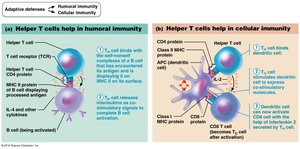
Helper T cells are crucial for mobilizing both humoral and cellular immune responses. They provide costimulatory signals necessary for activation of B cells and cytotoxic T cells.
Cytotoxic T Cells: Mechanism of Action
Cytotoxic T cells kill infected and cancerous cells by releasing perforin and granzymes, which induce apoptosis in target cells.
Summary: Immune Response to Influenza Virus
First Line of Defense
Surface barriers: Skin and mucous membranes prevent viral entry.
Second Line of Defense
Innate internal defenses: Phagocytes, natural killer cells, inflammation, interferons, complement, and fever are activated.
Third Line of Defense
Adaptive defenses: B cells produce antibodies; T cells attack infected cells; macrophages present antigens to activate T cells.
Additional info: The notes above expand on brief points with academic context, definitions, and examples to ensure completeness and clarity for exam preparation.
